
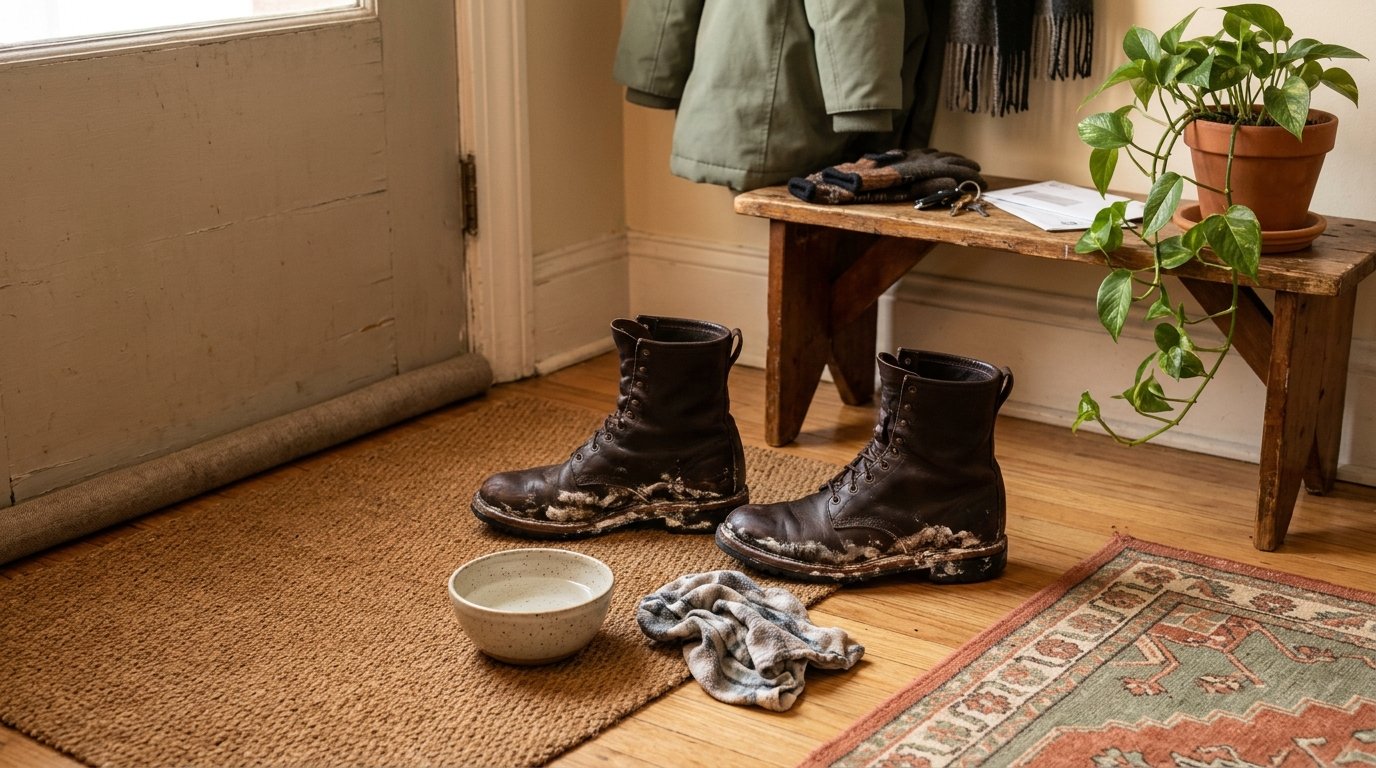
You step inside your apartment after a freezing morning commute, kick off your favorite winter boots, and notice an unsightly crusty white ring creeping up the leather. If you live somewhere with cold winters, watching road salt turn your footwear into a chalky mess feels like an inevitable seasonal tragedy. You want your winter pairs to survive more than a single season, but scrubbing blindly with water often leaves the marks right where they started.
How do you get salt stains out of boots? You can remove salt stains from leather and synthetic boots by wiping them down with a 50/50 mixture of white vinegar and cool water to neutralize the mineral crust, rinsing with plain water, and letting them air-dry away from direct heat [Winter Salt Crust Neutralization and Material Restoration]. Let’s walk through five easy ways to save your footwear based on material, explore crucial drying rules, and look at how to protect your pairs before the next storm hits.
Before You Start: Always check the manufacturer’s care label if available. Test any cleaning solution on a small, hidden spot (like the inner heel or tongue) first to check for color-fastness. Avoid soaking footwear or exposing wet boots to direct heat like radiators, and always stuff them with clean paper to hold their shape while drying.
Why Do Winter Boots Get White Salt Marks?

Understanding what causes those stubborn crusty rings helps you treat them correctly instead of accidentally damaging your favorite footwear.
When city crews scatter road salt or ice melt to keep sidewalks clear, that chemical mixture dissolves into slush as snow melts. When you walk through that slush, your boots absorb the salty moisture. As the water evaporates into the warm air of your home, the salt crystals are left behind on the surface, drying into a rigid, powdery white line. If left untreated, salt pulls the natural oils out of leather, causing stiffness and permanent cracking over time [Winter Salt Absorption and Material Degradation Mechanics].
1. Leather Boots: The Vinegar and Water Recovery Method
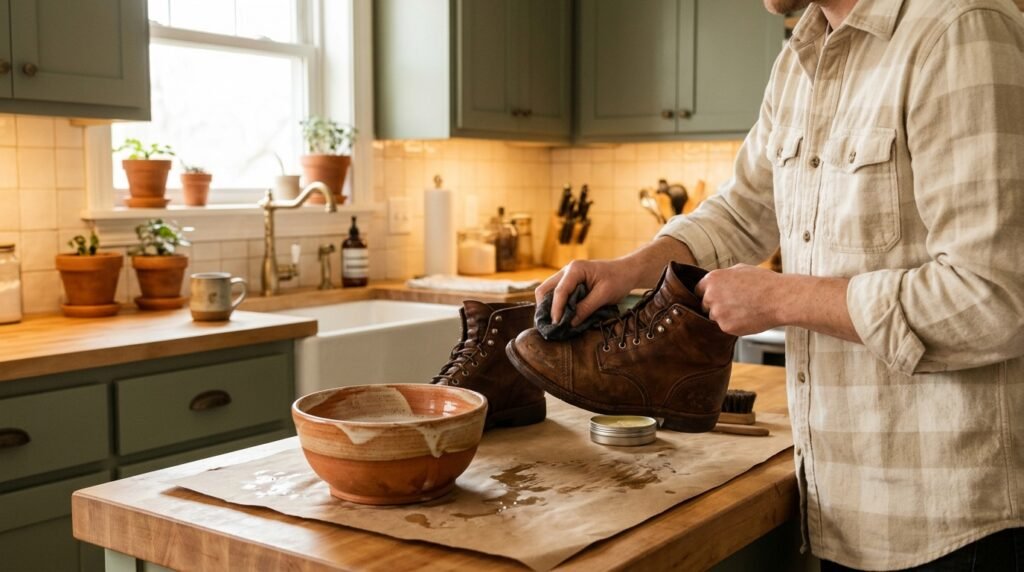
Classic leather boots bear the brunt of winter weather, but their durable hide handles targeted moisture treatment remarkably well.
- The Steps: Mix equal parts white vinegar and cool water in a small bowl. Dip a clean microfiber cloth into the solution, wring it out until damp (not dripping), and gently wipe along the salt stains. The acid in the vinegar neutralizes the salt crust. Wipe the entire surface down with a second cloth dampened only with plain water to rinse, then let them air-dry completely [Step-by-Step Salt Stain Neutralization].
- The Finish: Once completely dry, massage a quality leather conditioner or mink oil back into the leather to restore the natural oils stripped away by the salt [Post-Cleaning Lipid Restoration in Winter Footwear].
2. Suede and Nubuck Boots: The Dry-Brush and Eraser Routine
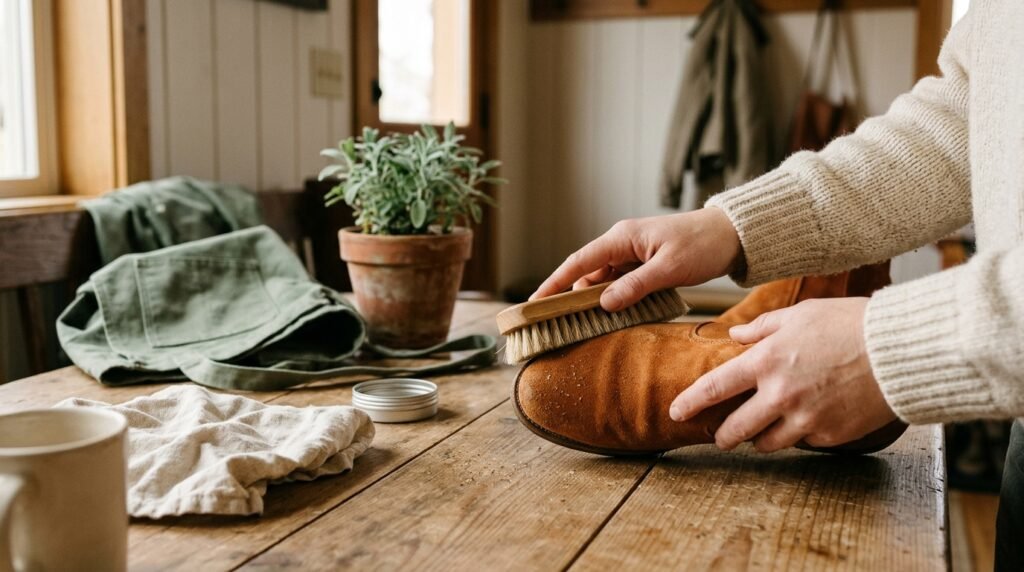
Suede and nubuck are notoriously sensitive to moisture, meaning traditional liquid cleaners can leave permanent water spots if used incorrectly.
- The Steps: Let wet suede dry completely before attempting to clean it. Use a specialized suede brush or a clean, dry toothbrush to gently brush away surface salt crystals. For stubborn residue, rub the marks lightly with a suede eraser or a clean pencil eraser, working in one direction [Specialized Suede Salt Stain Removal Protocols].
- The Finish: Once the salt is lifted, brush the nap of the suede back up in sweeping motions to restore its velvety texture [Post-Cleaning Nap Restoration in Suede Footwear].
3. Canvas and Fabric Sneakers: Mild Soap and Gentle Scrubbing

Casual canvas or fabric winter sneakers absorb moisture quickly, requiring a mild detergent approach to lift embedded minerals.
- The Steps: Mix two drops of liquid dish soap with a bowl of warm water. Dip a soft-bristled brush into the soapy water, shake off excess moisture, and gently scrub the stained fabric in circular motions [Gentle Surfactant Cleaning for Fabric Footwear]. Wipe away the soapy residue with a damp, clean cloth.
- The Finish: Stuff the sneakers tightly with paper towels to absorb interior moisture and prevent yellow water rings from forming as they air-dry [Internal Moisture Extraction and Water Ring Prevention in Fabric Footwear].
4. Rubber Soles and Waterproof Boots: Seam and Rubber Care
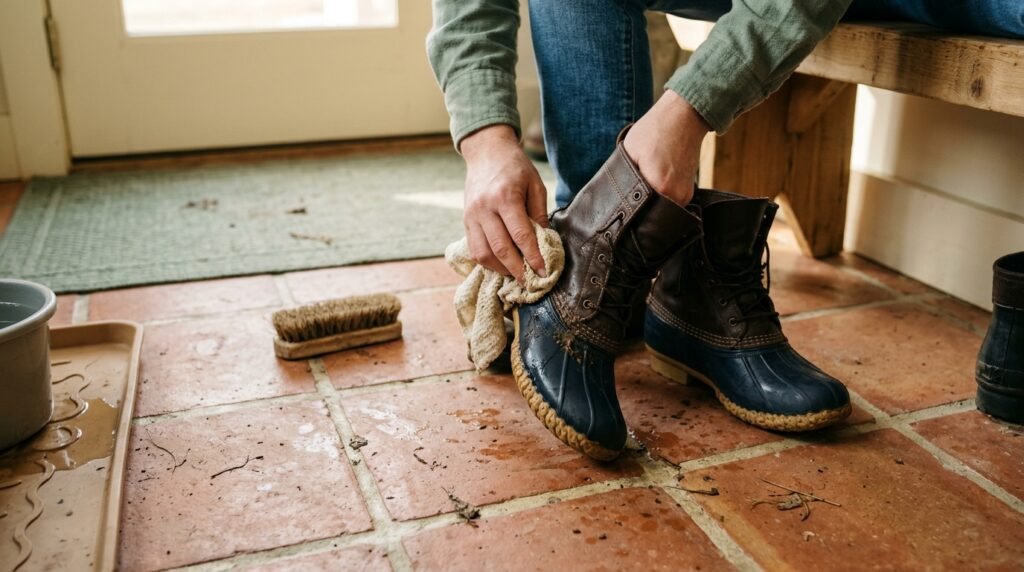
Even heavy-duty rubber duck boots and waterproof winter pairs accumulate stubborn mineral lines along the rubber-to-fabric bonding seams.
- The Steps: Wipe down the rubber shells and lower seams using a damp cloth soaked in diluted dish soap. For stubborn salt crust trapped in textured rubber treads, use an old toothbrush to scrub out the crevices. Rinse with a damp cloth [Rubber Shell and Tread Maintenance Protocols].
- The Finish: Dry thoroughly with a towel, and apply a rubber conditioner or protective spray to prevent the material from drying out and splitting over time.
5. Prevention and Routine Maintenance: Stopping Salt Before It Darts
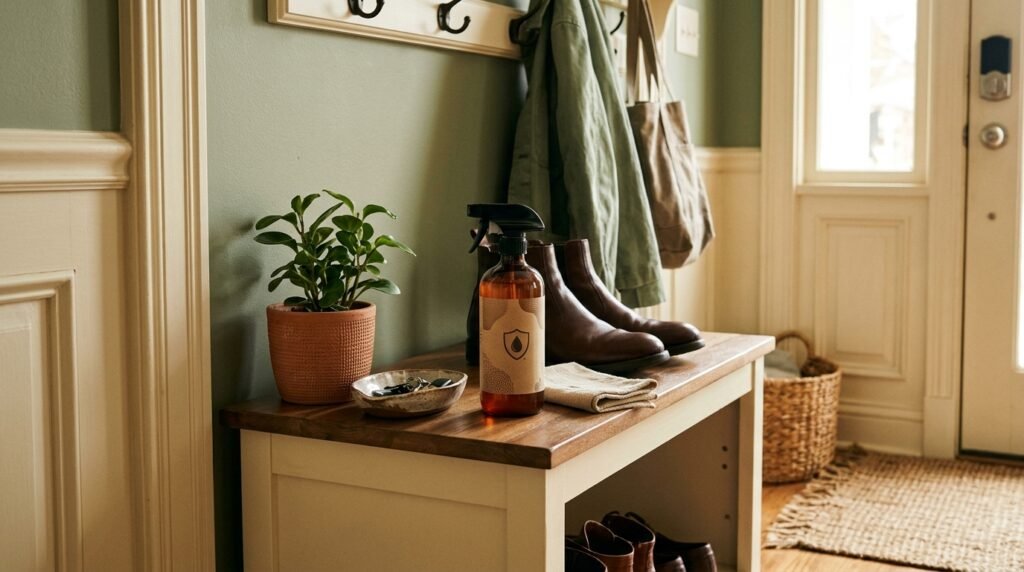
The absolute easiest way to deal with winter salt stains is to stop them from setting into the material in the first place [Proactive Barrier Protection Against Winter Salt].
- The Steps: Before winter weather begins, apply a protective spray suited for leather, suede, or canvas [Proactive Pre-Treatment and Post-Walk Maintenance Protocols]. After every walk through salted city streets, take thirty seconds to wipe your boots down with a damp cloth before the salt has a chance to dry into a crust.
- The Finish: Rotate between at least two pairs of winter shoes, giving each pair a full 24 hours to dry out and rest between wears.
How to Dry Wet Boots Safely
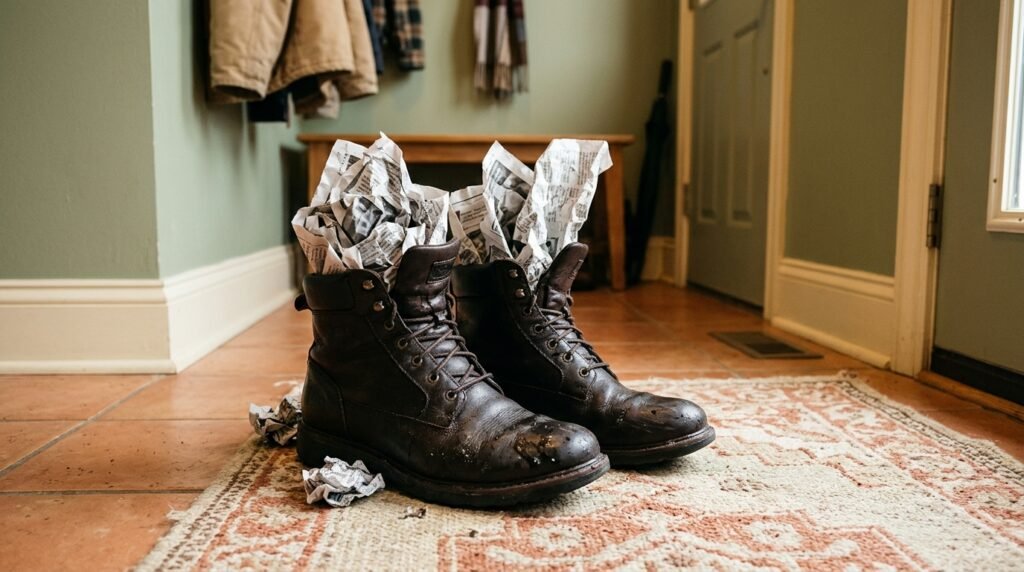
How you dry your boots after a snowy commute or a cleaning session is just as important as how you clean them.
Always let your boots air-dry naturally at room temperature. Stuff the interior loosely with newspaper or paper towels to absorb internal moisture and maintain the shoe’s structural shape [Controlled Ambient Drying and Structural Preservation]. Never place wet boots near a heater, space heater, radiator, or direct hair-dryer blast [Prohibition of Direct Thermal Drying]. Rapid, artificial heat bakes the moisture out too quickly, causing leather to shrink, warp, and crack permanently.
Frequently Asked Questions

What removes salt stains from boots?
A cloth dampened with a mix of white vinegar and water is a common method for leather. Test it on a hidden spot first, then let the boots air-dry [Pre-Test Protocols for Acidic Leather Cleaners].
Does white vinegar remove salt stains from shoes?
Yes, the mild acidity in white vinegar neutralizes and dissolves mineral salt crystals without harming durable leather uppers [Chemical Action of Dilute Acetic Acid on De-Icing Salts].
How do you remove salt stains from suede?
Brush gently when dry, dab lightly with a barely damp cloth if needed, let them dry naturally, and brush again to lift the delicate nap [Dry-First Restoration Hierarchy for Suede].
How do you protect shoes from road salt?
Apply a waterproof protector spray suitable for your specific shoe material before winter arrives, and wipe down your boots after each wear [Comprehensive Winter Footwear Preservation Protocol].
Can I use rubbing alcohol on salt stains?
Equal parts rubbing alcohol and water can lift stubborn stains on certain fabrics, but it can be harsh on delicate leather, so always test a hidden spot first [Solvent-Based Spot Removal and Material Compatibility Protocols].
What should I do if salt ruins my leather boots?
Clean the salt thoroughly with a vinegar solution, let them dry naturally with paper stuffing, and apply a heavy-duty leather conditioner to restore lost oils [Complete Winter Salt Remediation and Conditioning Protocol].
Conclusion

Saving your winter footwear from aggressive road salt doesn’t require expensive professional services or harsh chemicals—just a bit of kitchen vinegar, gentle brushing, and proper drying habits. By acting quickly and maintaining a post-wear wipe-down routine, your favorite boots will easily survive the slushiest winter months.

Nathan handles the site’s dressier content and its more practical side — from wedding-guest shoe pairings to keeping your favorite pair looking new for longer. He believes good style shouldn’t mean uncomfortable shoes, and most of his posts reflect that balance between looking good and actually being able to walk in it.