
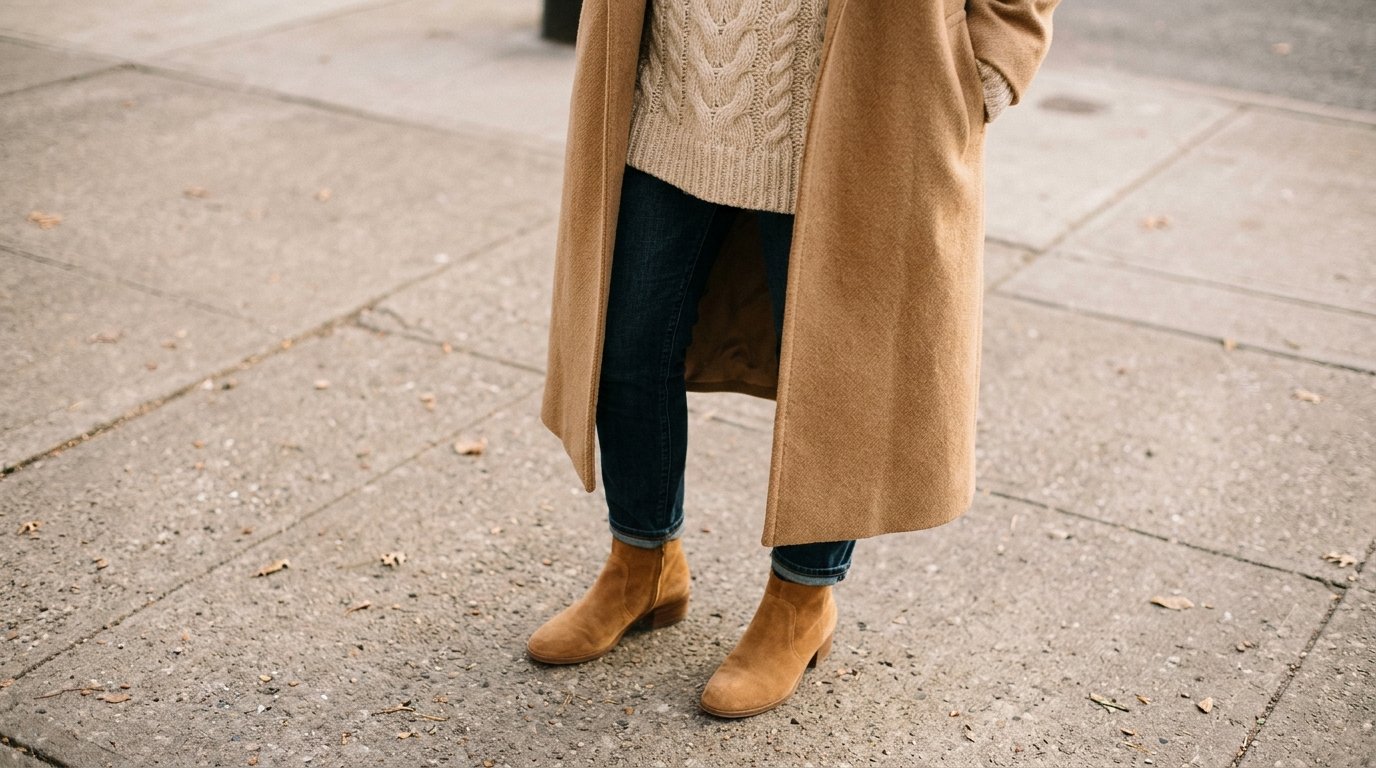
Yes, you can wear suede boots in winter, if you treat them with a protector spray first, avoid soaking conditions, and brush and dry them properly afterward. Suede is soft and warm, and it adds depth to winter outfits. It is not the right choice for deep slush or heavy rain, but it works well on dry days, cleared pavements, and light snow.
The routine is simple: protect, brush, dry. Protect the boots before your first wear, with a suede protector spray. Brush them after every wear, to lift dust and salt before it sinks in. Dry them at room temperature, away from direct heat, if they get wet. With that routine, a pair of suede boots can last more than one winter, and still look new.
This guide shows you how to protect suede boots step by step, how to wear them with jeans, coats, and dresses, when to skip them, and what to do if they get wet or salted. It also covers a simple winter care routine, and how to store suede boots at the end of the season.
How to Wear Suede Boots in Winter: The Short Answer
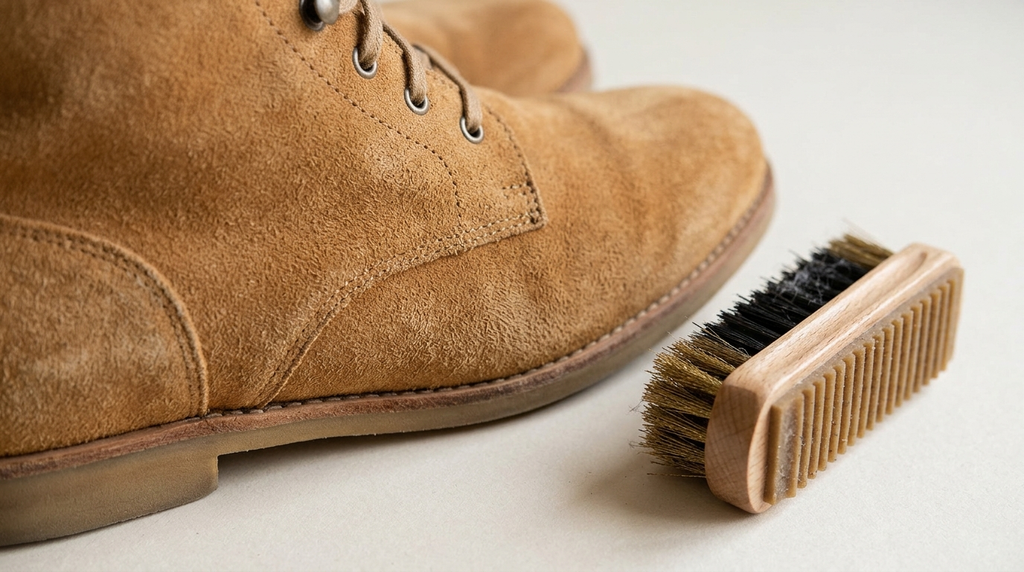
Suede boots can be worn in winter, if you prepare them first. A protector spray helps water bead on the surface, instead of soaking into the nap. Nap is the soft, raised surface of suede, and it is what makes suede feel soft. Once the nap is wet, it can flatten, spot, and stain. A spray will not make suede fully waterproof, but it will give you time to get out of light rain or snow.
Choose the right conditions. Wear suede boots on dry days, on cleared pavements, and in light, fresh snow. Avoid deep slush, heavy rain, and pools of road salt. Salt can leave white rings on suede, and slush can soak through the nap. If the forecast is heavy rain, wear a leather pair instead. Save suede for the days when the ground is dry or only lightly damp.
Choose the right style too. Ankle suede boots work well with jeans and wool trousers. Knee-high suede boots work well with midi dresses and long coats. Chelsea suede boots are easy to slip on and off, and they look smart with tailored clothes. Shearling-lined suede boots feel warmer, and they suit very cold days. For suede styling with a skirt, see this suede biker boots with a plaid midi skirt guide.
Are Suede Boots Good for Winter? Pros and Cons
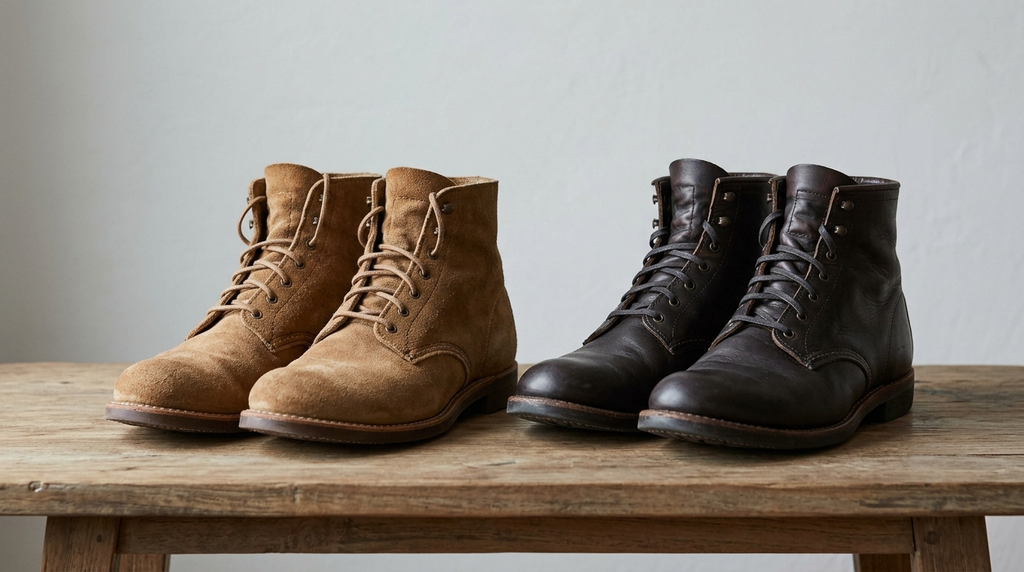
Suede boots have clear pros in winter. They feel warm and soft, and they look rich with knitwear, wool coats, and denim. Suede adds texture to an outfit, in a way that smooth leather does not. It also feels light, so a suede boot can feel easier to walk in than a heavy leather boot.
Suede also has clear cons in winter. It soaks up water faster than smooth leather, and it stains more easily. Salt, mud, and slush can mark the nap, and those marks can be hard to remove. Suede also fades in strong sunlight, and the nap can flatten with wear. It needs more care than smooth leather, and it needs that care often.
So, are suede boots good for winter? They are good for dry winter days, and for short trips in light snow. They are not good for wet commutes, deep slush, or heavy rain. If you have only one pair of winter boots, a smooth leather pair is a safer choice. If you have a leather pair for wet days, suede is a lovely second pair for dry days. That is the honest balance, and it will help your suede boots last longer.
Before Your First Winter Wear: Protect Suede Boots Step by Step
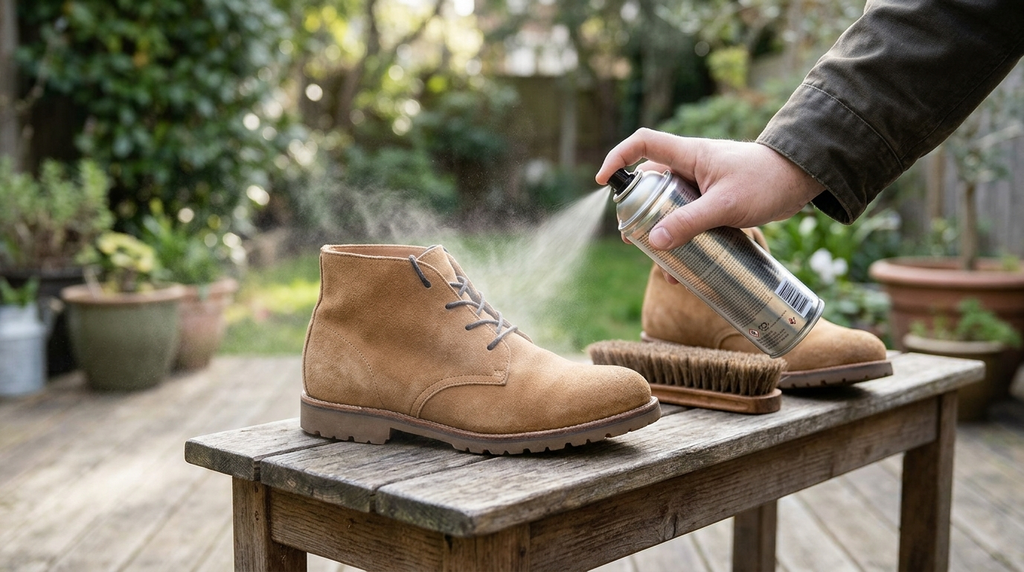
Protect suede boots before you wear them outside in winter. A protector spray is not a one-time fix. It needs to be applied well, left to cure, and reapplied through the season. Follow the steps below, and check the label on your spray for drying times.
Clean first
Brush the boots first, with a dry suede brush. Brush in one direction, to lift dust and loose dirt from the nap. If there are marks, use a suede eraser, and rub gently. Do not use water to clean suede before you spray it, as water can spot the nap. Start with clean, dry boots, so the spray can coat the nap evenly.
Spray evenly
Hold the spray about 15 to 20 centimetres from the boot, and spray in light, even passes. Cover the whole boot, including the seams and the heel. Do not soak one spot, as that can darken the nap. Let the first coat dry fully, then add a second light coat if the label suggests it. Work in a well-ventilated room, away from open flames.
Let it cure and reapply
Let the boots cure for at least a few hours, or overnight if you can, before you wear them outside. Curing lets the spray bond to the nap. Reapply the spray every few weeks in heavy use, or after the boots get wet. Check the label for how often to reapply, as different sprays last for different lengths of time. For more on waterproofing, see this chelsea boots with a midi skirt guide, which covers rainy-day wear.
How to Wear Suede Boots in Winter: Outfits for Cold Days

Suede boots are easy to style in winter, because suede adds warmth and texture. The key is to pair them with rich, soft fabrics, like knitwear, wool, and denim. Suede is naturally casual, so it works best with relaxed, warm outfits, rather than very formal ones.
With jeans
Wear suede ankle boots with dark jeans in winter. Tuck slim jeans into the boot, or let straight jeans sit just above the boot top. Add a chunky knit sweater and a wool coat, and the outfit will feel warm and balanced. For a smarter look, wear suede Chelsea boots with dark jeans and a tailored coat. Avoid very light jeans on wet days, as they can show splashes more easily.
With a coat
Wear suede boots with a long wool coat in winter. A knee-high suede boot with a long coat looks warm and put together. An ankle suede boot with a shorter coat works well too, if the coat covers the top of the boot. Choose a coat in a plain colour, like camel, grey, or navy, so the suede stands out. For cold-day outfit ideas, see this winter outfit of the day with knee-high boots guide.
With a midi dress or skirt
Wear suede boots with a midi dress or skirt in winter, with warm tights underneath. A knee-high suede boot with a midi dress looks soft and warm. An ankle suede boot with a midi skirt works well too, if the skirt is long enough to cover the top of the boot. Add a knit sweater and a wool coat, and the outfit will feel complete. For more on ankle boot outfits, see this fall outfit of the day with ankle boots guide.
Suede Boots in Rain, Snow, and Salt: When to Wear Them, When to Skip Them
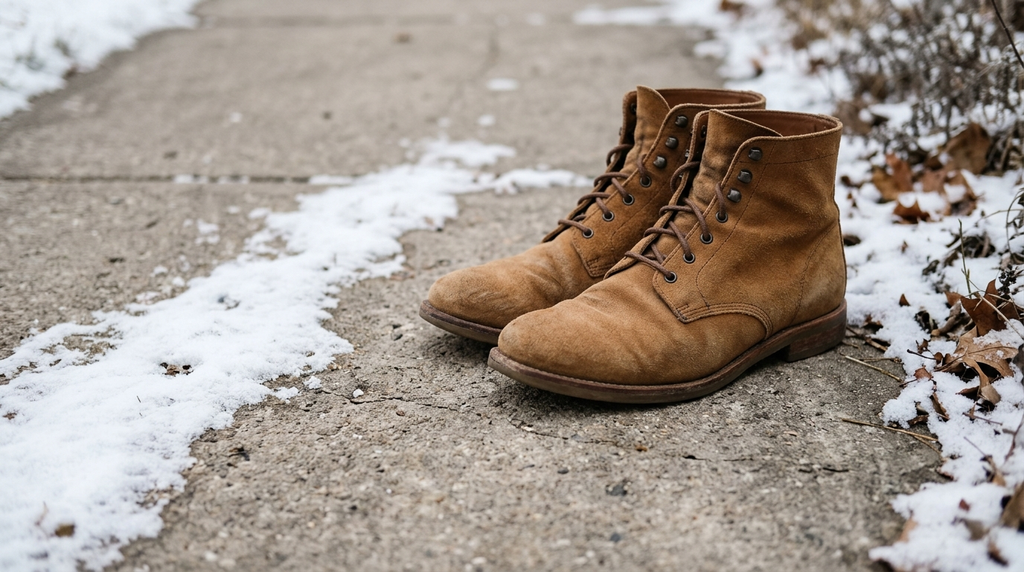
Suede boots can cope with light snow and light rain, if they are protected. They cannot cope with heavy rain, deep slush, or long walks in wet conditions. The difference is how much water hits the nap, and for how long. A short walk in light snow is fine. A long walk in slush is not.
In light, fresh snow, suede boots will work well, if they are sprayed and you brush them after. Snow is drier than rain, and it brushes off more easily. In rain, water soaks into the nap faster, and it can leave water spots. In slush, salt and grit mix with water, and they can stain and flatten the nap. Salt is the worst of the three, as it leaves white rings that can be hard to remove.
Skip suede on days with heavy rain, deep slush, or long wet commutes. Wear a smooth leather pair instead, as leather can be wiped clean and re-proofed more easily. Save suede for dry days, cleared pavements, and short trips. That one choice will do more for your suede boots than any spray or brush. If you do get caught in rain, blot the boots dry as soon as you can, and let them air dry at room temperature.
What to Do If Suede Boots Get Wet or Salted
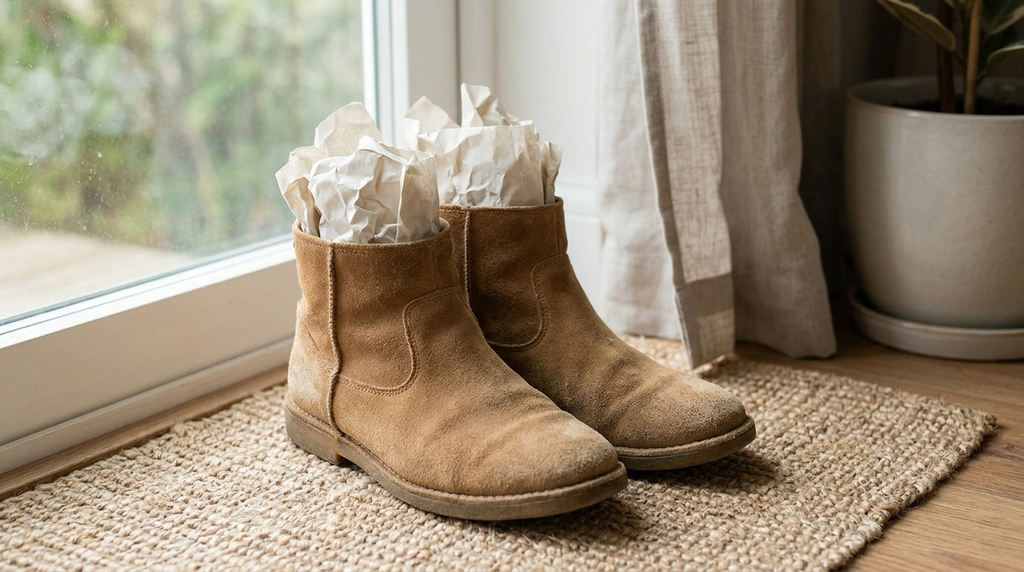
If suede boots get wet or salted, act fast, but do not panic. Suede can often be saved, if you dry it well and brush it after. Do not use direct heat, and do not wipe wet mud, as that pushes dirt into the nap. Follow the steps below, in order.
If they get wet
Blot the boots gently with a clean, dry cloth, to lift as much water as you can. Do not rub, as rubbing can flatten the nap. Stuff the boots with plain paper, to help them keep their shape as they dry. Let them air dry at room temperature, away from radiators, heaters, and direct sunlight. Heat can stiffen suede and crack the nap. Once the boots are fully dry, brush them in one direction, to lift the nap back up.
If they get salt stains
Brush off any dry salt first, with a suede brush. For white salt rings, try a cloth dampened with a mix of equal parts water and white vinegar. Dab the stain gently, do not soak the suede, and test the mix on a hidden spot first, as vinegar can change the colour of some suedes. Let the spot dry fully, then brush it in one direction. If the stain stays after one try, do not keep scrubbing. Take the boots to a cobbler, as a professional can often lift a stain that home care cannot. For more on suede in cold weather, see this suede biker boots with a plaid midi skirt guide.
How to Clean and Care for Suede Boots: A Simple Winter Routine
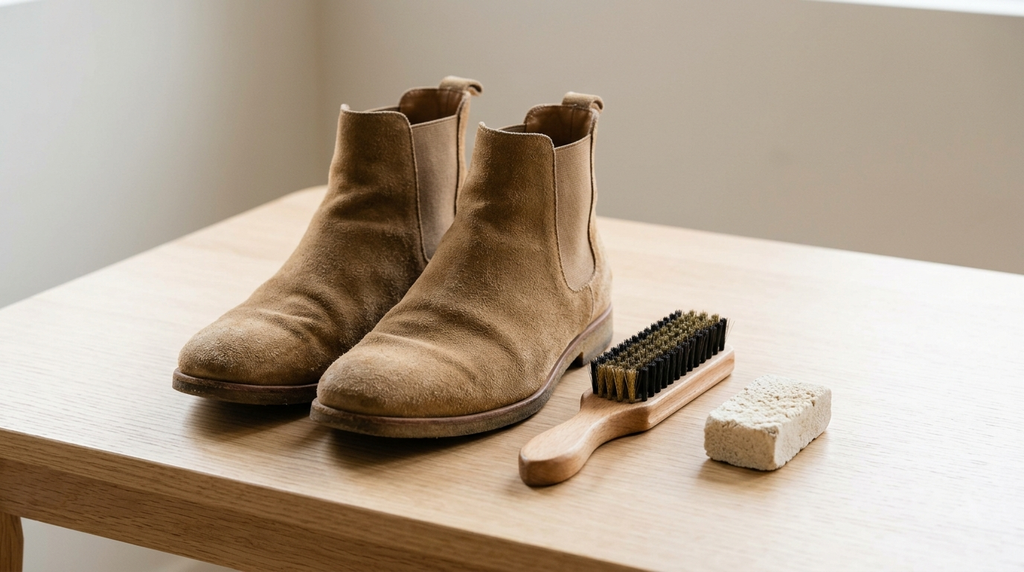
A simple winter routine will keep suede boots looking new. It takes only a few minutes after each wear, and it stops dirt and salt from sinking into the nap. Keep your tools in one place, so the routine is easy to follow.
Brush after every wear
Brush the boots after every wear, with a dry suede brush. Furthermore, brush in one direction, to lift dust, grit, and road salt before they sink in. Pay attention to the toe and the heel, where dirt collects first. A quick brush takes less than a minute, and it makes a big difference over a winter.
Clean marks and revive the nap
For marks, use a suede eraser, and rub gently. For flattened nap, hold the boot over steam from a kettle for a few seconds, then brush it in one direction. Do not hold the boot too close to the steam, and do not let it get wet. For oil stains, sprinkle a little plain cornflour on the spot, leave it overnight, then brush it off. If a mark stays after one try, take the boots to a cobbler.
Store suede boots well
Store suede boots upright, with boot trees or plain paper inside, to keep their shape. Keep them in a cool, dry place, away from direct sunlight, as sunlight can fade suede. Use a breathable bag, not a plastic bag, as trapped damp can damage the nap. Give each pair a rest day between wears, so the inside can dry fully. For comfort-first shoe thinking, see these comfortable heels you can actually wear all day.
Questions About Suede Boots in Winter

Can you wear suede boots in winter?
Yes, you can wear suede boots in winter, if you treat them with a protector spray first, avoid soaking conditions, and brush and dry them properly afterward. Wear them on dry days, cleared pavements, and in light snow. Skip them in heavy rain, deep slush, and long wet commutes.
Can you wear suede boots in the snow?
Yes, you can wear suede boots in light, fresh snow, if they are protected with a spray and you brush them after. Snow is drier than rain, and it brushes off more easily. Avoid deep slush and road salt, as they can stain and flatten the nap, and they are harder to clean.
Can you wear suede boots in the rain?
You can wear suede boots in light rain, if they are protected, but protection reduces risk, it does not remove it. Water can soak into the nap and leave spots. For heavy rain, wear a smooth leather pair instead. If suede boots do get wet, blot them dry and let them air dry at room temperature.
How do you protect suede boots from water?
Clean the boots first with a dry suede brush. Spray them evenly with a suede protector spray, from about 15 to 20 centimetres away. Let the first coat dry fully, then add a second light coat if the label suggests it. Let the boots cure for a few hours, or overnight, before you wear them outside.
How do you get salt stains out of suede boots?
Brush off any dry salt first, with a suede brush. Dab the stain gently with a cloth dampened with equal parts water and white vinegar, and test the mix on a hidden spot first. Do not soak the suede. Let the spot dry fully, then brush it in one direction. If the stain stays, take the boots to a cobbler.
What should you do if suede boots get wet?
Blot the boots gently with a clean, dry cloth, to lift as much water as you can. Do not rub, as rubbing can flatten the nap. Stuff the boots with plain paper, to help them keep their shape. Let them air dry at room temperature, away from radiators, heaters, and direct sunlight. Once dry, brush them in one direction.
Conclusion
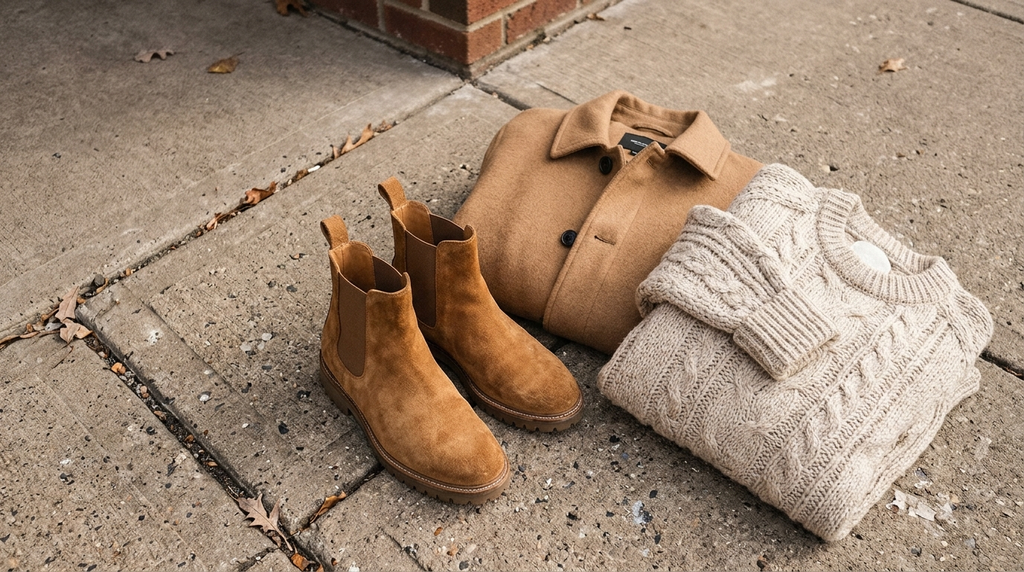
Suede boots can be worn in winter, and they can look new for more than one season, if you follow a simple routine. Protect them before your first wear, with a suede protector spray. Brush them after every wear, to lift dust and salt. Dry them at room temperature, away from direct heat, if they get wet. Wear them on dry days and in light snow, and save a leather pair for heavy rain and deep slush.
Your next step is simple. Before you wear your suede boots outside this winter, brush them, spray them, and let them cure overnight. That one evening of care will protect them through the season, and it will keep them looking new.
Next, explore these guides:
- Suede Biker Boots With a Plaid Midi Skirt for November
- Chelsea Boots With a Midi Skirt for Rainy November Days
- Winter Outfit of the Day: Warm, Chic Looks That Start With Knee-High Boots
- Fall Outfit of the Day: Cozy Layered Looks Built Around Ankle Boots
- Comfortable Heels You Can Actually Wear All Day

Sarah’s the one behind most of HeelToStyle’s sneaker and boot content. She’s spent years experimenting with pairing casual footwear into everyday outfits and has a soft spot for finding new ways to style the same pair of white sneakers. She keeps an eye on seasonal trends so the site’s advice stays current.