
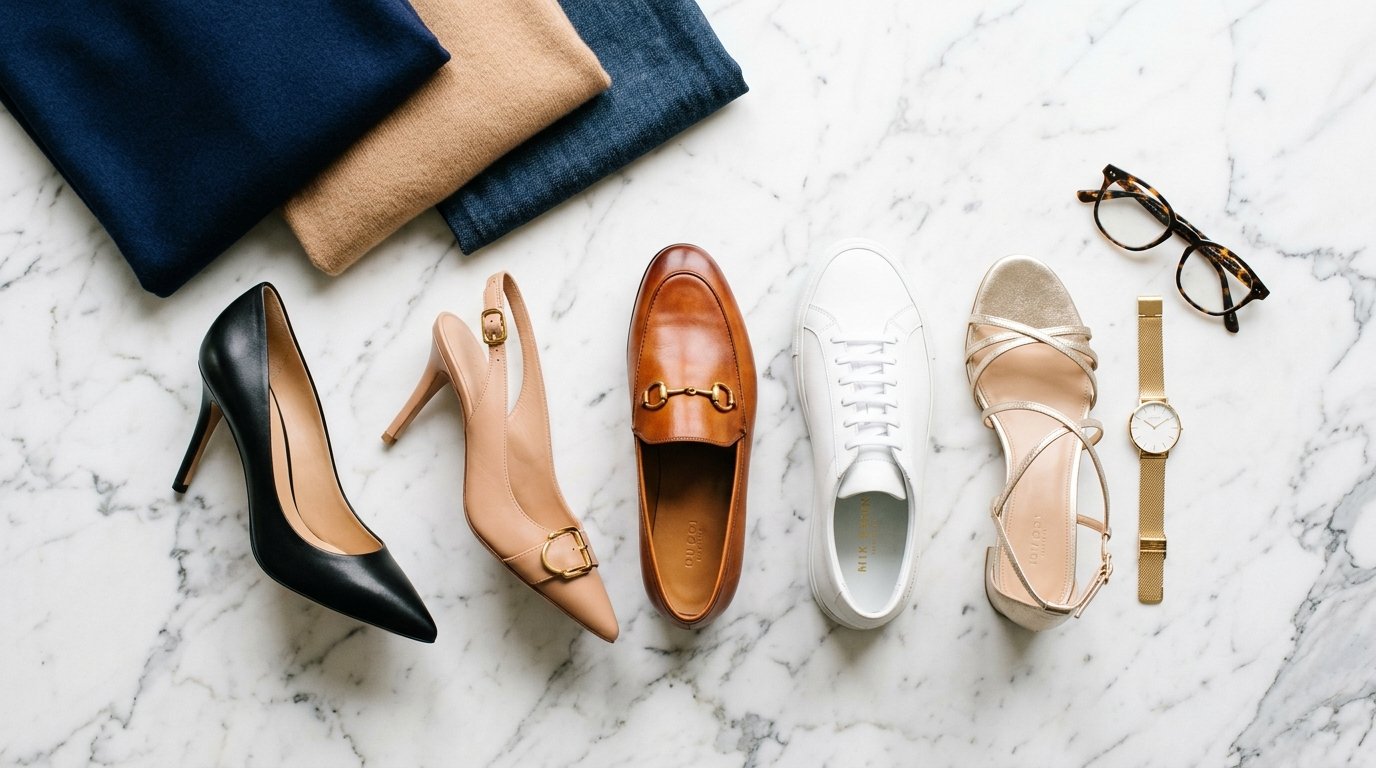
Mastering this shoe color matching guide is the ultimate shortcut to simplifying your morning routine while elevating your style across every dress code. The most common wardrobe dilemma is not lacking clothes, but having shoes that clash with your hemlines, fabrics, or color palettes. By understanding core color theory—such as contrast ratios, undertone temperatures, and tonal sandwiching—you can easily pair footwear with tailored suits, relaxed weekend denim, and formal evening gowns.
A well-curated shoe collection relies on strategic versatility. Nude tones matched to your skin, rich cognac, deep espresso, and versatile metallics serve as natural bridges across your wardrobe. Below, discover the definitive color-coordination framework, step-by-step styling rules, and practical visual formulas to help you pair your footwear with confidence.
The Foundation of Footwear Color Theory: Temperature, Contrast, and Grounding
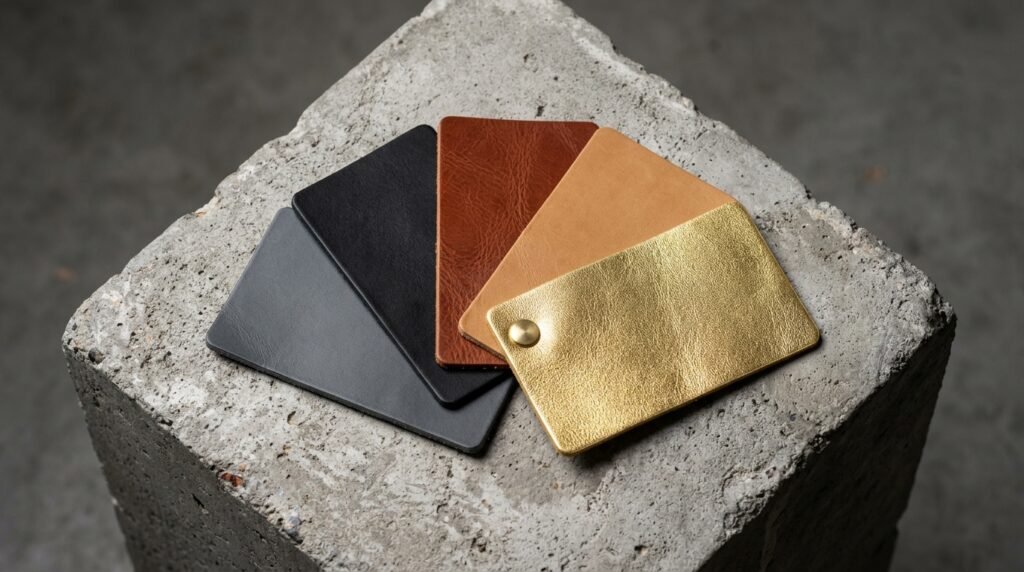
Before coordinating specific garments, it helps to understand how footwear influences the overall balance of an outfit. Your shoes dictate where the eye lands and how your proportions read from head to toe.
- Color Temperature Harmony: Match cool garment tones (navy, grey, emerald, ice blue) with cool footwear shades (black, slate, silver, pure white). Pair warm textiles (camel, olive, rust, cream) with warm footwear (cognac, tan, espresso, gold).
- The Grounding Principle: Dark shoes anchor an outfit, giving it authority and structural weight. Lighter shoes draw the eye upward toward the face, creating an airy, lengthened vertical line.
- The “Sandwiching” Technique: Repeat your footwear color in an upper element—such as a jacket, belt, scarf, or handbag—to frame your look and create balanced cohesion.
Core Neutral Shoe Colors That Coordinate with Every Wardrobe

A functional capsule shoe collection relies on versatile neutrals that complement your clothing rather than competing with it.
1. Nude and Skin-Tone Footwear: The Architectural Leg-Lengthener

A shoe calibrated to your skin undertone creates an unbroken line from your hemline to the floor. Unlike stark colors that create a horizontal visual break at the ankle, skin-tone footwear elongates the legs. This makes it ideal for midi dresses, tailored shorts, and cropped trousers.
2. Rich Cognac and Caramel: The Warm-Weather Anchor
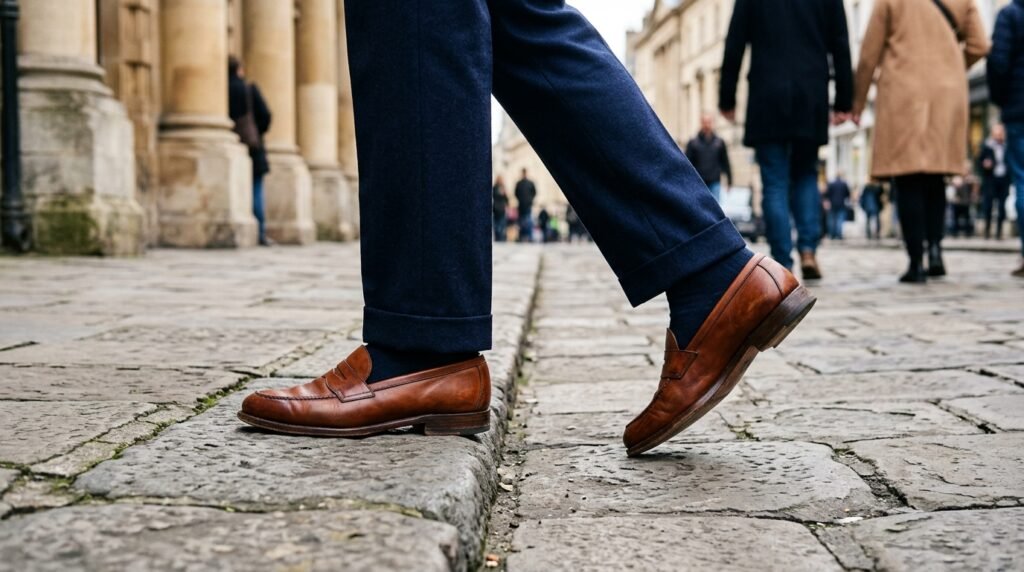
Cognac leather provides an elevated, organic warmth that stark black cannot achieve. It pairs naturally with white linen, earth-toned tailoring, olive separates, and raw indigo denim.
3. Deep Espresso and Chocolate Brown: The Understated Power Neutral
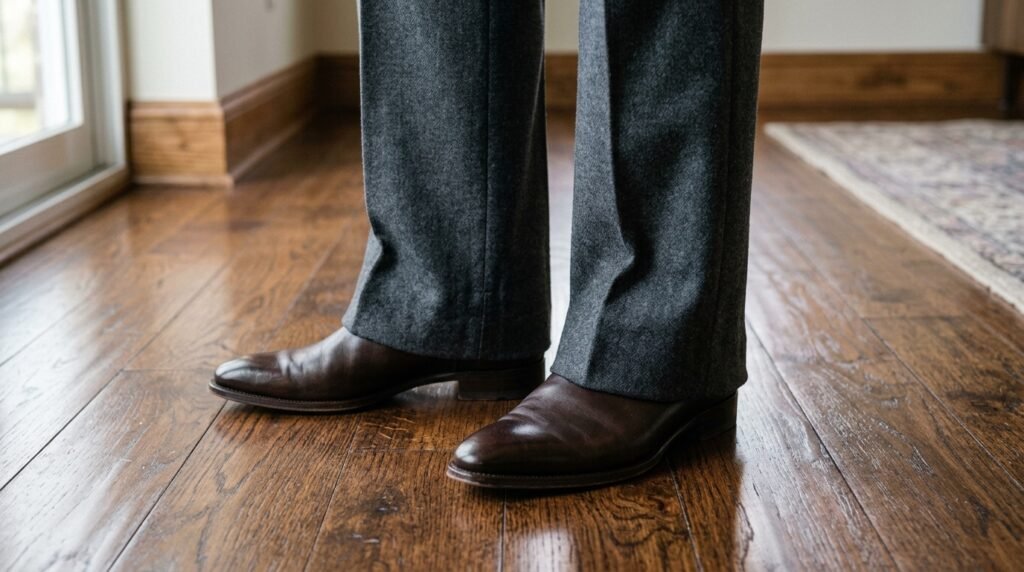
Dark chocolate brown has largely replaced harsh black as the fashion-forward neutral of choice. Espresso footwear delivers the grounding weight of dark leather while softening high-contrast outfits, pairing effortlessly with charcoal, navy, and cream.
4. Crisp White and Soft Alabaster: Modern Graphic Contrast

A clean white court sneaker or alabaster kitten heel cuts through heavy fabrics, adding an intentional, editorial finish to casual denim and relaxed suiting.
Nude vs. Black Shoes: Formality, Contrast, and Silhouette Rules
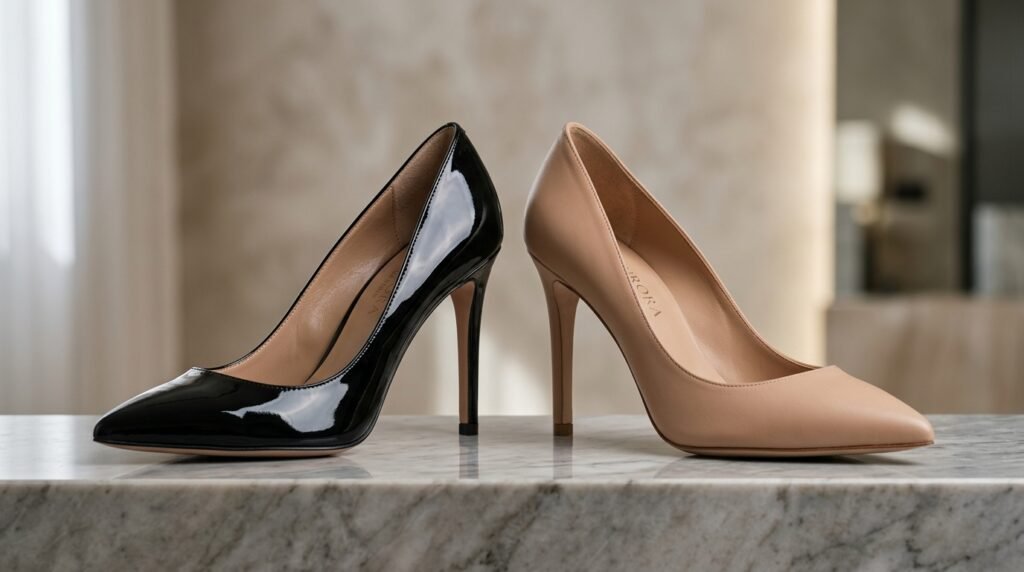
Choosing between black and nude footwear is a daily styling decision. Each serves a distinct functional purpose across different silhouettes:
| Styling Parameter | Black Footwear | Nude / Skin-Tone Footwear |
| Visual Impact | High contrast; provides a definitive visual stop | Low contrast; elongates the vertical leg line |
| Best Paired Hemlines | Floor-sweeping trousers, opaque tights, dark maxi skirts | Knee-length dresses, midi skirts, cropped pants |
| Optimal Dress Codes | Black-tie, corporate formal, winter evening events | Cocktail, garden weddings, business casual, daytime |
| Palette Compatibility | Jewel tones, monochrome black, charcoal, navy | Pastels, vibrant multi-color prints, creams, earth tones |
How to Match Shoes with Formal Evening Wear
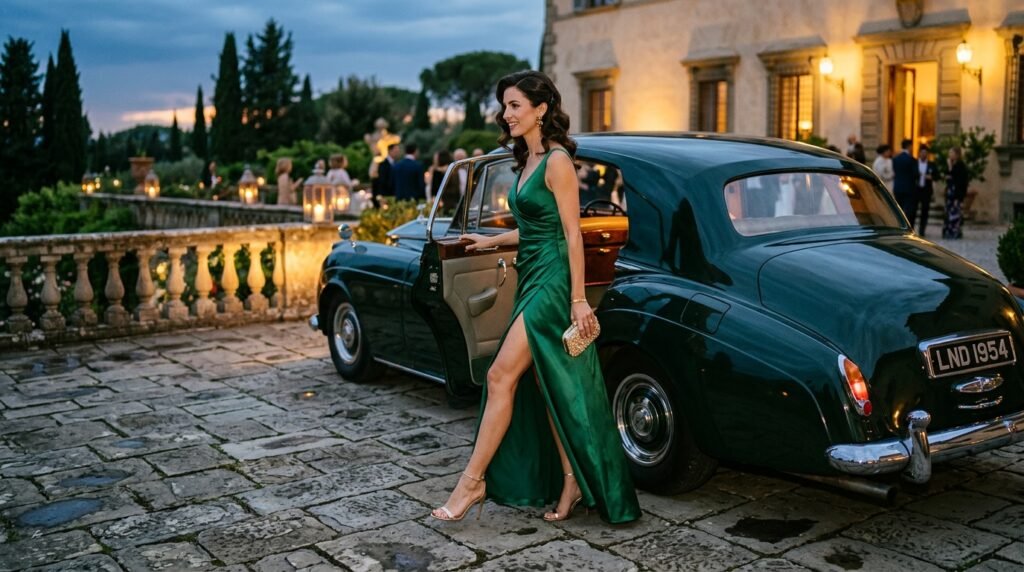
Formal and black-tie events require footwear that complements delicate fabrics without overwhelming their drape.
Floor-Length Gowns and Slit Dresses
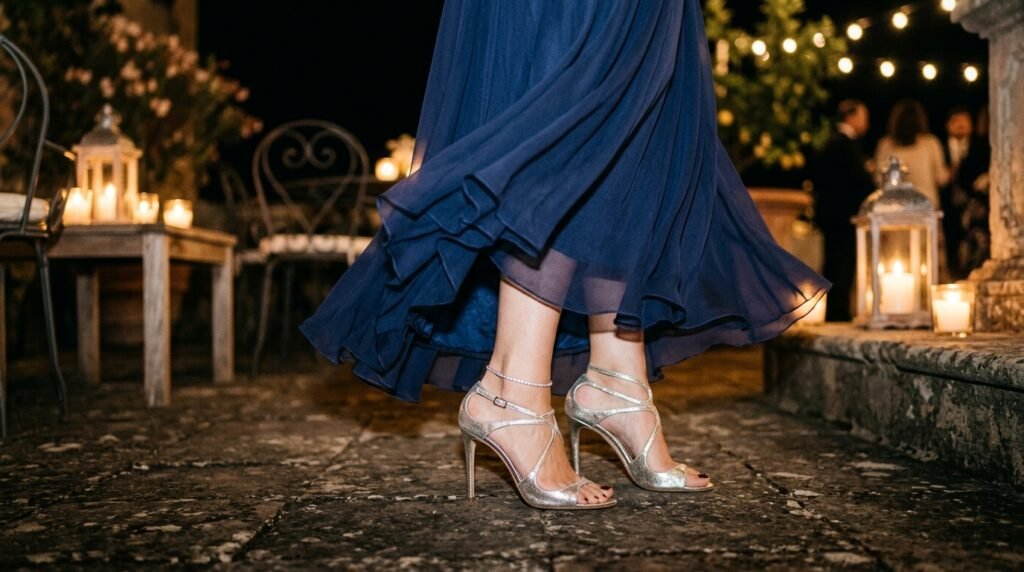
When wearing a floor-sweeping gown with a high slit, choose an open-toe, delicate ankle-strap sandal in metallic champagne gold or soft silver. The thin straps expose the instep, keeping the focus on the gown’s fabric rather than a heavy block of leather.
Cocktail Dresses and Tailored Evening Tuxedos

For cocktail attire, pair structured velvet or crepe dresses with pointed-toe pumps in high-shine patent black, deep oxblood, or reflective metallic leather. If wearing an evening tuxedo suit, a sleek pointed pump elongates the trouser break and adds feminine contrast to sharp lapels.
Casual Everyday Shoe Color Combinations
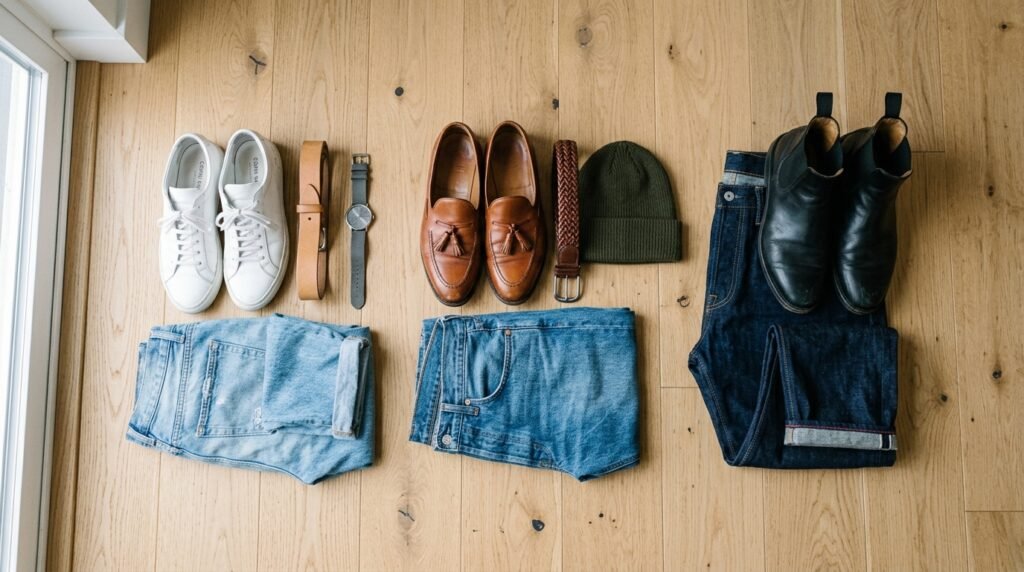
Weekend styling is about combining practical comfort with intentional color coordination.
Straight-Leg Blue Denim Formulas
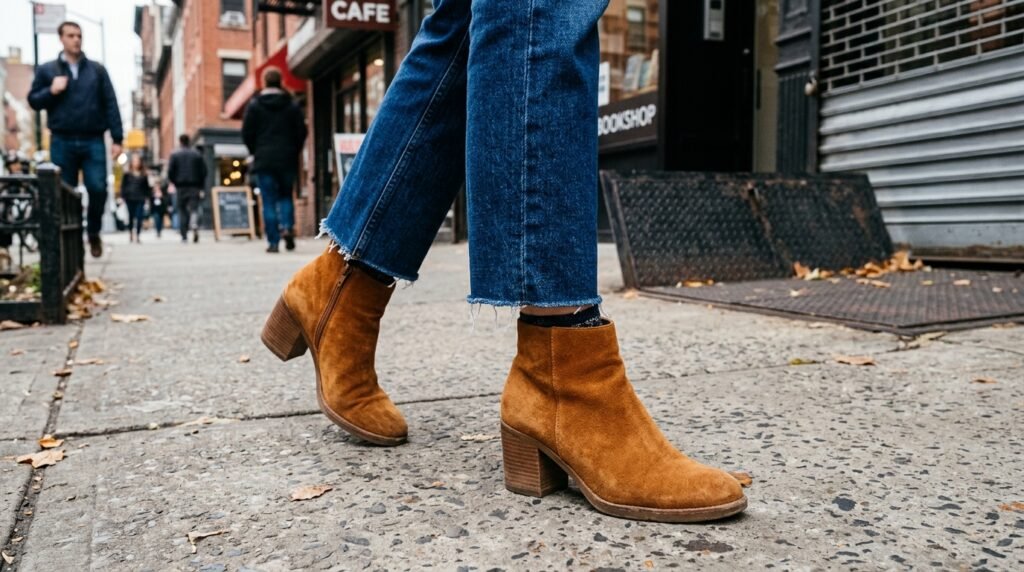
- Light-Wash Denim: Pairs best with optic-white sneakers, soft taupe suede loafers, or warm tan sandals for a relaxed aesthetic.
- Medium Vintage-Wash Denim: Coordinates effortlessly with rich cognac ankle boots, chocolate loafers, and burgundy pointed flats.
- Dark Raw Indigo Denim: Anchored cleanly by polished black leather boots, deep espresso derbies, or metallic ballet flats.
Monochrome Knit Sets and Athleisure

When styling tonal loungewear, match the depth of your footwear to your fabric. Pair oatmeal knit sets with bone-white trainers or sand-colored suede mules. Ground charcoal grey loungewear with slate-grey or monochrome black leather sneakers.
Advanced Styling: Metallics and Statement Colors as Modern Neutrals
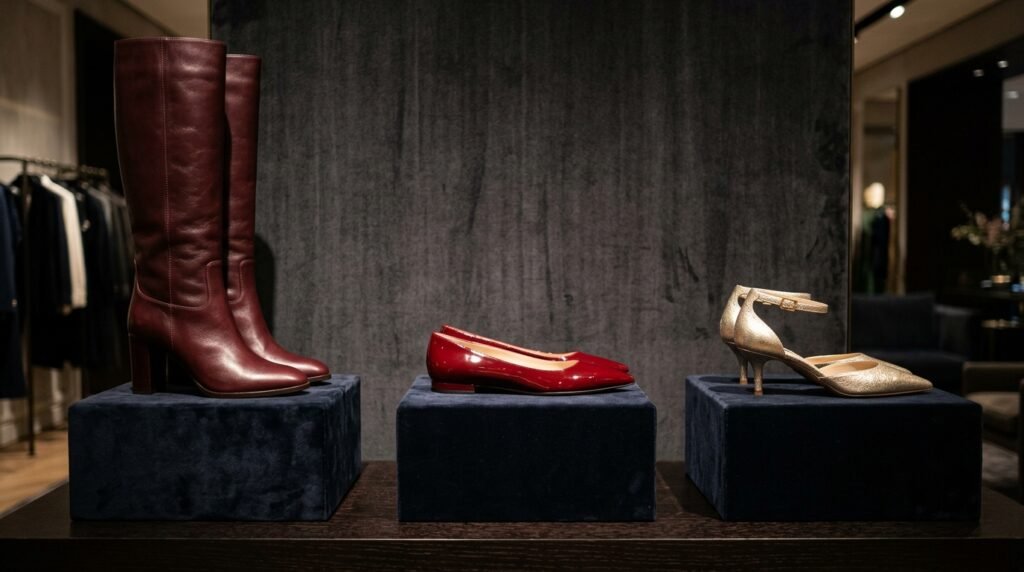
- Metallics as Universal Reflectors: Champagne gold, pewter, and silver function as mirrors rather than saturated pigments. A metallic shoe reflects the colors around it, making it one of the easiest choices for multi-colored floral dresses or bold jewel-toned jumpsuits.
- The Pop-of-Color Formula: When wearing a monochrome black, navy, or beige base, use bold footwear (such as cherry red, cobalt blue, or emerald green) as your primary accessory. Keep your jewelry and handbag minimal to let the footwear stand out.
- Burgundy as a Secret Neutral: Deep wine and oxblood carry red warmth with dark, grounded undertones. Burgundy shoes pair effortlessly with navy suits, grey wool, camel outerwear, and dark denim without clashing.
Comprehensive Shoe and Garment Color Coordination Matrix

| Clothing Color Palette | Primary Shoe Recommendation | Secondary Alternative | Colors to Avoid |
| Monochrome Black | Obsidian Black (Patent or Suede) | Deep Burgundy / Metallic Gold | Dull washed-out beige |
| Navy and Midnight Blue | Rich Cognac / Caramel | Deep Espresso / Metallic Silver | Jet black with flat matte textures |
| Charcoal and Slate Grey | Polished Black / Soft Silver | Deep Oxblood / Cool Taupe | Warm golden tans |
| Camel, Khaki, and Beige | Warm Tan / Bone White | Chocolate Brown / Gold | Stark cool-toned silver |
| Olive and Forest Green | Warm Cognac / Espresso | Metallic Champagne / Burgundy | Neon or bright pastel shoes |
| Vibrant Floral / Multi | Skin-Tone Nude (Exact Match) | Metallic Gold or Silver | Competing bold solid colors |
Frequently Asked Questions
What color shoes match with every outfit?
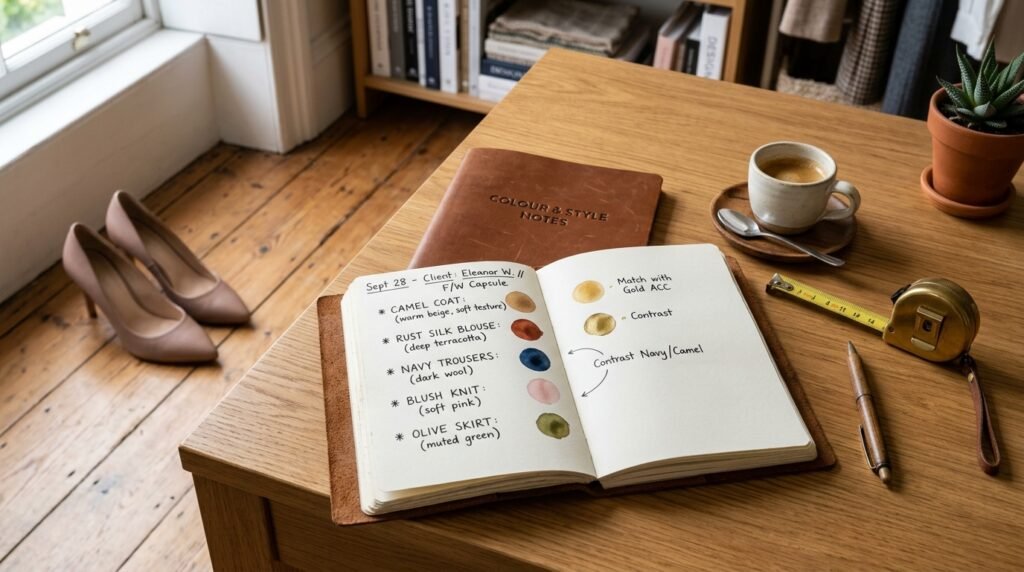
Skin-tone nude (calibrated to your specific complexion) and warm metallic champagne gold match virtually every outfit. Nude footwear elongates the legs and pairs seamlessly with any hemline, while metallic leather reflects ambient light and adapts to both warm and cool color palettes.
What is the 3-3-3 rule for clothes?
The 3-3-3 rule is a minimalist capsule wardrobe styling challenge where you select three tops, three bottoms, and three pairs of shoes to create over twenty distinct outfit combinations through strategic layering and color coordination.
What shoe color is more versatile, black or brown?
Cognac brown is generally more versatile for smart-casual and business-casual wardrobes because it pairs effortlessly with denim, navy, white, and earth tones. Black remains essential for conservative formalwear, black-tie events, and dark monochromatic tailoring.
How do you match shoes with a formal dress?
For formal evening dresses, choose footwear that matches either the undertone of your gown or your metallic jewelry. Strappy metallic sandals in gold or silver are the most dependable choice, while sleek pointed pumps in satin or patent leather suit cocktail hemlines and formal suiting.
Yes, provided you choose high-shine textures like patent leather or rich suede. Combining navy garments with black accessories creates a chic, Parisian-inspired color palette when the contrast is sharp and intentional.
How do I choose the correct nude shoe for my skin tone?
Do not settle for generic beige labeled “nude” if it clashes with your skin. Look for footwear brands that offer diverse nude spectrums—from porcelain and blush undertones to rich caramel, chestnut, and deep espresso—to achieve an unbroken, leg-lengthening silhouette.
Conclusion

Mastering shoe color coordination is all about understanding the balance between warm and cool undertones, managing visual contrast, and curating dependable neutrals. By investing in skin-tone nude pumps, warm cognac loafers, and versatile metallic sandals, you can easily pair footwear across your entire wardrobe.

Emily started HeelToStyle after one too many pairs of boots sat unworn in her closet simply because she couldn’t figure out what to wear them with. What began as personal outfit notes turned into a full site dedicated to practical, wearable shoe styling. She leads content direction and writes most of the site’s occasion-based outfit guides.