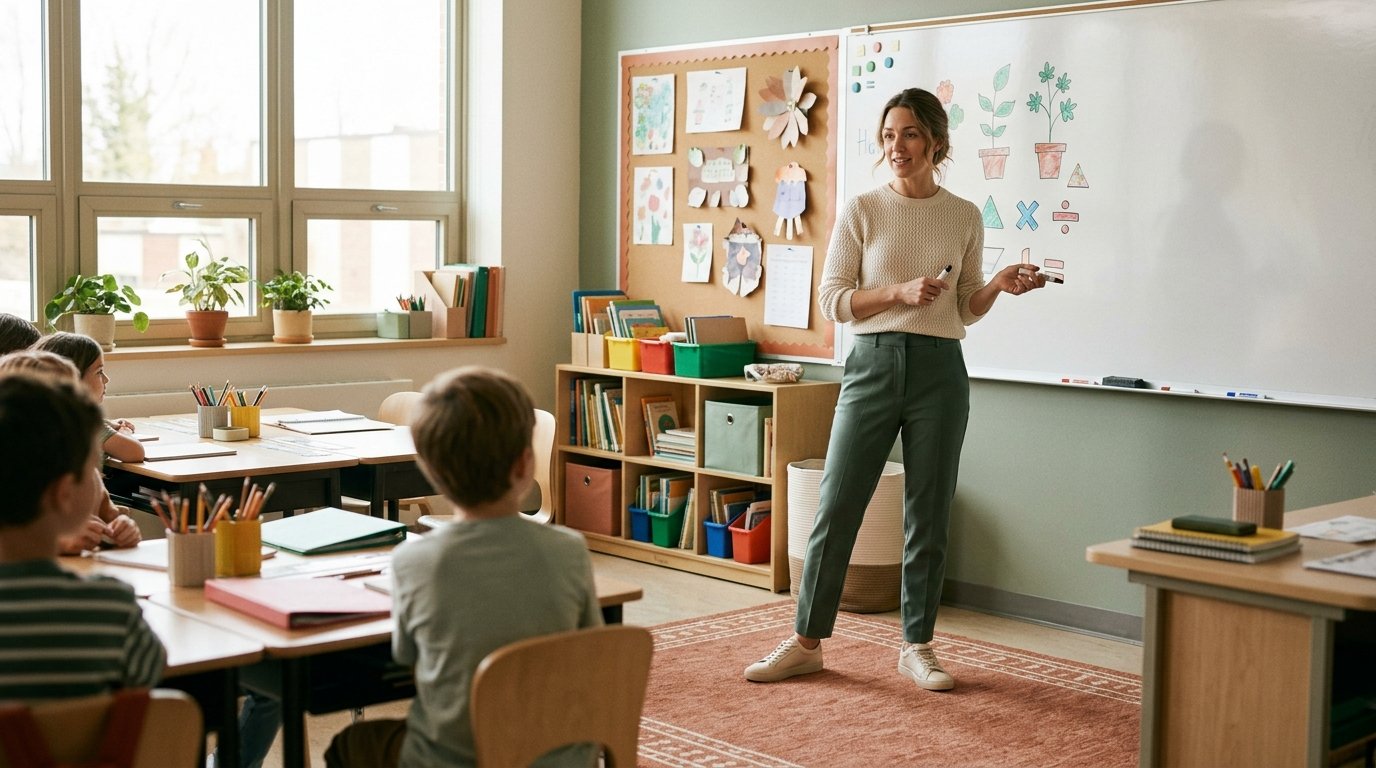
You hear the morning warning bell echo down the linoleum hallway, glance down at your watch, and realize you have already spent three solid hours pacing between rows of desks, crouching down to tie a kindergartener’s shoelaces, and rushing across the school courtyard without a single moment to sit down. If you are an educator scanning your bedroom closet at 6:00 AM wondering how to survive another grueling day of standing without developing agonizing foot pain, you are far from alone.
Finding shoes for teachers requires a rare intersection of professional polish, school dress-code compliance, and all-day orthopedic endurance. Comfortable, closed-toe shoes with stable soles, such as loafers, sneakers, low block heels, and flats, work best. Always check your school’s dress code [Educator Footwear Ergonomics and Workplace Compliance]. Let’s explore ten comfortable, professional footwear styles, essential classroom survival tips, and how to build a rotation that protects your feet.
Why Classroom Footwear Demands More Than Standard Work Shoes

Before diving into specific shoe styles, it helps to understand why typical corporate footwear falls short in a school environment.
Corporate office workers log a fraction of the daily steps that educators do. Teachers routinely clock between 8,000 and 15,000 steps a day, navigating hard tile floors, rushing up and down stairwells, and constantly shifting between standing, squatting, and walking. Wearing stiff, unsupportive dress shoes or precarious heels leads to acute arch strain, lower back fatigue, and sore joints. A truly great teacher shoe needs a cushioned footbed, a flexible sole, and a secure fit that stays comfortable hour after hour.
10 Comfortable, Professional Shoes for Teachers
1. Minimalist Leather Sneakers
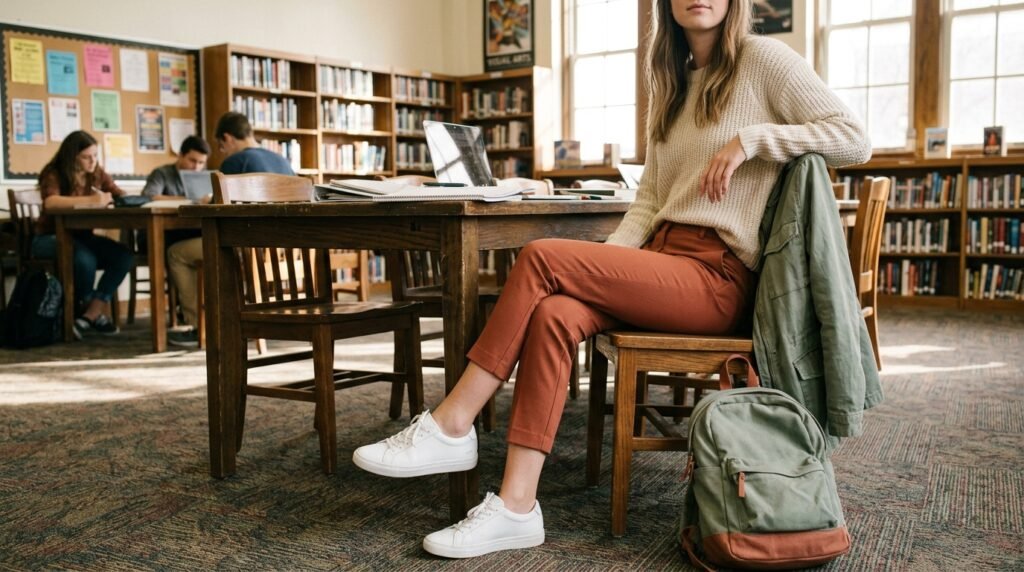
Blending a clean athletic silhouette with professional leather textures has revolutionized modern business-casual classroom style.
- The Shoe Match: Low-profile, plain white or neutral leather sneakers featuring minimal branding and supportive cushioned insoles.
- The Outfit Formula: Style minimalist leather sneakers with tailored ankle-length cigarette pants, a tucked-in knit shell, and a structured cardigan.
- Why It Works: They deliver supreme walking comfort while looking sharp enough for faculty meetings, provided your school permits athletic footwear.
2. Classic Leather Loafers

A timeless staple of educator wardrobes, loafers offer an immediate air of authority and professional polish.
- The Shoe Match: Supple leather or suede loafers with flexible soles and modest arch support.
- The Outfit Formula: Pair classic black or cognac loafers with pleated wide-leg trousers, a tucked blouse, and a lightweight blazer [Professional Tailoring and Supportive Footwear Coordination].
- Why It Works: They slip on and off easily, match virtually any outfit, and provide a structured alternative to open footwear.
3. Supportive Ballet Flats

When you want a low-profile shoe that feels weightless on your feet, a well-cushioned ballet flat is a reliable classroom companion.
- The Shoe Match: Round or almond-toe ballet flats equipped with rubber outsoles and built-in arch cushioning (avoid completely flat, paper-thin soles).
- The Outfit Formula: Combine neutral leather ballet flats with a midi shirt dress and a tailored belt for an effortless, one-and-done morning outfit.
- Why It Works: They offer a quiet, feminine silhouette that allows you to move quickly across the classroom floor without slipping.
4. Low Block-Heel Pumps

For teachers who prefer a touch of height for parent-teacher conferences, award ceremonies, or picture day, block heels provide stability.
- The Shoe Match: A sturdy 1-to-2-inch block heel pump featuring a closed toe and a wide base of support.
- The Outfit Formula: Style low block-heel pumps with cropped tailored trousers, a button-down shirt, and a classic trench coat.
- Why It Works: Unlike thin stilettos that catch in floor grates or cause wobbling, a thick block heel distributes your weight evenly across your foot.
5. Low Block-Heel Ankle Boots

When autumn weather sets in and morning commutes turn chilly, ankle boots offer warmth, ankle stability, and effortless style.
- The Shoe Match: Suede or leather ankle boots with a low, chunky block heel and a side zipper for quick morning transitions.
- The Outfit Formula: Pair black or brown ankle boots with straight-leg denim (if casual Fridays are allowed), a knit turtleneck, and a structured blazer [Smart-Casual Workplace Layering and Ankle Boot Coordination].
- Why It Works: They protect your feet from drafty hallways while offering the structural support needed for all-day standing.
6. Slip-On Athletic Sneakers

For physical education teachers, special education staff, or anyone running active classroom games, slip-on sneakers are a lifesaver.
- The Shoe Match: Breathable mesh or knit slip-on sneakers with thick shock-absorbing midsoles and zero laces to trip over.
- The Outfit Formula: Match athletic slip-ons with high-waisted utility pants, a breathable cotton tee, and a casual zip hoodie.
- Why It Works: They offer maximum athletic cushioning and allow you to slide them on in seconds during chaotic morning rushes.
7. Low-Heel Mary Janes

Bringing a touch of vintage charm back to the hallway, modern Mary Janes combine secure strap support with professional design.
- The Shoe Match: Leather Mary Janes featuring a supportive buckle strap across the instep and a low, comfortable heel or flat sole.
- The Outfit Formula: Style Mary Jane flats with an A-line midi skirt, opaque black tights, and a cozy crewneck cardigan.
- Why It Works: The instep strap prevents your foot from sliding forward, eliminating toe pinching during long hours of standing.
8. Comfortable Suede Clogs
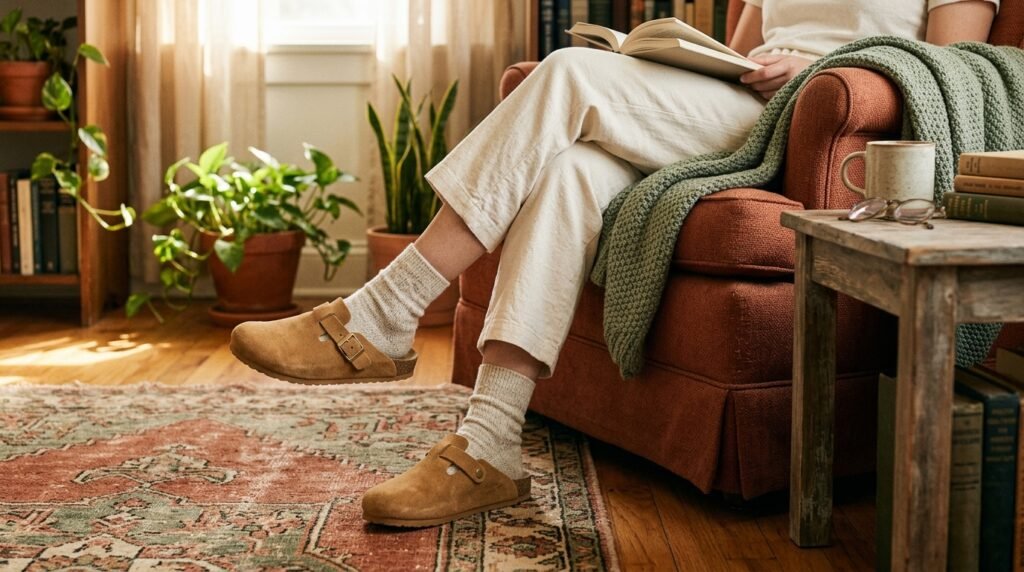
Clogs have carved out a permanent home in modern education due to their effortless slip-on nature and orthopedic comfort.
- The Shoe Match: Molded cork footbed clogs (such as closed-toe styles with supportive leather uppers) that cradle the foot’s natural arches.
- The Outfit Formula: Pair neutral suede clogs with cropped linen or cotton trousers and an oversized knit sweater.
- Why It Works: They provide rigid arch support and allow your toes plenty of room to breathe throughout the school day [Ergonomic Footwear Design for Standing Professions].
9. Chelsea Boots (Fall and Winter)
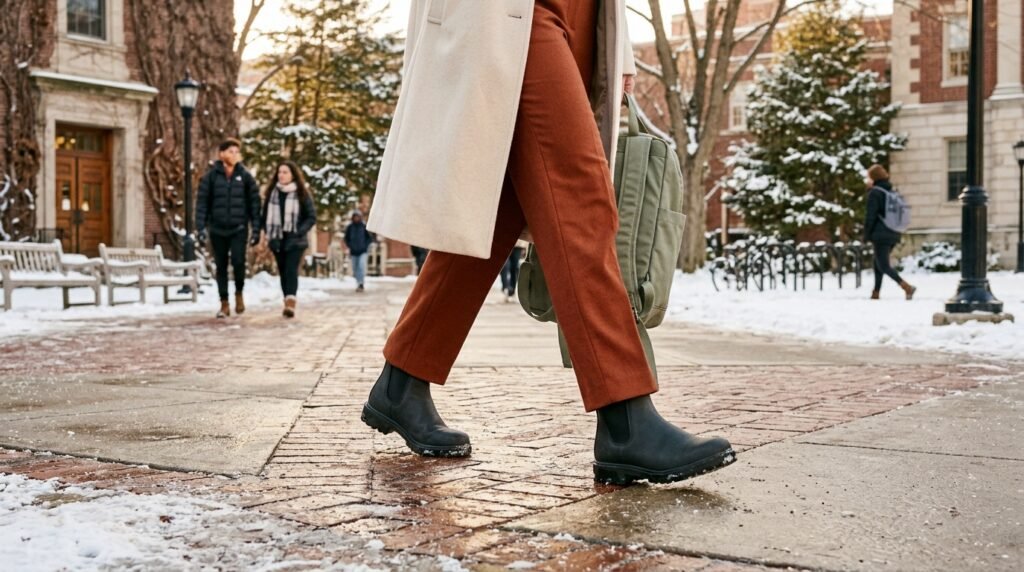
A sleek, pull-on Chelsea boot delivers rugged weather protection without sacrificing a clean, professional aesthetic.
- The Outfit Formula: Style waterproof leather Chelsea boots with tailored black trousers, a silk blouse, and a winter wool coat.
- Why It Works: Elastic side panels make them easy to slide on, and sturdy rubber outsoles prevent slipping on wet morning sidewalks.
10. Platform Sneakers (Casual Days)

For casual spirit days or relaxed classroom environments, platform sneakers add a modern trend-forward twist while boosting comfort.
- The Shoe Match: A clean leather or canvas sneaker featuring a slightly elevated platform sole for extra cushion.
- The Outfit Formula: Combine platform sneakers with ankle-length wide-leg pants and a casual striped boatneck top.
- Why It Works: The extra thickness in the sole absorbs impact shock when walking on unforgiving concrete school floors.
Classroom Footwear Essentials: Tips for Long Days

Surviving a school year on your feet requires more than just buying a great pair of shoes; it requires smart daily maintenance.
- Check Your Dress Code: Always review your school’s official faculty handbook before purchasing footwear. Some schools strictly prohibit open-toe shoes, bright neon sneakers, or canvas materials for safety reasons.
- Think About Floor Surfaces and Bending: Classrooms feature hard tile, commercial carpet, and slick stairs. Look for slip-resistant rubber outsoles. Because you will constantly be crouching down to help students, flexible leather that doesn’t pinch your toes when kneeling is essential.
- Rotate Your Pairs: Never wear the exact same pair of shoes two days in a row. Letting your shoes rest for 24 hours allows the internal cushioning to decompress and dry out completely.
- Consider Insoles and Podiatry Care: Adding aftermarket gel or orthotic inserts can transform an average pair of work shoes into all-day champions. If you experience ongoing foot pain, plantar fasciitis, or joint stress, schedule an evaluation with a podiatrist or medical doctor.
- Keep a Spare Pair: Stash an emergency pair of comfortable flats or backup sneakers in your classroom filing cabinet or desk drawer for those unexpected days when blisters flare up.
Frequently Asked Questions
What shoes should a teacher wear?
Comfortable, closed-toe shoes with stable soles, such as loafers, sneakers, low block heels, and flats. Check your school’s dress code.
Can teachers wear sneakers?
In many schools, yes, especially clean, minimal leather styles. Policies vary widely by district and individual school, so check your specific dress code.
Can teachers wear heels?
Low block heels are common, but long days, hallway walking, and stair climbing make lower heights much easier. Choose whatever height feels comfortable and stable for you.
Can teachers wear open-toe shoes?
It depends entirely on your school’s policy. Some districts restrict sandals or open-toe shoes for safety reasons during science labs or recess duty, so verify first.
What are the best shoes for teachers who stand all day?
Shoes with robust arch support, shock-absorbing rubber outsoles, and breathable materials—such as supportive loafers, walking sneakers, and cushioned clogs—are ideal for all-day standing.
What shoes should I wear to parent-teacher night?
For evening conferences where you want a slightly elevated, professional appearance, opt for low block-heel pumps, heeled booties, or polished leather loafers.
Conclusion

Navigating a bustling school year requires footwear that supports your body just as much as your lesson plans support your students. By choosing supportive loafers, clean sneakers, or stable block heels, and rotating your pairs regularly, you can conquer long days on your feet with ease and comfort.

Nathan handles the site’s dressier content and its more practical side — from wedding-guest shoe pairings to keeping your favorite pair looking new for longer. He believes good style shouldn’t mean uncomfortable shoes, and most of his posts reflect that balance between looking good and actually being able to walk in it.