

You are standing in front of your closet at 7:30 AM, staring down a packed day of commuting, back-to-back meetings, and standing presentations. Your heels make your arches ache just looking at them, but your beat-up gym running shoes scream “Saturday morning coffee run.” You want polished comfort, but navigating office dress codes feels like walking a tightrope. Building sharp, polished work sneaker outfits doesn’t require breaking HR rules or sacrificing your personal style. With the right silhouette, crisp materials, and smart tailoring formulas, you can step into the office looking sharp, competent, and completely put-together.
The Executive Sneaker Strategy: At a Glance
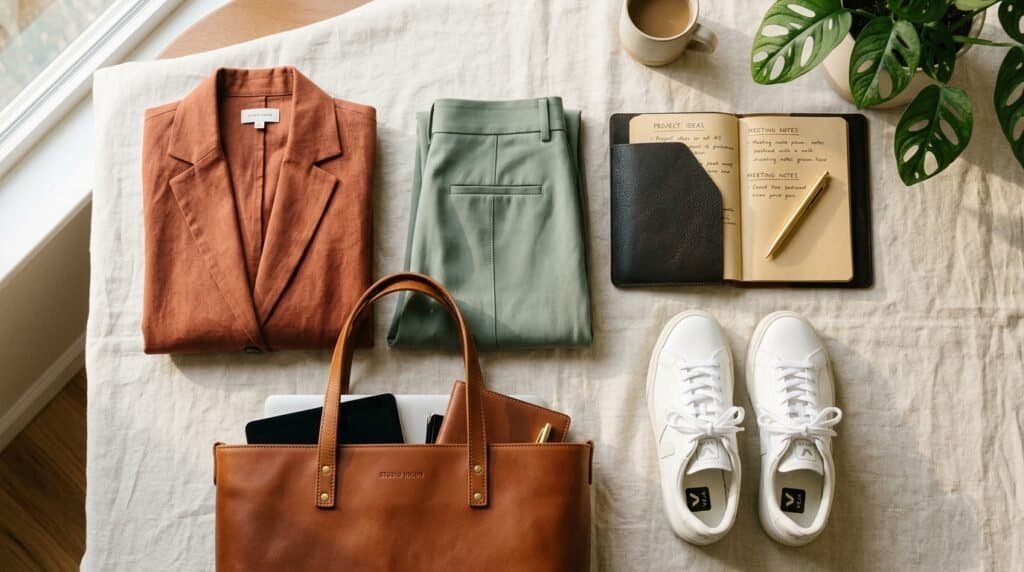
Wearing sneakers to the office is no longer a fashion gamble if you follow a foundational rule: your footwear must look intentional, not accidental. The goal is to blend athletic comfort with structured tailoring so your overall silhouette reads as thoughtful business-casual rather than casual-Friday laundry day.
Here is the three-pillar blueprint to make sneakers work anywhere from creative agencies to modern corporate offices:
- Structure over slouch: Pair minimalist footwear with structured pieces like tailored trousers, belted blazers, and crisp button-downs to create a clean visual balance.
- Material matters: Stick to smooth leather, high-grade suede, or refined matte finishes in solid neutrals (white, black, tan, navy) while skipping athletic mesh, loud logos, and chunky neon soles.
- Proportions dictate success: The break of your pant hem makes or breaks the look. Aim for slight-to-no break, cropped ankles, or clean wide-leg draping that clears the floor.
Keep these core principles in mind, and you will never feel underdressed walking into an unexpected client meeting.
Decoding the “Office-Appropriate” Sneaker: What Passes the Test
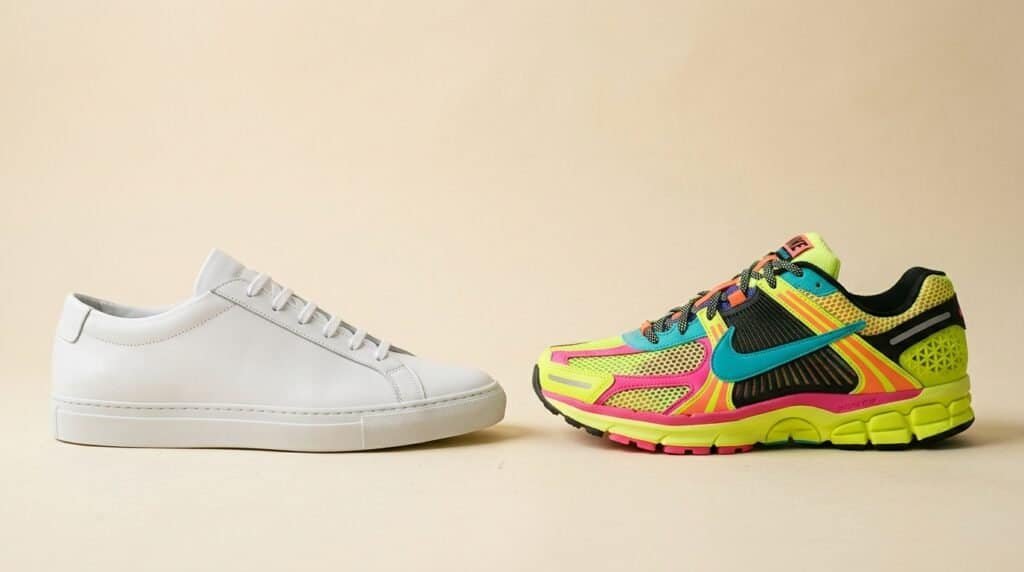
Not all casual shoes are built for the workplace. An office-worthy sneaker is defined by its restraint: clean lines, minimal branding, flat or low-profile outsoles, and premium materials.
Before grabbing a pair from your closet, run it through this quick checklist:
- Silhouette: Low-profile, sleek toe box, and no aggressive athletic tread.
- Condition: Spotless upper, clean sidewalls, and fresh laces with no fraying.
- Colorway: Solid monochromatic tones or muted neutrals (white, cream, camel, black, or navy).
- Branding: Subtle or embossed logos rather than high-contrast graphic overlays.
If the shoe looks like it belongs on a treadmill, a basketball court, or a hiking trail, leave it for the weekend.
The Anatomy of a Work-Ready Sneaker: Materials, Soles, and Profiles
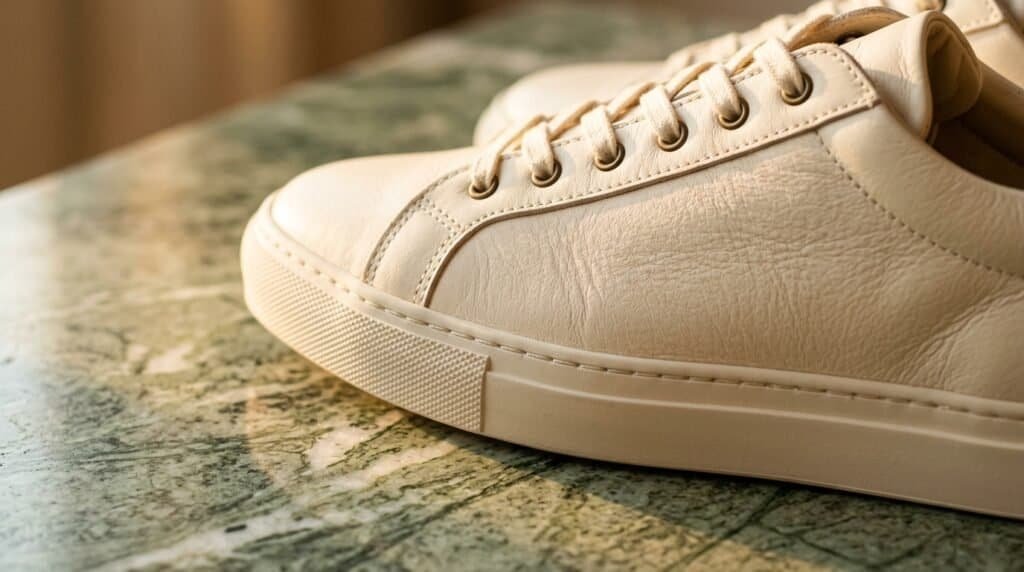
The difference between a sneaker that looks executive and one that looks sloppy comes down to texture and build quality. Smooth full-grain leather is the gold standard for office environments because it mimics the surface sheen of traditional oxfords and loafers.
Matte suede and nubuck offer an elegant, textural alternative for fall and winter months. Avoid high-shine patent leathers or breathable nylon mesh panels, which instantly pull an outfit toward sport rather than style. Look for vulcanized rubber cup soles in matching or complementary neutral shades. A razor-thin sole can look flimsy, while an oversized chunky lug sole can overwhelm tailored clothing. Aim for a balanced, medium-thickness sole (roughly 0.75 to 1.25 inches) that provides arch support without drawing unwanted attention.
The Classic White Leather Low-Top: Your Everyday Wardrobe Anchor
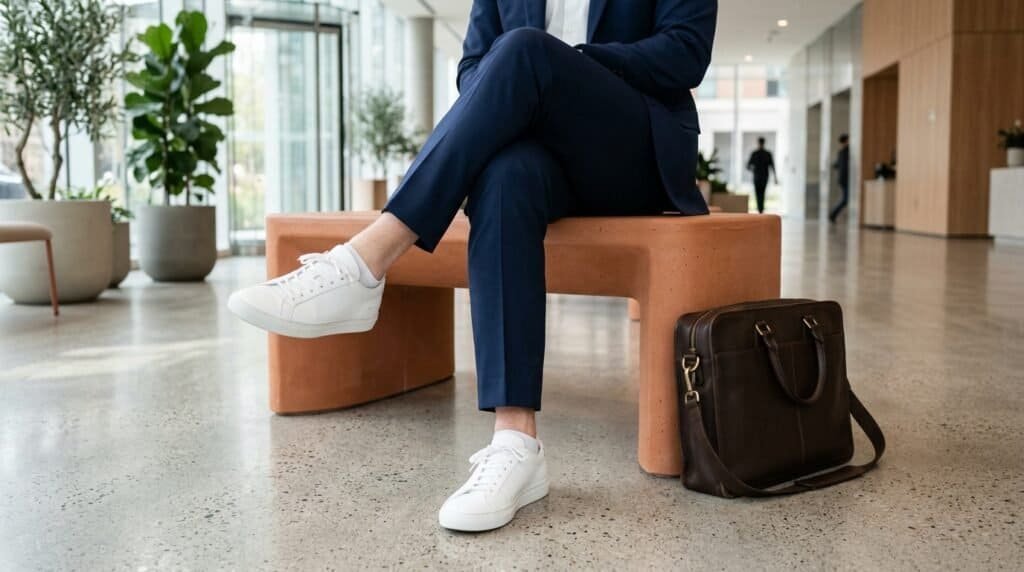
If you only invest in one pair for your work wardrobe, make it a pristine white leather low-top. A crisp white sneaker acts as a neutral palette cleanser that modernizes traditional workwear basics.
Here is how to get the most mileage out of a single white pair:
- With navy suiting: Softens a rigid corporate suit without losing professionalism.
- With pleated culottes: Creates an effortless, breezy aesthetic for warmer office days.
- With dark wash trousers: Bridges the gap between casual denim and tailored blouses.
Keep the leather conditioned and wipe down the soles weekly to ensure they retain their boardroom-ready finish.
Monochromatic Black and Neutral Kicks for Conservative Offices
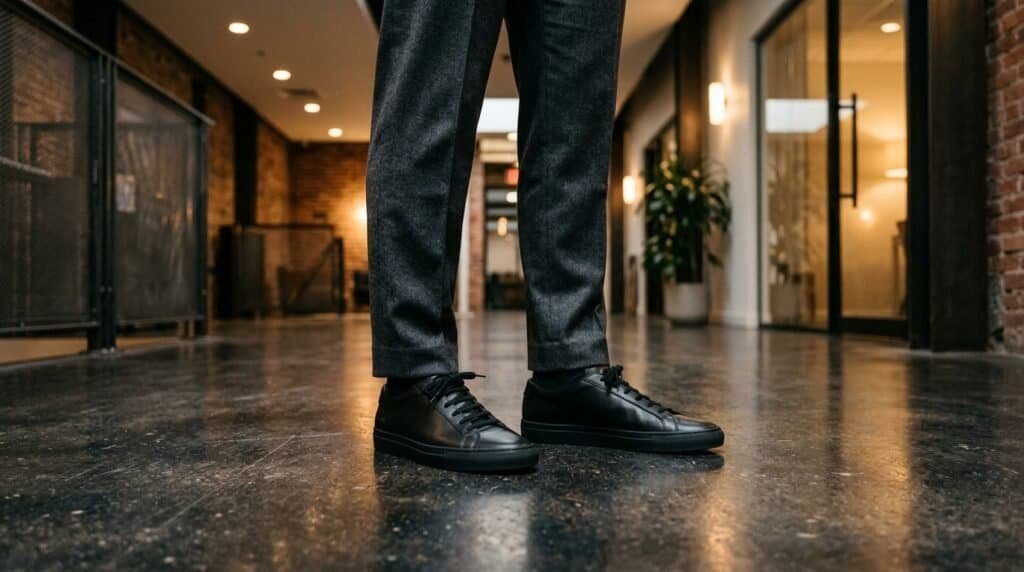
If your workplace leans more traditional or your office has strict dress codes, white sneakers might feel a step too bold. Solid black leather sneakers with matching black soles are the stealth champions of corporate footwear.
From a few paces away, a sleek, all-black leather sneaker blends seamlessly with black dress pants, functioning almost like a comfort oxford. If black feels too severe, explore soft earth tones:
- Warm taupe or camel: Pairs beautifully with cream trousers and rich earth-toned knits.
- Deep navy: Matches indigo denim and slate gray slacks effortlessly.
- Rich chocolate brown: Serves as a direct substitute for leather dress shoes in business-casual settings.
The Tailored Trouser + Sneaker Formula: Getting the Hemline Right

The fastest way to ruin a smart work sneaker outfit is a sloppy pant hem dragging on the floor or bunching over your shoe. Getting the tailoring right creates a sleek, intentional line from hip to toe.
Follow these three hem rules for different pant cuts:
- Straight-leg trousers: Hem to skim right above the top of the sneaker collar (no break) to showcase the shoe’s clean profile.
- Ankle-crop pants: Sit 1 to 2 inches above the ankle bone, creating breathing room that flatters low-top silhouettes.
- Wide-leg or puddle trousers: Length should clear the top of the sole by half an inch so the fabric drapes cleanly without pooling on dirty sidewalks.
Styling Midi Skirts and Shirt Dresses with Sleek Trainers

Pairing sneakers with dresses and skirts gives off an approachable, creative-director energy that looks chic from desk to dinner. The key is balancing femininity with casual structure.
- Pleated midi skirts: Pair a fluid accordion-pleat skirt with a tucked-in fine-gauge sweater and minimalist white trainers.
- Cotton poplin shirt dresses: Add a structured leather belt to define your waist and match the clean finish of your shoes.
- Slip skirts: Layer with an oversized structured blazer to ground the lightweight silk while keeping the sneakers context-appropriate.
Stick to midi or knee lengths; mini hemlines paired with sneakers can quickly feel too collegiate for a professional setting.
The Blazer and Dark Denim Pairing for Casual Fridays

Casual Friday does not mean letting your standards slip. Elevated denim paired with an oversized blazer and low-profile sneakers strikes the perfect balance of relaxed sophistication.
To keep denim looking polished, follow these guidelines:
- Wash selection: Choose uniform dark indigo, deep charcoal, or solid black denim with zero distressing, raw hems, or whiskering.
- Fit: Select high-waisted straight-leg or relaxed tailored cuts over ultra-skinny jeans.
- Topper: Layer a structured double-breasted blazer over a high-neck ribbed tee or crisp poplin shirt.
This formula delivers an effortless look that commands respect in morning check-ins and transitions smoothly into Friday happy hours.
Monochrome Minimalist Outfits for Effortless Morning Dressing

When you are running late and do not have the mental energy to coordinate complex color palettes, go monochromatic. Dressing in head-to-toe tonal shades creates an elongated, sophisticated line that elevates casual footwear instantly.
Try these simple tonal formulas:
- All-Cream / Ivory: Ecru trousers, an ivory silk blouse, a camel coat, and crisp chalk-white leather sneakers.
- Tonal Grays: Charcoal wool slacks, a heather-gray cashmere crewneck, and soft gray suede low-tops.
- All-Black Minimalism: Black tapered ankle pants, a fitted black turtleneck, and minimalist black leather trainers.
Monochrome dressing shifts the eye toward silhouette and texture, making sneakers feel like an intentional design choice rather than an afterthought.
Commuter Footwear vs. Desk Footwear: The Swap Strategy
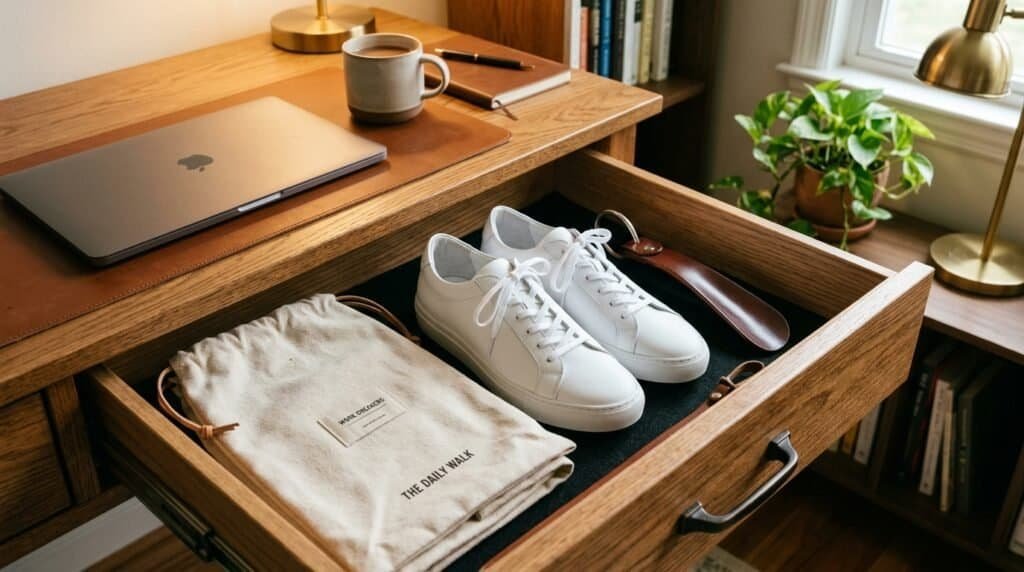
If you walk two miles to the subway or navigate wet winter slush on your way to work, wearing your pristine office sneakers outside can ruin them in days.
Implement a practical two-pair strategy:
- The Commute Shoe: Wear supportive, weather-resistant walking shoes or boots for transit, rain, and pavement pounding.
- The Desk Keeper: Store your immaculate work sneakers in a breathable cloth shoe bag in your office drawer or locker.
- The Quick Swap: Arrive five minutes early, slip into your fresh, climate-controlled work kicks at your desk, and step into the hallway looking impeccable.
This routine extends the lifespan of your professional sneakers by months while keeping street dirt off office carpets.
Budget-Tier vs. Investment Sneakers: Where to Spend and Where to Save

You do not need to spend hundreds of dollars on designer Italian kicks to look well-tailored, but knowing where to invest pays dividends in comfort and longevity.
| Tier | Price Range | What You Get | Best For |
| Budget-Friendly | $50 – $90 | Synthetic or mixed leather, basic foam insoles, glued construction | Testing a new style or rotating seasonal colors |
| Mid-Tier Workhorse | $100 – $180 | Genuine full-grain leather, removable cushioned insoles, stitched cup soles | Daily commuting and 40-hour workweeks |
| Luxury / Investment | $200 – $450+ | Hand-finished calfskin, butter-soft leather linings, resoleable construction | Client-facing roles, creative directors, executive team |
Keeping Your Work Sneakers Spotless and Boardroom-Ready
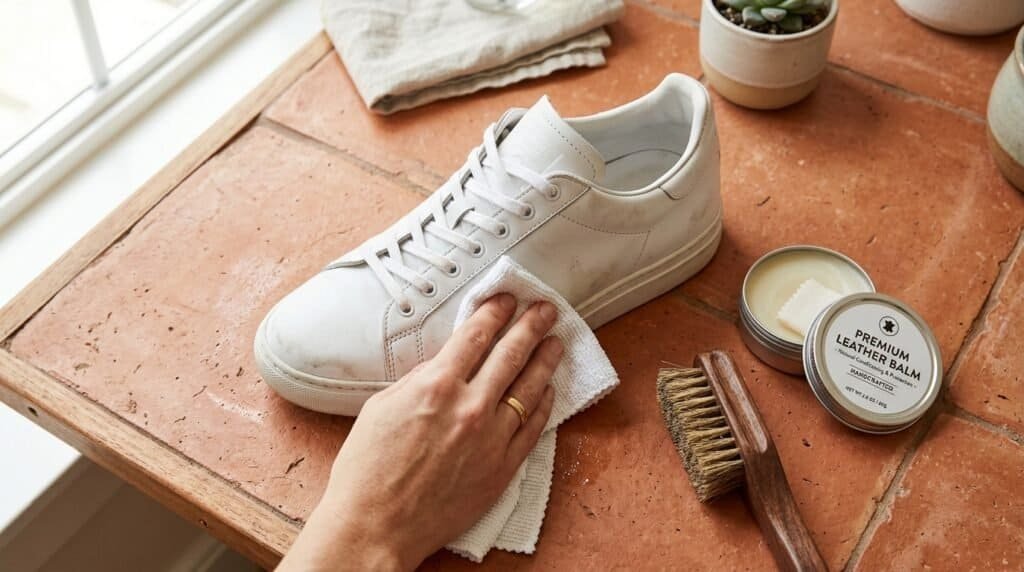
Scuffed toes and yellowing rubber outsoles will immediately ruin an otherwise tailored corporate outfit. Maintaining your sneakers requires minimal time if done consistently.
Keep an emergency shoe-care kit at your desk with these three essentials:
- Quick-wipe cleaning sheets: Individually wrapped wipes to clear away subway splashes and hallway scuffs instantly.
- Melamine foam sponge (magic eraser): Gently dampen and buff the white rubber sidewalls to restore factory brightness.
- Odor-neutralizing cedar inserts: Insert them overnight to absorb moisture and maintain the shoe’s shape.
Treat your work sneakers with the same care and respect you would give fine leather dress shoes.
Choosing the Right Socks: No-Show vs. Statement Crew Socks
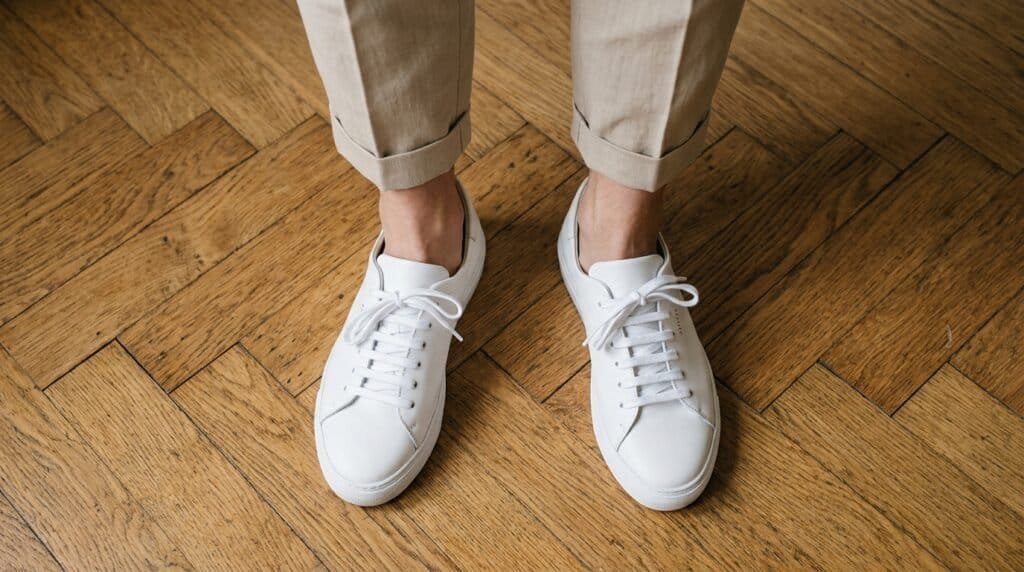
The wrong sock choice can disrupt the clean visual transition between your trousers and sneakers. Selecting the right hosiery depends on your pant hemline and personal aesthetic.
Follow these rules for a clean look:
- No-show socks: Best for cropped trousers, skirts, and dresses. Pick pairs with silicone heel grips to avoid mid-meeting slippage.
- Tonal trouser socks: When wearing full-length pants, match thin dress socks to your trouser color (e.g., navy socks with navy pants) to extend the leg line.
- Textured ribbed crew socks: In creative work environments, a crisp white or oatmeal ribbed sock paired with loafers or retro sneakers adds an intentional collegiate flair.

Office dress codes vary widely by industry. Calibrating your sneaker choice to your field ensures you stay stylish without crossing professional boundaries.
- Tech & Creative Agencies: High flexibility. Clean retro trainers, bold monochromatic suede, and fashion-forward silhouettes pair naturally with denim, chore jackets, and midi dresses.
- Corporate & Finance (Smart Casual): Low profile only. Stick strictly to luxury white or black full-grain leather paired with full suits or tailored separates.
- Education & Healthcare Administration: Focus on all-day ergonomics. Sleek orthotic-friendly leather low-tops deliver professional polish while supporting 10,000+ steps.
When starting a new job, observe what team leads and senior managers wear for the first two weeks before introducing sneakers into your rotation.
Comfort and Ergonomics: Insole Support for All-Day Standing
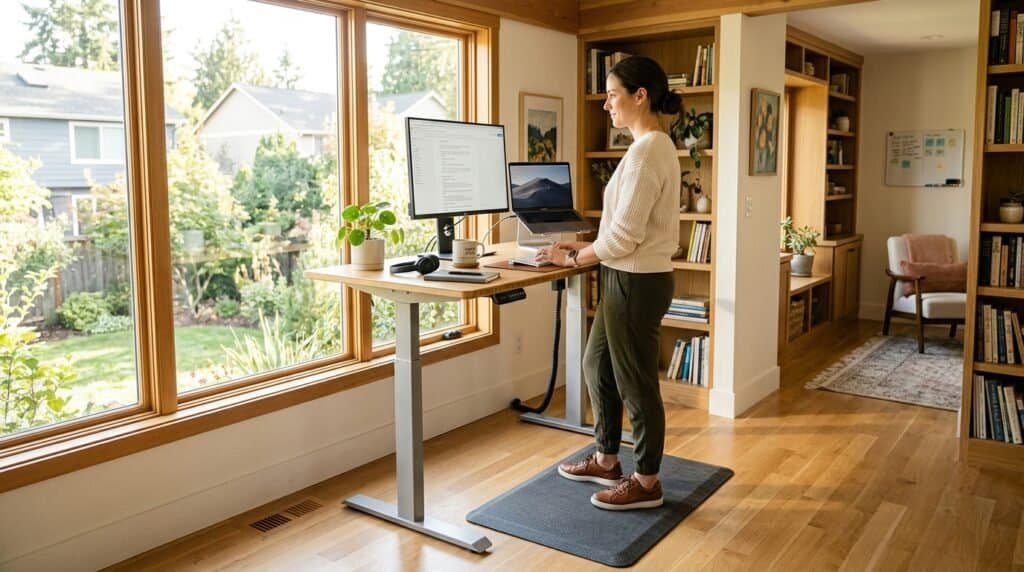
A shoe that looks great but leaves your feet aching by 2:00 PM is useless for a busy professional. Standard lifestyle sneakers often lack adequate arch support for standing desks and marble office hallways.
Look for these supportive features:
- Removable footbeds: Allows you to swap factory liners for custom orthotics or high-density foam insoles.
- Firm heel counters: Cup the heel to prevent internal pronation during long walking commutes.
- Wide toe boxes: Ensure your toes do not pinch during 8-hour desk sessions, preventing blisters and friction points.
Investing in quality support means you will never have to choose between posture and polish.
Common Work Sneaker Mistakes (And How to Fix Them)
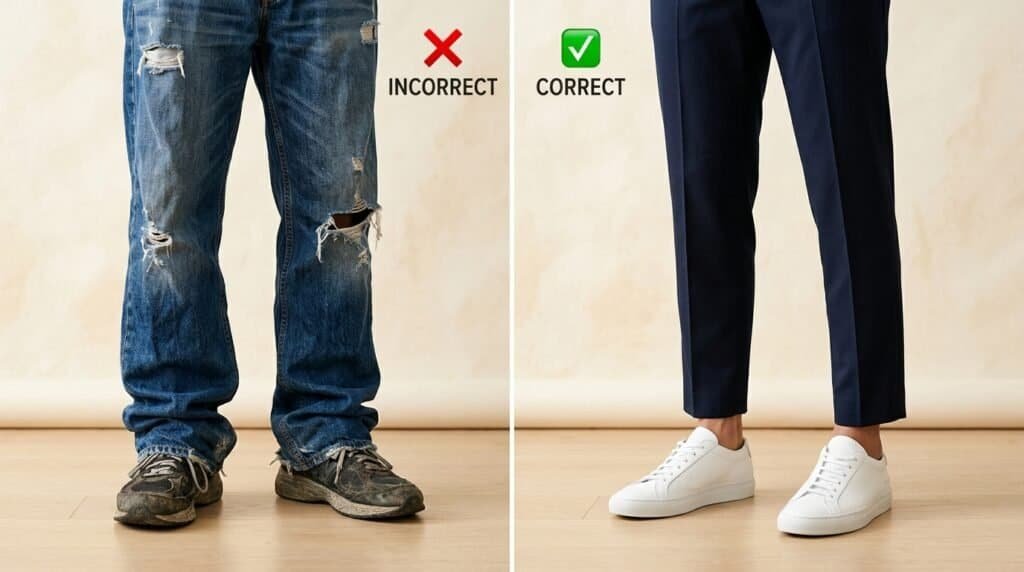
Small styling missteps can make sneakers feel out of place in professional settings. Avoid these common blunders to keep your outfits sharp:
- Wearing visible running shoes: Technical mesh trainers belongs in the gym; swap them for structured leather or clean suede.
- Letting pant legs puddle over wide tongue designs: Have your tailor hem trousers to hit cleanly above the shoe’s collar.
- Ignoring lace condition: Dirty or frayed laces make expensive shoes look neglected; replace laces every six months.
- Pairing sneakers with overly formal evening wear: Reserve sneakers for business-casual, smart-casual, and modern tailoring—not formal black-tie or strict corporate attire.
Frequently Asked Questions: Styling Sneakers for the Workplace

Can you wear sneakers to work?
Yes, in most modern offices — especially business casual or creative workplaces. The key is choosing a low-profile, minimal sneaker in a neutral color (white, black, or tan) rather than an athletic or logo-heavy pair, which reads as gym wear rather than office-appropriate.
Are white sneakers office appropriate?
Yes, white sneakers are one of the safest choices for the office because they read as clean and minimal rather than casual. Keep them free of visible dirt or scuffs, and pair them with tailored pieces like trousers or a blazer to balance out the casual shoe.
What sneakers are considered professional enough for work?
Look for leather or suede sneakers with a simple silhouette — no chunky soles, bright colors, or large logos. Brands known for minimal, low-profile designs (like classic white leather styles or slim retro sneakers) tend to work best for a business casual office.
Can I wear sneakers to a job interview?
It depends on the company culture. For creative or startup environments, clean minimal sneakers paired with tailored clothing can work. For traditional corporate interviews, it’s safer to stick with dress shoes or heels unless you know the office is casual.
How do I make sneakers look more professional?
Pair them with structured pieces — tailored trousers, a blazer, or a button-down shirt — rather than casual basics like joggers or graphic tees. The contrast between a relaxed shoe and polished clothing is what makes the look read as intentional rather than sloppy.
What’s the difference between work sneakers and gym sneakers?
Work sneakers are typically lower-profile, made from leather or suede rather than mesh, and come in neutral colors without bold branding. Gym or running sneakers are built for performance and tend to look too sporty for most office settings.
Are sneakers acceptable in a corporate office?
This varies widely by company. Traditional corporate or client-facing roles may still expect dress shoes, while many modern corporate offices have relaxed dress codes that allow clean, minimal sneakers. When in doubt, check your company’s specific dress code or observe what colleagues wear.
Stepping Forward with Confidence
Transitioning to work-ready sneakers does not mean lowering your professional standards—it means dressing smarter for the demands of your real day. By investing in clean-lined leather silhouettes, mastering pant breaks, and maintaining your footwear with care, you can build versatile work outfits that keep you comfortable through long meetings, transit sprints, and after-hours networking.
Start simple: pull together one tailored trouser outfit with a fresh pair of white low-tops this week and see how much lighter your workday feels.

Emily started HeelToStyle after one too many pairs of boots sat unworn in her closet simply because she couldn’t figure out what to wear them with. What began as personal outfit notes turned into a full site dedicated to practical, wearable shoe styling. She leads content direction and writes most of the site’s occasion-based outfit guides.