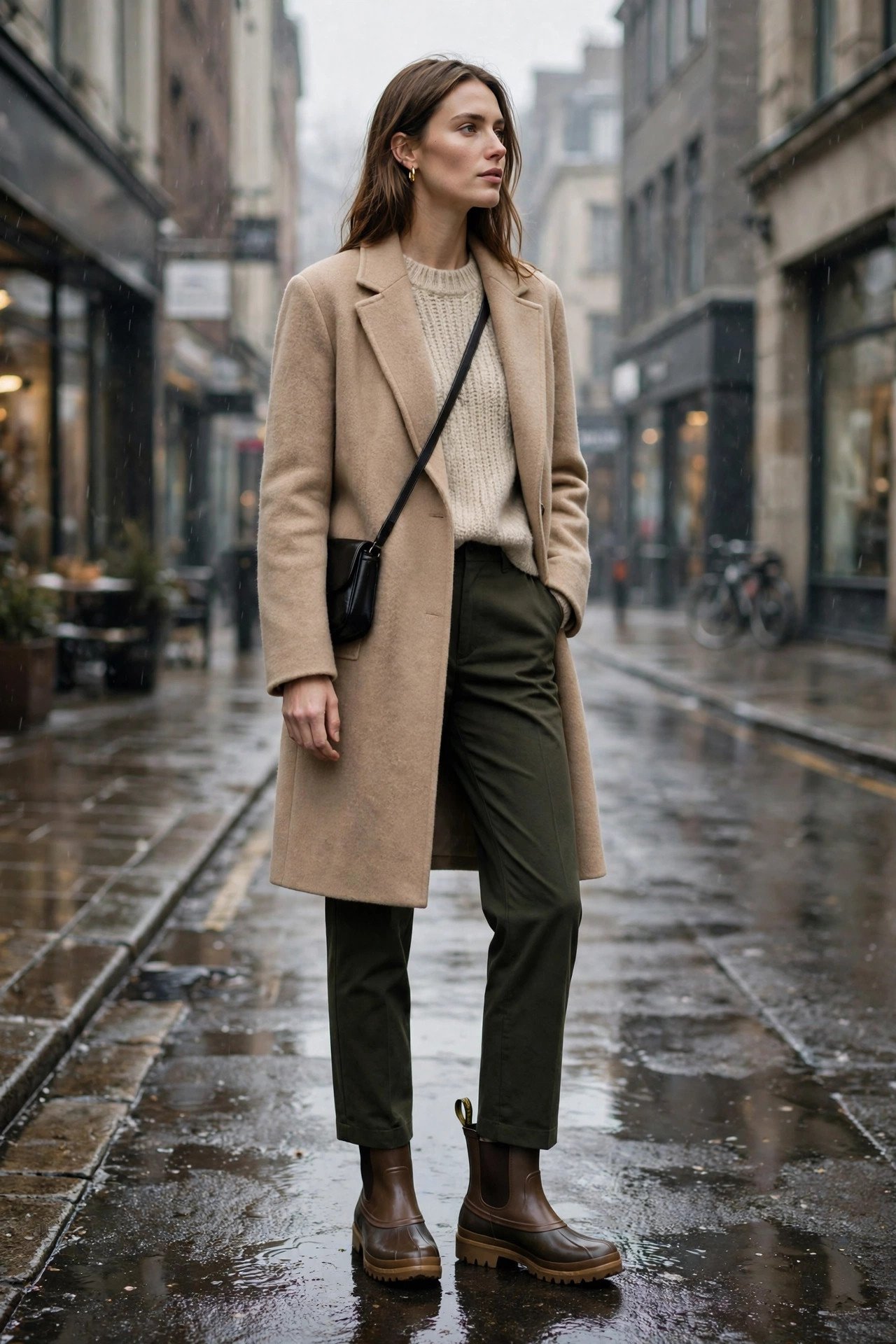
Urban winter boots differ fundamentally from dedicated snow boots. While snow boots are engineered specifically for deep drifts and often retain a bulky alpine aesthetic, city winter boots are built for mixed urban environments. They handle wet pavements, uneven Christmas market stones, slushy commutes, and indoor transitions where coats come off but footwear stays on. These designs balance warmth, weather resistance, and traction with a refined silhouette that integrates seamlessly into a deliberate outfit.
This guide bridges the gap between style and utility by cutting through advice that focuses solely on aesthetics or extreme alpine conditions. Instead, we evaluate three critical factors together—waterproofing, warmth, and grip—across the four most practical city boot styles. Use the comparison table at the top to select your ideal silhouette, and follow our styling sections to build a refined outfit that keeps you protected without looking like heavy outdoor gear.
The Short Answer: Warm Winter Boots That Still Look Like an Outfit
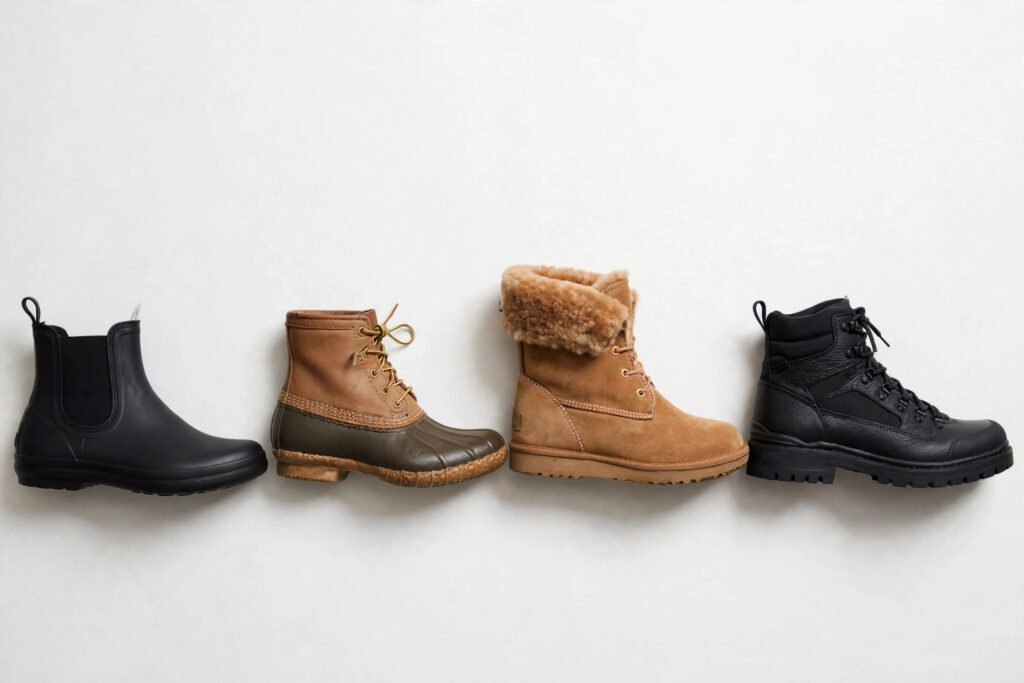
For most winter city days, choose a waterproof Chelsea boot, a duck boot, a shearling-lined boot, or a lug-sole boot, and check waterproofing, insulation, and grip before you check colour. The boot that looks best in a photo is not always the boot that stays dry and steady on a wet market street.
Boot Comparison Guide
Use this table as a starting comparison. The ratings serve as general performance guides rather than absolute guarantees for individual pairs, as construction, soles, and linings vary by manufacturer.
| Boot Type | Waterproofing | Warmth | Grip | Best For |
| Waterproof Chelsea boot | High (if seam-sealed) | Medium (depends on lining) | Medium to high (depends on sole) | Wet commutes and smart city days |
| Duck boot | High | Medium to high | High (usually lug or rubber sole) | Rain, slush, and market streets |
| Shearling-lined boot | Medium (depends on upper/treatment) | High | Medium (depends on sole) | Cold, dry-to-damp days and long outdoor time |
| Lug-sole boot | Medium to high (depends on upper) | Medium to high | High | Wet pavements, cobbles, and uneven ground |
Three Rules for Urban Winter Styling
- Lead with one practical feature: Prioritize waterproofing for rainy commutes, warmth for extended market visits, or grip for cobbles and slush. Boots attempting to balance all elements simultaneously often appear overly bulky.
- Keep your outfit structured: Pair practical footwear with tailored wool coats, straight or wide-leg trousers, or midi skirts with tights to maintain a deliberate silhouette. Shapeless clothing paired with chunky boots easily shifts your look into heavy outdoor gear.
- Match your boots to the ground conditions: Recognize that dry, cold days require different footwear than wet, slushy conditions, even when temperatures remain identical.
For more boot outfit ideas in the same category, browse the Boot Outfits guides.
How to Read Waterproofing, Warmth, and Grip Ratings
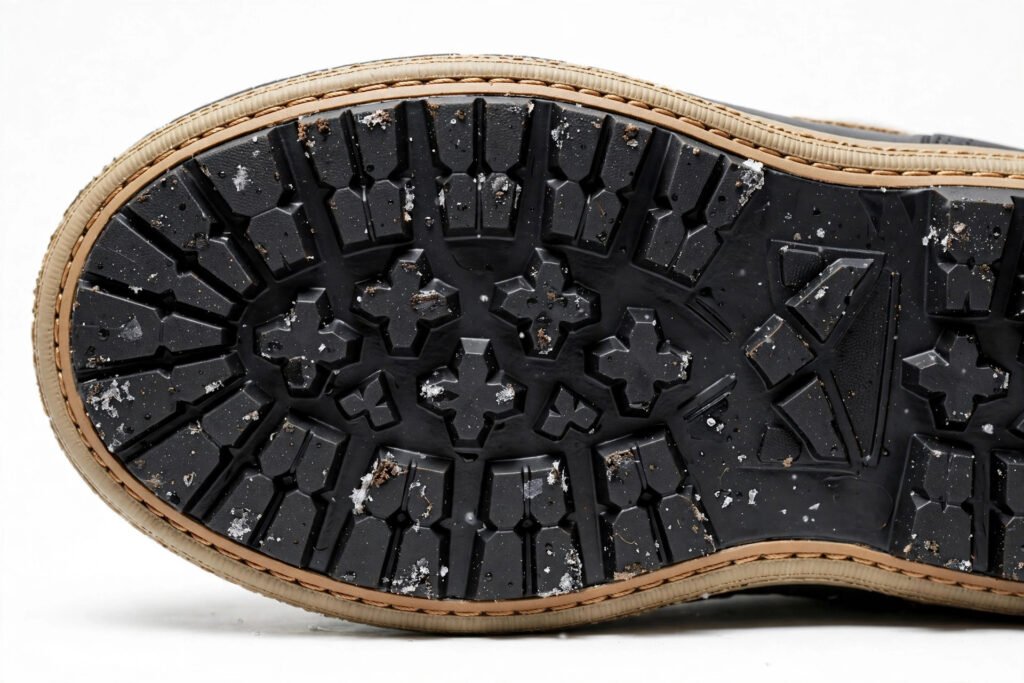
There is no single universal rating that covers every winter boot, so read the maker’s description in three separate parts, and do not assume one good feature covers the others.
Waterproofing involves more than a simple label. A boot can feature a waterproof membrane yet still allow moisture through seams, zippers, or low shafts during deep slush. Inspect whether manufacturers seal the seams. Determine if the item is truly waterproof or merely water-resistant. Note the height of the waterproof section. Verify that the sole bonds securely to the upper without gaps. Water-resistant materials handle light rain briefly. True waterproof builds block sustained moisture.
However, low ankle options fail in deep slush. Shaft height matters just as much as membranes for city rain. Warmth depends on linings and fit rather than sheer thickness. Shearling, fleece, and synthetic insulation provide heat but occupy interior space. Boots that feel too tight with winter socks actually feel colder. Restricted air circulation limits movement and reduces warmth. Review the lining material, insulated insoles, and toe room. Properly fitted footwear with winter socks outperforms tight alternatives.
Four Boots That Pass the City Test
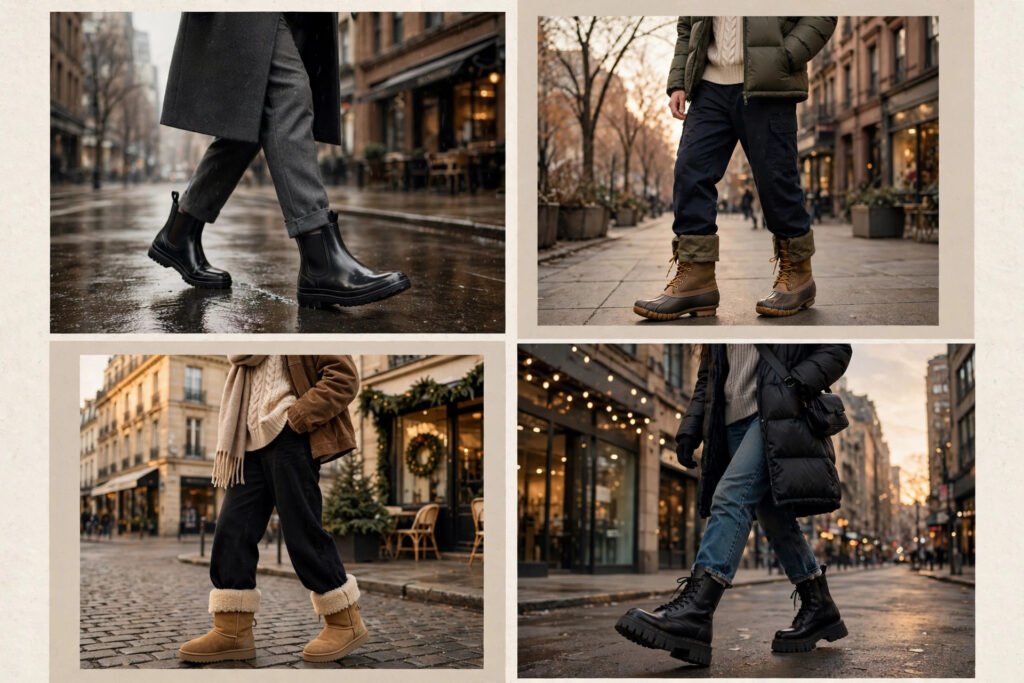
Waterproof Chelsea boot
Waterproof Chelsea boots offer maximum versatility among the four styles due to their classic urban silhouette featuring a close ankle, elastic side panels, and a clean toe box. Iterations designed for wet conditions typically feature treated leather uppers, sealed seams, and enhanced treads compared to standard dress alternatives. Choose this footwear for wet commutes and professional city days requiring a polished appearance from morning meetings through evening dinner reservations after rainy walks. Pair them with straight-leg trousers, midi skirts with opaque tights, wool coats, and structured handbags. These boots blend effortlessly into your ensemble, maintaining the classic look of a traditional Chelsea boot while providing complete waterproof protection.
Check the sole before you buy. A waterproof Chelsea boot with a smooth, dressy sole will stay dry but may feel unsteady on wet pavements. A version with a lightly lugged rubber sole keeps the same clean shape and adds grip without looking like a hiking boot. That sole is the difference between a Chelsea boot that is waterproof on paper and one that works on a wet commute.
Duck boot
Duck boots feature a rubber lower section paired with a leather or fabric upper, complete with adjustable laces. That rubber base handles rain and slush effectively by preventing moisture from soaking through the ground-contact zone. Most designs incorporate rugged lug soles for superior traction. Choose duck boots for rainy days, slushy commutes, and market streets. Pair them with straight-leg pants or relaxed-fit jeans cuffed just above the boot line. Complete the look with a chunky knit sweater and a hooded waterproof coat. Because duck boots lean casual, keep the rest of your outfit clean and structured to let the footwear serve as your practical statement piece.
Duck boots can look bulky if the trouser leg is too wide and falls over the top of the boot. A straight leg that ends just above the boot shaft keeps the shape clean. If you wear them with a skirt, choose a midi skirt with tights and a longer coat, so the boot reads as a weather choice, not as a mismatch with a dressy outfit.
Shearling-lined boot
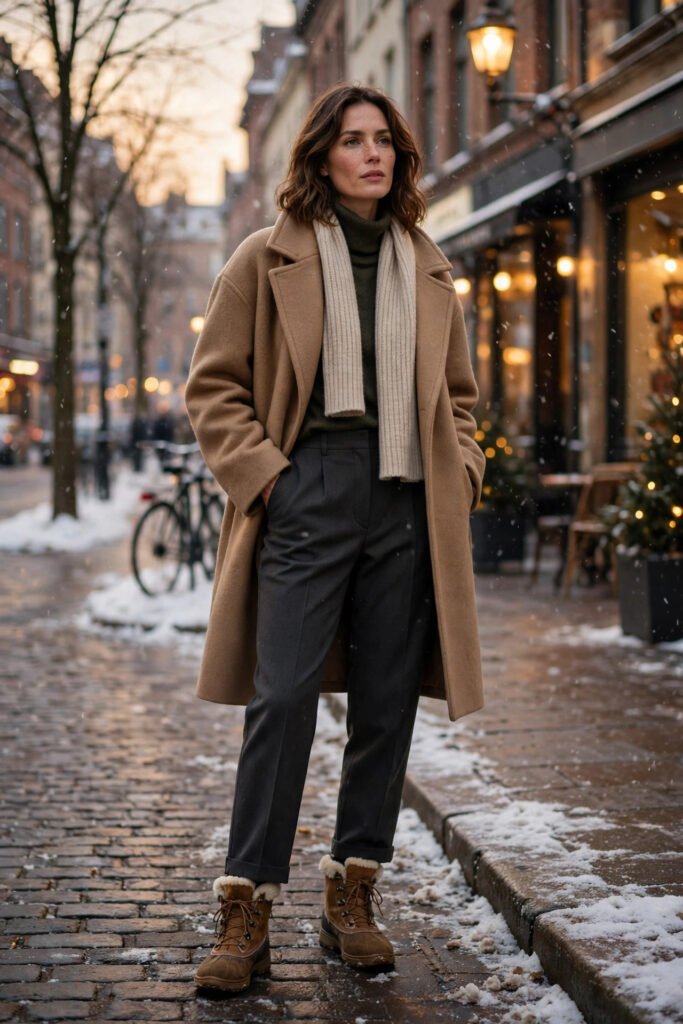
Shearling-lined boots feature a thick, warm interior pile crafted from either real or synthetic shearling, making them the warmest option among the four for extended outdoor wear. They excel during winter market visits or cold days featuring light dampness rather than heavy rainfall. Select shearling-lined footwear for cold, dry-to-damp conditions where warmth takes precedence over heavy waterproofing. Pair them with midi skirts and tights or straight trousers under long wool coats, maintaining a warm, neutral color palette of cream, camel, black, or chocolate. Because the plush lining introduces extra softness, incorporate a structured coat to keep your overall silhouette sharp and polished.
Lug-sole boot
Lug-sole boots feature a deep, chunky tread that provides exceptional traction on wet pavements, cobblestones, and uneven surfaces. The upper can take the form of a classic Chelsea silhouette, a lace-up ankle boot, or a taller shaft. The defining lug sole transforms this design into a reliable city-weather boot rather than a delicate dress shoe. Choose lug soles when navigating slippery pavements, historic cobbles, or uneven market grounds where grip is your primary concern. Pair them with straight-leg trousers, midi skirts with tights, or wide-leg pants that hit just above the boot line alongside a structured coat. Because lug soles introduce visual weight to your lower half, maintain balance with a clean, streamlined outfit above featuring one statement boot and a simple coat without competing chunky layers.
Lug soles can feel heavy indoors, and they can mark smooth floors if they are very deep. For a city day that includes indoor stops, a medium lug, with tread you can see and feel but not a very deep hiking tread, is usually the best balance. It gives grip outside without feeling clumsy inside.
Christmas Markets: Standing, Walking, and Cobbles

Christmas market days differ from standard city days because you spend more time standing on uneven ground outdoors without warm indoor breaks. Warmth and grip take priority over shorter commutes. Boots comfortable for a twenty-minute walk might feel freezing after two hours of standing. Prioritize warmth first during market visits, followed closely by traction. Shearling-lined boots or warm-lined lug soles outperform thin waterproof Chelsea boots unless heavy wet slush dominates the terrain. In extremely wet conditions, duck boots or waterproof lug-sole boots provide the ideal balance by handling moisture and extended standing periods.
Layer strategically without altering your boot line. Wear warm tights beneath midi skirts or thermal leggings under straight trousers to boost warmth without changing how your boots fit. A long wool coat insulates your core, which naturally keeps your feet warmer. Carry a crossbody bag to keep your hands free for market stalls. Wear gloves with strong grip to hold hot drinks securely. Watch for hazards like cobblestones, wet wooden walkways, and uneven steps between stalls. Lug soles and rubber treads with visible patterns minimize slip risks, though no sole eliminates them completely.
For a warm, chic starting point for a winter day out, see Winter Outfit of the Day: Warm, Chic Looks That Start With Knee-High Boots.
Wet Commutes: Rain, Slush, and Indoor Stops
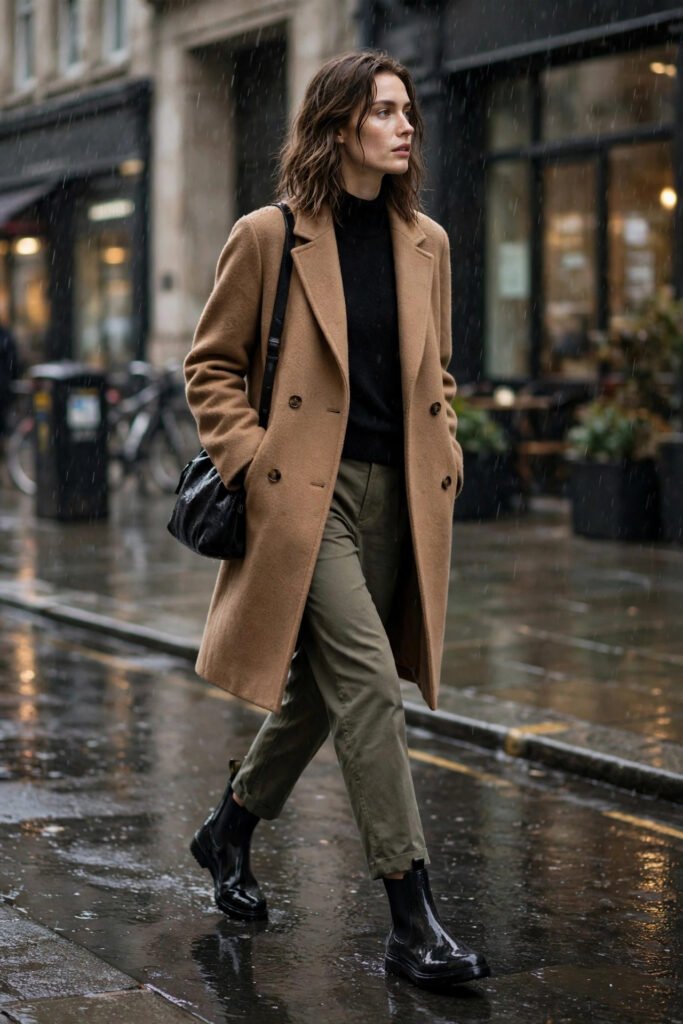
A wet commute requires footwear that transitions seamlessly from outdoor rain and slush to indoor office, shop, or restaurant environments without requiring a shoe change. Waterproof Chelsea boots and waterproof lug-sole boots excel in this scenario by combining sleek city styling with weather-resistant construction. Build your commuter outfit around your footwear selection. Pair waterproof Chelsea boots with straight-leg trousers or a midi skirt, opaque tights, a simple knit or shirt, and a neutral wool or waterproof coat. Reserve casual duck boots for relaxed workdays, school runs, or informal schedules unless your workplace maintains a casual footwear policy.
Pack for your entire commute rather than just the walk. Tuck a small cloth or towel into your bag to wipe your boot shafts dry upon arrival, and pack dry backup socks for severe downpours. When boots become soaked, let them dry naturally at room temperature away from direct heat sources to prevent cracking the leather or ruining the sole adhesive. Stuffing them lightly with paper helps maintain their structural shape while drying. Consider indoor flooring when evaluating your footwear choice. While deep lug soles excel outdoors, they can feel heavy on polished office surfaces, whereas smooth leather soles look sharp indoors but slip outside. Medium-depth lugs or rubber treads with clean patterns offer the ideal compromise for mixed environments. If you will spend most of your day indoors, waterproof Chelsea boots featuring lightly lugged soles provide the simplest, most versatile option.
For a work outfit starting point that is not boot-specific, see What to Wear to a Job Interview: Outfits and Shoes.
Warmth Without Bulk: Socks, Tights, and Hem Length
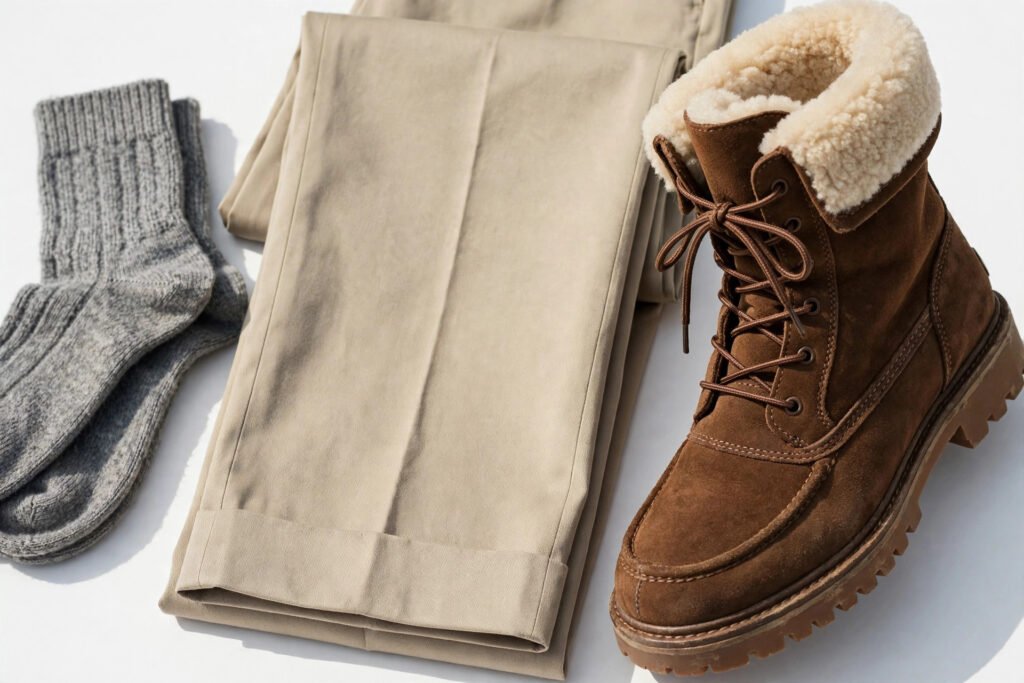
Warmth in a winter boot outfit is not just about the boot. Socks, tights, and hem length change how warm you feel, and how the boot looks, without adding bulk to the outfit itself.
Select medium-weight wool or synthetic socks that fit comfortably inside your boots without squeezing your toes. Very thick socks worn in snug footwear restrict circulation, making your feet feel colder rather than warmer. When extra warmth is necessary, layering a thin liner sock beneath a medium sock preserves your fit better than a single bulky layer. Always test your boot fit at home using your intended winter socks rather than thin summer pairs. When styling tights with midi skirts, choose opaque options matching your boot color—such as black tights with black boots or chocolate tights with brown boots—to create a continuous, leg-lengthening line. Fleece-lined tights resemble standard opaque styles under longer skirts or trousers while delivering exceptional warmth for frigid market days.
For hem length, let the trouser or skirt hem work with the boot, not against it. Straight-leg trousers should end just above the boot shaft or fall just over it, without dragging on wet ground. Wide-leg trousers should fall just above the floor when you wear the boots, so they do not soak up slush. A midi skirt should fall over the top of a taller boot or clearly above an ankle boot, with a clean gap, so the outfit does not look caught in between. A hem that drags in slush will get wet and heavy, and it will make even a waterproof boot feel less practical.
Grip and Weather Checks Before You Leave the House
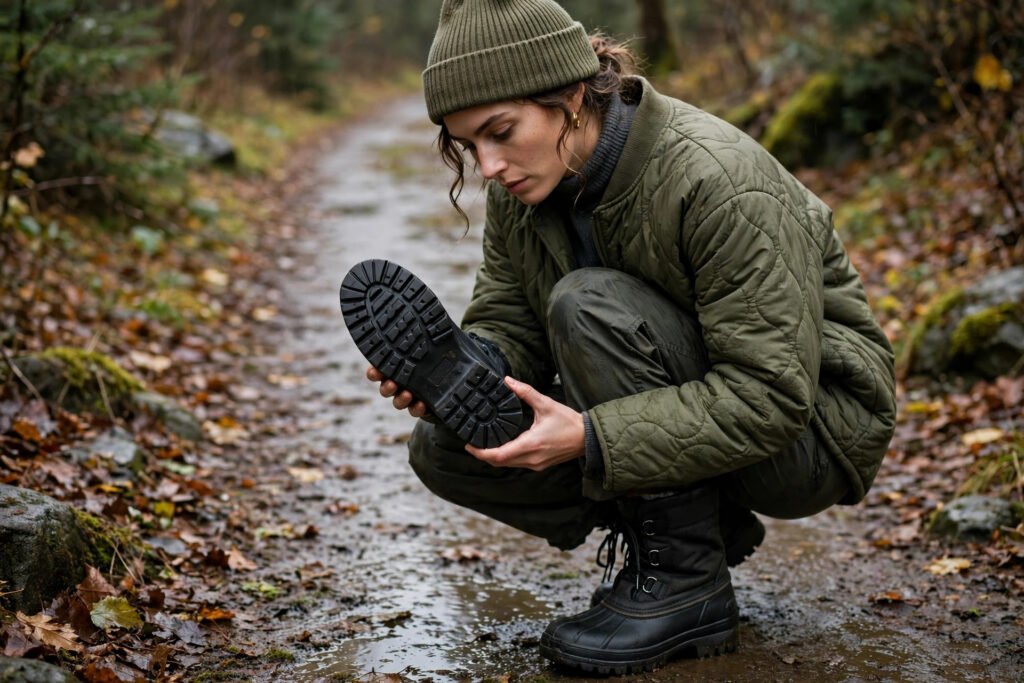
Use this short check before a winter city day, a market visit, or a wet commute. It takes a few minutes at home, and it catches the problems that are hardest to fix once you are outside.
- Sole check: Look at the tread. Is it visible, spaced, and flexible, or smooth and worn? A worn sole, even on a good boot, will grip less well than a new sole with clear tread.
- Seam and shaft check: Look for gaps, loose stitching, or a zip that does not close fully. Water often enters through a small gap rather than through the main upper.
- Fit check with winter socks: Walk, sit, and stand again in the full outfit. Check that the boot does not pinch at the toes or slip at the heel, and that the hem does not catch on the boot shaft.
- Ground check: Think about the ground you will actually walk on: smooth pavements, cobbles, market walkways, or icy steps. A boot that grips well on smooth pavements may still feel unsteady on cobbles or ice.
- Indoor check: Think about where you will be inside. A very deep lug sole may feel heavy indoors, and a very smooth sole may feel unsteady outside. A medium tread is often the best balance for a mixed day.
Safety, Weather Adaptation, and Break-In Guidelines
On wet, icy, or very smooth ground, a textured or rubber sole can help reduce slip risk, but no sole removes slip risk entirely. In very wet or icy conditions, a different boot for travel, changed into indoors if needed, may be more practical.
Break in new boots gradually, with shorter wears at home first, rather than a full market day as the first wear. Leather softens with wear, but a boot that pinches or slips badly on the first try is unlikely to become comfortable simply by forcing it for a long day.
For cold-weather layering with a different tall-boot silhouette, see Winter Outfit of the Day: Warm, Chic Looks That Start With Knee-High Boots.
What Not to Wear When Warmth, Water, and Grip All Matter
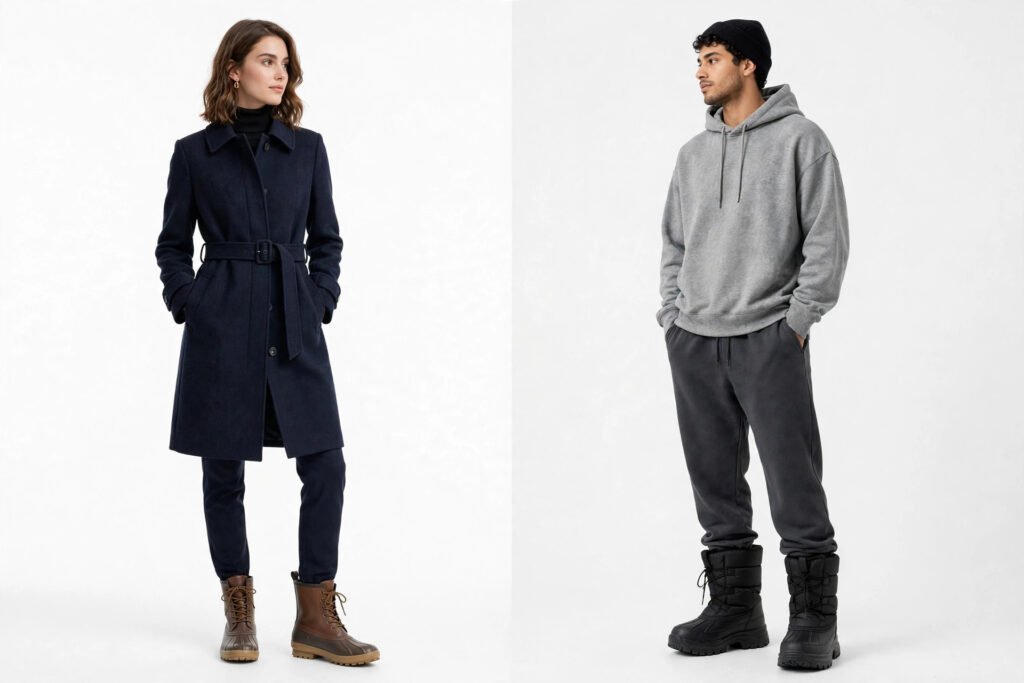
- Do not wear a smooth-soled dress boot on a wet market or commute day and expect grip. A beautiful leather sole with no tread will stay dry in light rain but can feel unsteady on wet pavements and cobbles.
- Do not wear an untreated suede boot in heavy rain or slush and expect it to stay dry. Suede can look warm and soft, but without treatment and a waterproof construction, it will soak through in sustained wet weather.
- Do not wear a very bulky snow boot for a city outfit and expect it to look like an outfit. A snow boot built for deep snow has a different shape, sole, and weight from a city boot, and it will dominate the outfit even with a structured coat.
- Do not wear a boot that is too tight with winter socks and expect it to feel warm. Tight fit reduces circulation and can make your feet feel colder, even if the boot itself is well lined.
- Do not add a second chunky, outdoor layer at the same time as a chunky boot. A very heavy outdoor coat, a bulky scarf, and a lug-sole boot together can tip a city outfit into outdoor gear. Keep one practical piece strong, and keep the rest structured and simple.
Frequently Asked Questions About Warm Winter Boots
What is the warmest winter boot that still looks like an outfit?
A shearling-lined boot is usually the warmest of the city types, because its lining adds insulation without changing the boot shape as much as a snow boot does. For a very cold, dry-to-damp day, it is a good choice. For a very wet day, a waterproof duck boot or a waterproof lug-sole boot with a warm lining may be a better balance, because it handles both warmth and water.
Are Chelsea boots warm enough for winter?
A Chelsea boot can be warm enough for many winter city days, depending on its lining and sole. A thin, unlined Chelsea boot will feel cold on a long outdoor day. A waterproof Chelsea boot with a warm lining and a lightly lugged rubber sole is a better winter choice, because it adds warmth and grip without changing the clean Chelsea shape.
Are duck boots waterproof?
A duck boot is usually highly water-resistant or waterproof at the lower section, because that section is rubber. Check whether the upper is also waterproof, whether the seams are sealed, and how high the rubber section reaches. A duck boot with a low rubber section will handle rain and shallow slush well, but it will not protect you in deep slush the way a taller waterproof boot will.
What sole is best for wet pavements and cobbles?
A lug sole or a rubber sole with visible, spaced tread is usually best for wet pavements and cobbles, because it gives more bite than a smooth sole. A medium lug is often the best balance for a city day, because it grips outside without feeling too heavy indoors. No sole removes slip risk entirely, especially on ice.
Can I wear warm winter boots to work?
Yes, in many workplaces, especially a waterproof Chelsea boot or a clean lug-sole boot with straight trousers or a midi skirt, a simple top, and a structured coat. Check your workplace dress code first, and choose a clean, classic boot without heavy outdoor hardware for the most work-ready version. A duck boot is more casual, so save it for casual workdays or days with no formal meetings.
How do I keep winter boots from looking like snow gear?
Keep the rest of the outfit structured. A wool coat, straight or wide-leg trousers, or a midi skirt with tights makes a practical boot look deliberate. Avoid adding a second bulky outdoor layer at the same time as a chunky boot, and choose a boot shape that is already a city shape, such as a Chelsea boot or a clean ankle boot, rather than a boot built for deep snow.
Should I size up for winter socks?
Not automatically. Size up only if the boot feels tight with your usual winter socks. A boot that is too large will slip at the heel and can feel unsteady, especially on wet ground. Check the fit at home with the socks you will actually wear, and choose the size that fits well with those socks, not the size that fits with thin summer socks.
Build Your Warm Winter Boot Outfit in 5 Minutes
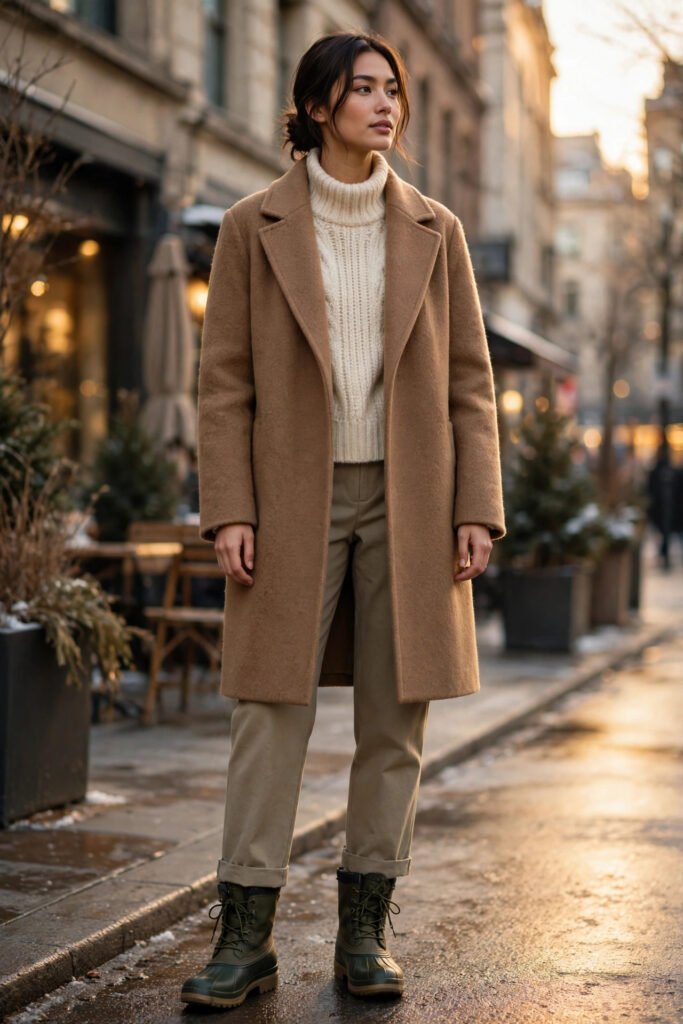
Use this quick check before you leave the house:
- Ground first: rain, slush, cobbles, or cold and dry? Choose waterproofing, grip, or warmth as your lead feature.
- Boot type: waterproof Chelsea, duck, shearling-lined, or lug-sole, based on that lead feature.
- Bottom: straight trousers, wide-leg trousers, or a midi skirt with tights, with a hem that works with the boot shaft.
- Top and coat: simple top, structured wool or waterproof coat, one simple accessory.
- Walk test: walk, turn, and stand again, and check that the sole feels steady, the fit is comfortable with winter socks, and the hem falls cleanly.
If all five check out, you have a warm winter boot outfit, not snow gear. If one fails, change that one piece, not the whole outfit. A different sole, a better sock fit, or a simpler coat is usually enough.
Next, explore the guides that go with this one: Winter Outfit of the Day: Warm, Chic Looks That Start With Knee-High Boots, Fall Outfit of the Day: Cozy Layered Looks Built Around Ankle Boots, and How to Style Knee-High Boots With Dresses.

Sarah’s the one behind most of HeelToStyle’s sneaker and boot content. She’s spent years experimenting with pairing casual footwear into everyday outfits and has a soft spot for finding new ways to style the same pair of white sneakers. She keeps an eye on seasonal trends so the site’s advice stays current.