
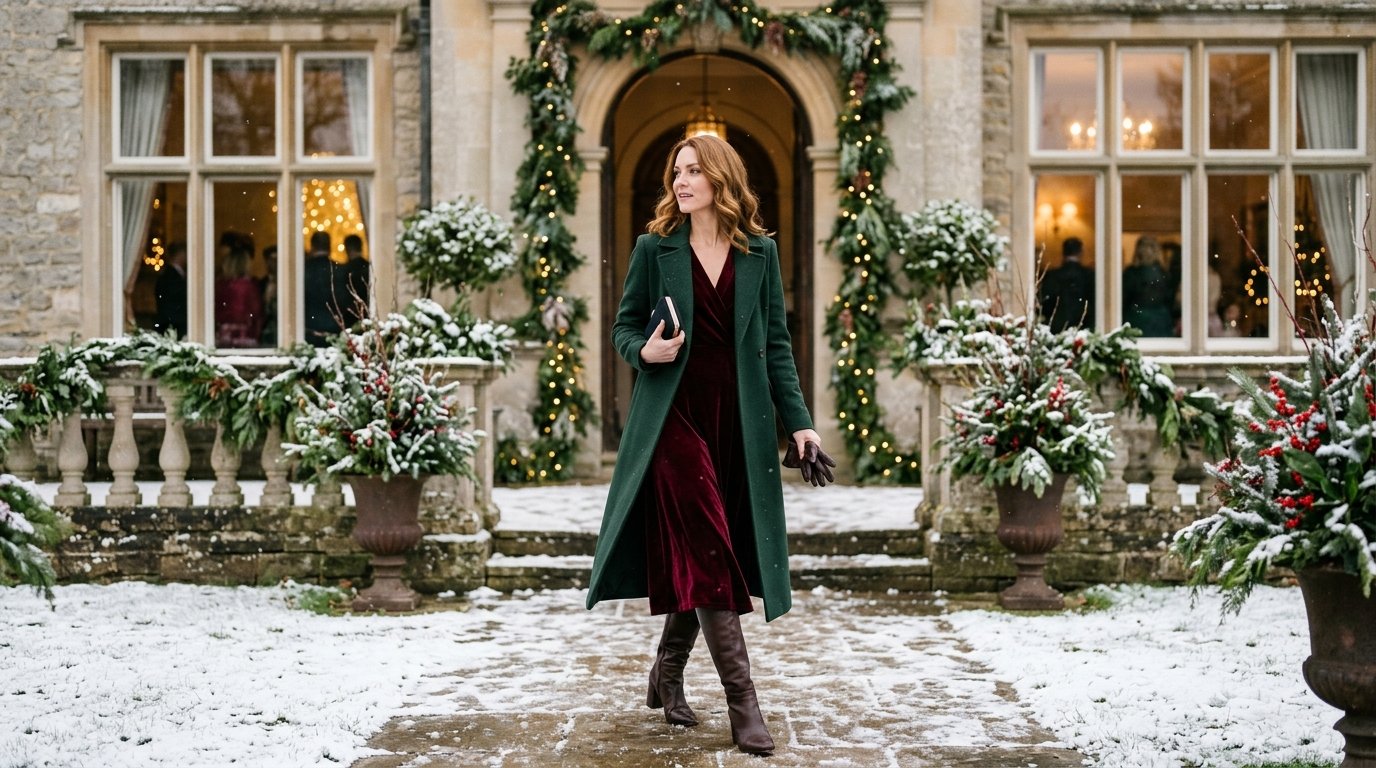
A winter wedding asks for two things that do not always go together: a shoe that looks right for a wedding, and a shoe that works in cold, wet or icy conditions. The answer is rarely one perfect pair for every wedding. It depends on whether the ceremony is indoors or outdoors, how dressy the wedding is, how long you will stand and dance, and what the ground will be like between the car, the venue and the photos.
This guide answers by venue and dress code, then covers warmth and steadiness separately. That way you can choose a shoe that looks like a wedding shoe, keeps you warm enough, and gives you a steadier footing than a slim, smooth-soled heel on a winter surface.
The Short Answer: What Shoes to Wear to a Winter Wedding
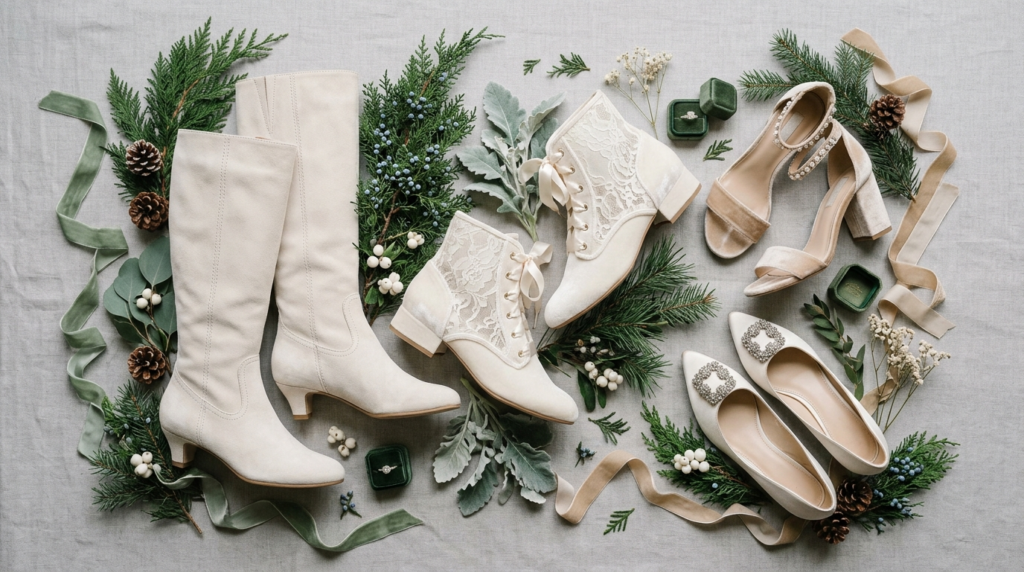
For most winter weddings, wear closed-toe, dressy boots, low block heels, or elegant flats with a grippy sole, paired with warm tights or socks that do not show awkwardly. For indoor formal weddings, polished boots or block heels work well. For outdoor or cold venues, a dressy boot with a stable heel and a textured sole is usually the practical choice.
If you only remember one rule, it is this: choose the shoe for the coldest, wettest and longest part of the day, not just for the ceremony photo. You can always make a warm, steady shoe look dressy with the right dress, coat and accessories.
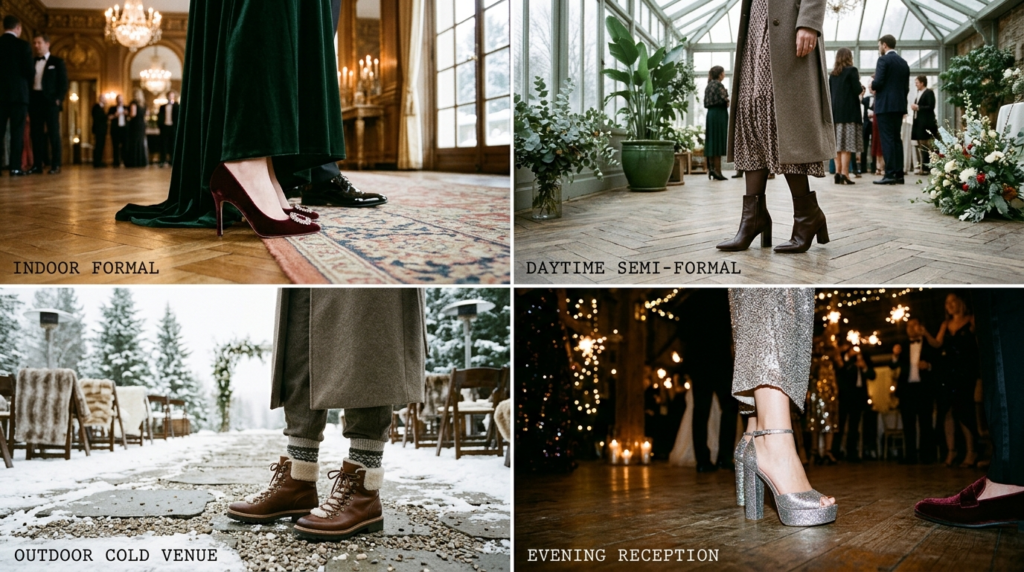
| Venue / dress code | Best winter wedding shoes | Warmth and footing notes |
|---|---|---|
| Indoor, formal | Polished knee-high boots, low block heels, dressy flats | Warm indoors; focus on dressiness and comfort for dancing |
| Indoor, semi-formal / daytime | Ankle boots, block heels, polished loafers | Comfortable for long ceremonies and receptions |
| Outdoor / cold venue | Dressy knee-high or ankle boots with a grippy sole | Best coverage and stability; check ground and weather |
| Evening reception / dancing | Low block heels, dressy flats, stable boots | Choose a pair you can stand and dance in for hours |
For more boot ideas in the same style, browse the Boot Outfits guides.
How to Decide in 4 Questions
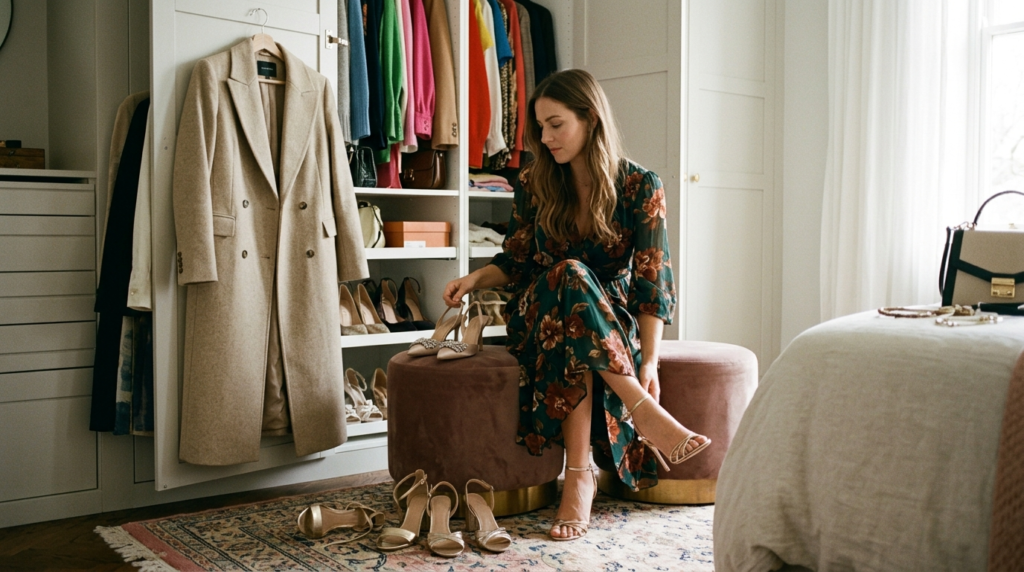
Answer these before you choose, and most winter wedding shoe decisions become clear:
- Is it indoors, outdoors, or both? A fully indoor hotel wedding and an outdoor garden, barn or churchyard ceremony call for different soles and levels of coverage.
- How dressy is it? A black-tie or formal evening wedding, a semi-formal daytime wedding and a relaxed winter wedding have different expectations. Match the shoe to the dress code on the invitation, not just to the season.
- How long will you stand, walk and dance? Ceremonies, receiving lines, photos, dinner and dancing can add up to many hours. A shoe that feels fine for an hour may feel very different by the end of the reception.
- What will you walk on? Smooth indoor floors, carpets, gravel, grass, wet pavements and icy steps all favour different soles. A textured or rubberised sole usually gives a steadier footing than a completely smooth leather sole on wet or icy ground.
If you are unsure about the venue, ask the couple or the venue one simple question: “Will any part of the day be outdoors, and what is the ground like?” That answer is worth more than any generic shoe list.
What Shoes to Wear to a Winter Wedding by Venue
Indoor, Formal Winter Wedding
Best shoes: Polished knee-high boots, low block heels, or dressy flats.
Outfit pairing: A midi or maxi dress, a tailored dress, or an elegant jumpsuit, with a coat for travel.
Why it works: Indoor formal weddings remove most weather risk, so you can focus on dressiness and dancing comfort. A knee-high boot under a midi dress looks polished and warm, while a low block heel gives a formal look with a more stable base than a slim stiletto.
Warmth check: Even indoors, travel to and from the venue can be cold. A coat, and boots or tights for the journey, help more than a single open-toe party shoe.
Avoid: Open-toe shoes on a very cold day, and brand-new heels you have not worn for several hours.
For dress-and-boot proportions, including slip dresses for winter weddings, see How to Style Knee-High Boots with Dresses.
Indoor, Semi-Formal or Daytime Winter Wedding
Best shoes: Ankle boots, block heels, or polished loafers.
Outfit pairing: A sweater dress, a midi dress, tailored trousers, or a polished skirt outfit.
Why it works: Daytime and semi-formal weddings are usually less formal, but still call for a finished shoe. Ankle boots are a strong middle ground: dressy enough for a wedding, practical enough for a long day, and warm enough for winter travel.
Warmth check: A knit dress with ankle boots and tights is often warmer and more comfortable than a thin dress with open shoes, without looking less dressy.
Avoid: Very casual sneakers, heavy outdoor boots, and shoes that clash in formality with the rest of the outfit.
For a relaxed autumn-to-winter base to build on, see Fall Outfit of the Day: Cozy Layered Looks Built Around Ankle Boots.
Outdoor or Cold-Venue Winter Wedding
Best shoes: Dressy knee-high boots or ankle boots featuring a grippy, textured sole and a low, stable heel.
Outfit pairing: A longer or midi dress paired with warm tights, a long coat, and gloves or a wrap for outdoor parts of the day.
Why it works: Outdoor winter weddings introduce cold, wind, wet ground, and sometimes ice or snow into the equation. Boots provide necessary coverage, warmth, and a steadier footing than traditional dress shoes, while a longer dress conceals the boot shaft to keep the ensemble elegant.
Warmth check: Warm tights, a long coat, and footwear that covers the ankle or calf offer far more protection than thin dress shoes alone. When outdoor photos are scheduled, choose footwear suited for the actual ground rather than indoor floors.
Avoid: Slim stilettos on gravel, grass, or ice, open-toe shoes during freezing weather, and smooth soles lacking grip on wet steps..
For cold-weather layering and boot comfort, see Winter Outfit of the Day: Warm, Chic Looks That Start With Knee-High Boots.
Evening Reception and Dancing
Best shoes: Low block heels, dressy flats, or stable boots you have danced in before.
Outfit pairing: A dressy midi dress, a formal jumpsuit, or a polished evening outfit.
Why it works: Receptions involve standing, greeting, dinner and dancing, often for several hours. A low block heel or a dressy flat gives a party look with a more stable base than a high, slim heel, and a boot can work well if the dress code and dress length suit it.
Warmth check: Evenings can feel colder after a warm reception, especially when travelling home. Keep your coat and a practical travel pair in mind for the end of the night.
Avoid: Brand-new heels for a long dancing night, and shoes that slip at the heel once you start moving.
For all-day heel comfort in more detail, see Comfortable Heels You Can Actually Wear All Day.
Staying Warm Without Ruining the Outfit
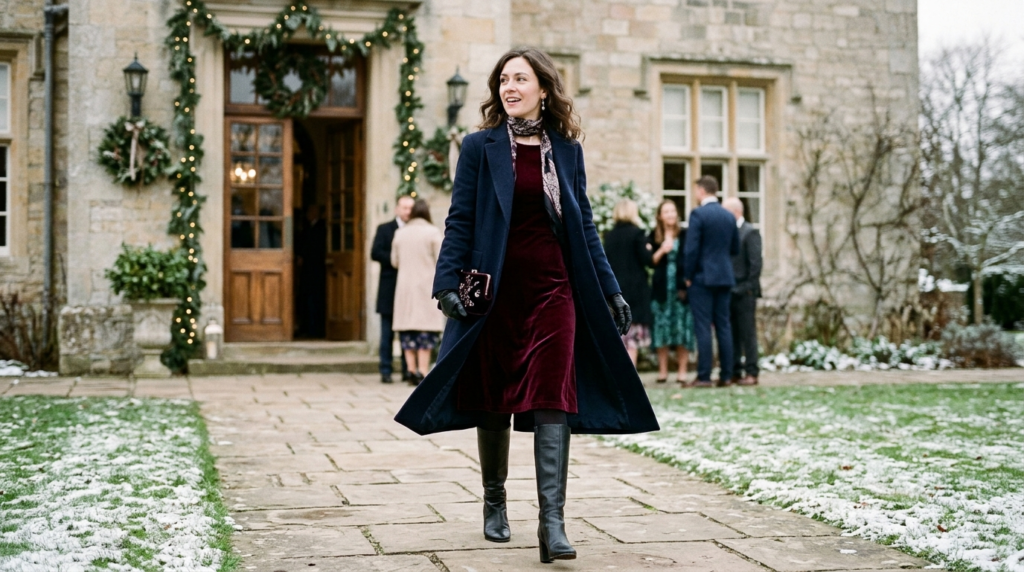
Warmth for a winter wedding is mostly about layers that do not show awkwardly:
- Tights that match the shoe. Opaque tights in a colour close to your boots create a clean, continuous line and add warmth without breaking the outfit. Fleece-lined tights can look like normal opaque tights under a longer dress.
- Boots under longer dresses. A midi or maxi dress can hide a warm boot completely, which means you do not have to choose between warmth and a wedding look.
- A coat for travel and outdoor parts. A long wool coat or a dressy coat keeps the outfit warm between venues and during outdoor photos, even if you remove it indoors.
- A wrap, scarf or shawl. These add warmth for outdoor ceremonies and chilly venues, and they can be removed easily for dancing.
- Warm socks inside boots. A smooth, warm sock inside a boot adds comfort without bunching, as long as the boot still fits securely.
The goal is not to look like you are dressed for snow. It is to add warmth in places that do not change the wedding outfit’s shape: under the dress, inside the boot, and over the outfit for travel.
Staying Steady: How to Reduce Slipping Risk
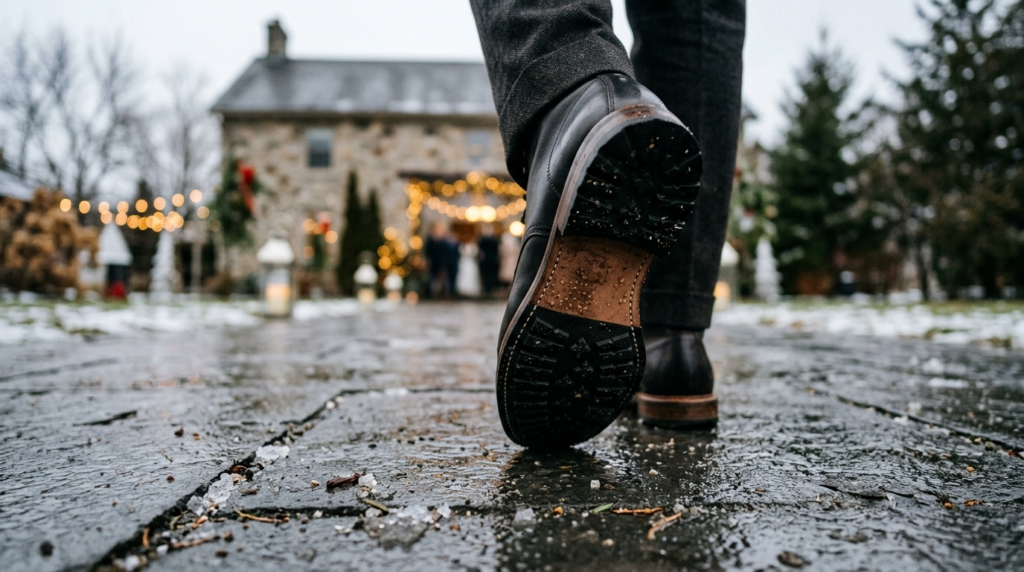
No shoe can guarantee you will not slip, especially on ice, but these choices reduce the risk:
- Choose a textured sole over a completely smooth sole for outdoor, wet or icy parts of the day.
- Choose a wider, lower heel over a slim, high heel for uneven ground, gravel, grass and steps.
- Test the shoe on a similar surface before the wedding. Walk on a smooth floor, a rug and, if possible, a wet pavement in them, and notice where the shoe feels unsteady.
- Keep steps slow and deliberate outdoors. Shorter steps and a flat, stable footing help more than rushing in an unfamiliar heel.
- Carry a practical pair if needed. If the ceremony is outdoors and the reception is indoors, a dressy boot for outside and a party shoe for inside can be a practical two-pair plan, as long as you have somewhere to change and store the first pair.
- Check the venue in advance. If the venue has icy steps, a steep slope or a gravel path, that information should influence your heel height and sole choice more than a photo of the dress alone.
What Not to Wear to a Winter Wedding
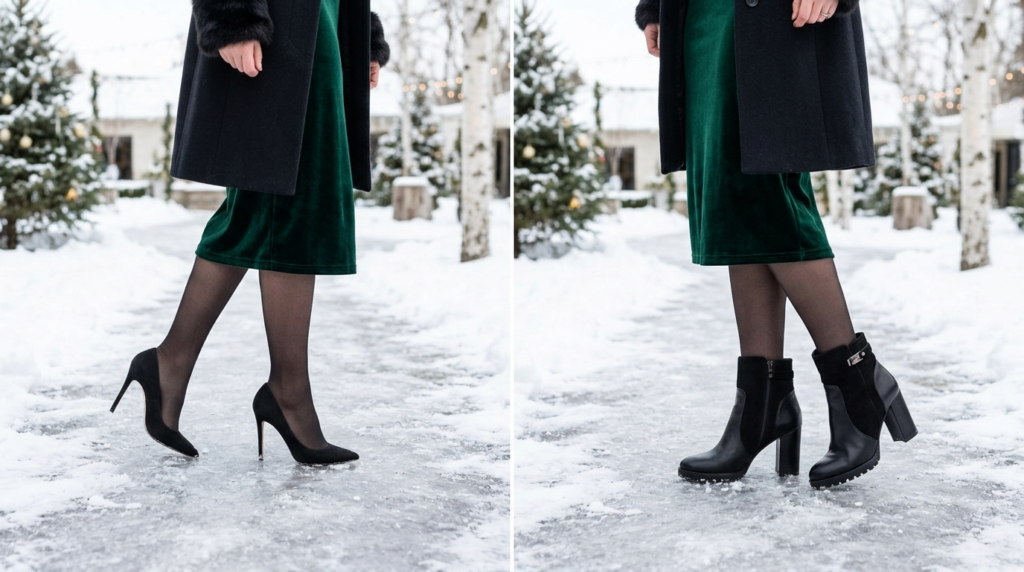
- Do not wear open-toe shoes in freezing or wet weather unless the wedding is fully indoors, warm, and clearly dressy, and you have a practical pair for travel.
- Do not wear slim stilettos on gravel, grass, snow or ice. A wider heel or a boot is usually steadier and more comfortable on those surfaces.
- Do not wear brand-new shoes for a long wedding day. A wedding involves standing, walking, photos and dancing, which is a difficult first test for any new pair.
- Do not wear heavy outdoor or snow boots to a formal indoor wedding unless you plan to change into a dress shoe indoors. A dressy boot is different from a practical snow boot.
- Do not ignore the dress code for the sake of warmth alone. Warmth matters, but a warm shoe that clashes badly with a formal outfit can feel as wrong as a cold dress shoe. A dressy boot, warm tights and a long coat usually solve both problems at once.
Frequently Asked Questions About Shoes to Wear to a Winter Wedding
Can I wear boots to a winter wedding?
Yes. Dressy ankle boots and knee-high boots are appropriate for many winter weddings, especially semi-formal, daytime and outdoor weddings. For formal weddings, choose polished boots in a neutral finish and pair them with a dress length that suits the boot shaft.
Can I wear heels in snow or ice?
Heels are riskier on snow and ice than boots with a textured sole and a wider heel. If you wear heels, choose a low block heel, test them on a similar surface beforehand, and consider a practical boot pair for outdoor parts of the day.
What shoes should I wear to an outdoor winter wedding?
Wear dressy boots with a grippy, textured sole and a low, stable heel, paired with warm tights and a long coat. A longer dress can hide the boot shaft while keeping the outfit elegant for photos.
Are open-toe shoes okay for a winter wedding?
Open-toe shoes are usually not practical for cold or outdoor winter weddings. For a fully indoor, warm, formal wedding, they can work, but bring a warm, practical pair for travel to and from the venue.
What shoes go best with a winter wedding guest dress?
For a midi dress, knee-high boots or block heels usually work well. For a maxi dress, a dressy boot or a low heel hidden under the hem works well. For a shorter dress, an ankle boot or a block heel keeps the proportions balanced. For dress-and-boot proportions, see How to Style Knee-High Boots with Dresses.
Should I bring a second pair of shoes for dancing?
Bring a second pair if your ceremony shoes are very different from your dancing shoes, if the ceremony is outdoors and the reception is indoors, or if you will dance for a long time. A dressy flat or a low block heel is a practical dancing backup.
What colour shoes should I wear to a winter wedding?
Neutral colours such as black, brown, burgundy, navy or metallic tones usually work best, because they pair with most winter wedding outfits and look polished in photos. Match the shoe colour to the outfit’s overall tone, rather than trying to match one accessory exactly.
Choose Your Winter Wedding Shoes in 5 Minutes
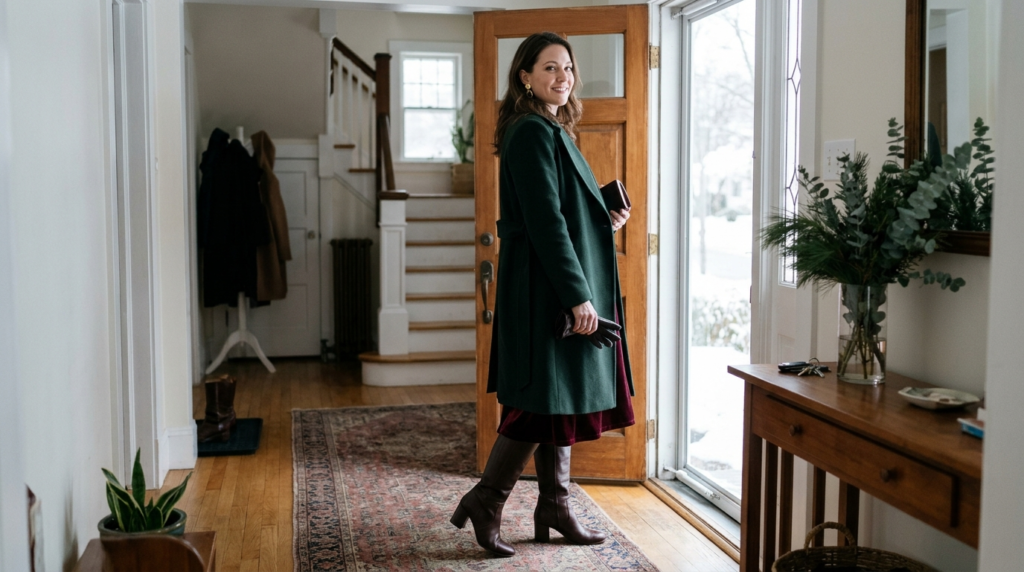
Use this quick check before the wedding:
- Is any part indoors, outdoors, or both, and what is the ground like?
- How dressy is the wedding: formal, semi-formal or relaxed?
- How long will you stand, walk and dance?
- Which pair in your closet already fits all three answers, with warm tights and a coat for travel?
If one pair fits, wear it. If no pair fits, plan a two-pair strategy: a dressy boot for outdoor or travel parts, and a party shoe for the indoor reception.
Next, explore the guides that go with this one: Winter Outfit of the Day: Warm, Chic Looks That Start With Knee-High Boots, How to Style Knee-High Boots with Dresses, and Comfortable Heels You Can Actually Wear All Day.

Emily started HeelToStyle after one too many pairs of boots sat unworn in her closet simply because she couldn’t figure out what to wear them with. What began as personal outfit notes turned into a full site dedicated to practical, wearable shoe styling. She leads content direction and writes most of the site’s occasion-based outfit guides.