

High heels change how your foot meets the ground, and that change is felt in two places first: the ball of the foot, and the toes. When the heel is raised, the foot is tilted forward, so more of your weight moves toward the front of the foot. When the toe box is narrow, the toes have less room to spread, so they can feel crowded, especially after a long day.
This guide explains that pressure and toe room in plain terms, without turning a shoe choice into a medical diagnosis. It shows how heel height, pitch, toe shape, and fit work together, how to check a pair at home before a long day, and how to choose a heel that is more likely to feel comfortable for you. It is not a guide to treating foot pain, and it is not a replacement for professional foot care if pain keeps coming back.
This post is different from the comfortable heels guide, which is about styling heels so they work all day. This post is about the fitting decision itself: pressure, toe room, and heel height, and how to test those three things before you buy or wear a pair.
The Short Answer: Pressure and Toe Room
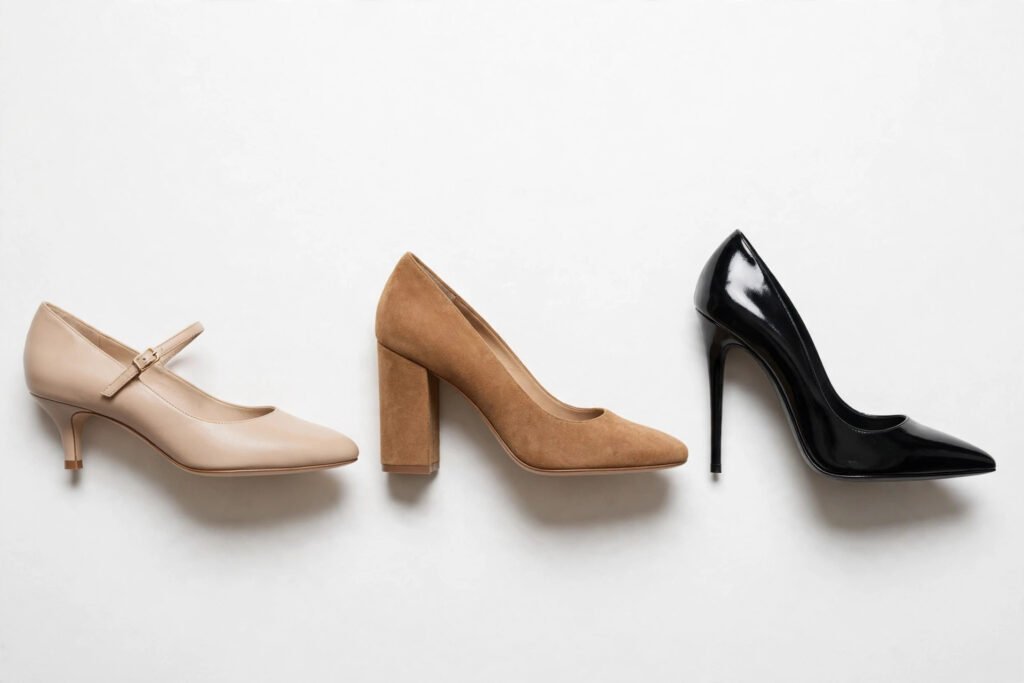
For most people, a lower heel with a wider, more forgiving toe box feels more comfortable than a very high, very narrow heel, because it shifts less weight forward and gives the toes more room to spread. That one sentence covers most of the fitting decisions in this guide.
Use this table as a starting comparison. These are general patterns, not exact measurements for every foot, because feet, shoe brands, and heel shapes vary.
| Heel choice | What tends to happen | Toe room check | Best for |
|---|---|---|---|
| Low heel, under about 2 inches, with a rounded toe | Less forward shift, more even feel under the foot | Toes can spread a little, no pinching at the sides | Everyday wear, longer days, travel |
| Mid heel, about 2 to 3 inches, with a block heel | More forward shift than a low heel, but a wider base under the heel | Check that the widest part of the foot lines up with the widest part of the shoe | Work, smart-casual days, evenings |
| High stiletto, over about 3 inches, with a pointed toe | More forward shift, more pressure at the ball of the foot, less room for the toes | Toes often feel crowded, especially the outer toes | Shorter occasions, not long walking days |
| Platform heel, with a platform under the front | The drop from heel to toe is smaller than the heel height alone suggests | Check toe room just as carefully, a platform does not fix a narrow toe box | Occasions where height matters, with a stable base |
Four fitting rules cover most heel choices:
- Lower the drop, not just the heel height. A smaller drop usually feels less steep under the foot.
- Match the toe box to your foot shape, not just your shoe size. If the shoe pinches across the toes, you usually need a wider fit, not a longer size.
- Check the widest point. The widest part of your foot should sit in the widest part of the shoe.
- Test the pair standing and walking, not just sitting. Feet spread a little when you stand and walk.
For all-day heel styling in more detail, see Comfortable Heels You Can Actually Wear All Day.
What Happens When the Heel Goes Up
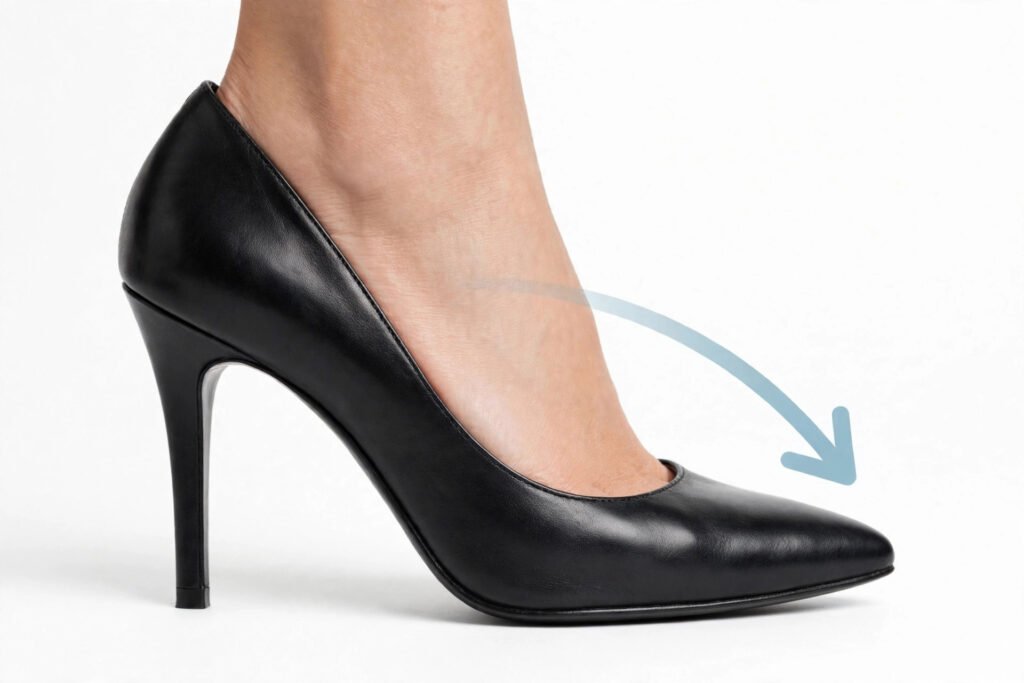
In flat shoes, your weight distributes evenly across both your heel and the forefoot. Elevating the heel introduces a gentle slope, shifting your body weight forward toward the ball of the foot and your toes. That forward shift is why the ball of the foot often feels it first in a high heel, and why it can feel sore after a long day of walking or standing.
Heel height is not the only factor. Pitch matters too. Pitch is the angle from the heel to the toe. A steep pitch, with a high heel and no front platform, feels steeper under the foot than the same heel height with a platform under the front, because the platform reduces the drop. That is why a platform heel can feel more manageable than a stiletto of the same height, even though both look tall from the side.
Stability matters too. A thin stiletto has a very small base, so balance takes more effort, especially on uneven ground. A block heel has a wider base, so the foot feels more supported. As heel height and pitch go up, forward pressure tends to go up too, so a high heel needs a better fit, a more stable base, and a shorter wearing time to feel comfortable.
The Toe Box Problem: Why Toes Get Crowded
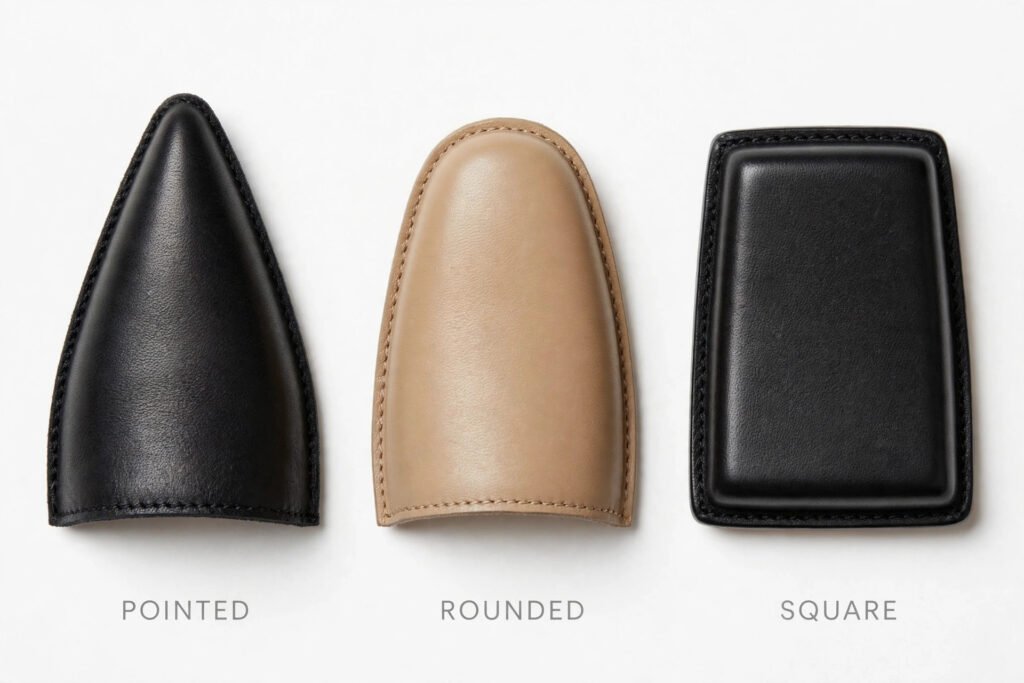
The toe box is the front part of the shoe where your toes sit. Its shape decides whether your toes can spread naturally, or whether they are squeezed together.
A rounded or square toe box gives the toes more room across the front. A pointed toe box narrows toward the tip, so the outer toes, and sometimes the little toe, can feel pressed against the side of the shoe. An elongated pointed toe, where the point extends past where your toes actually end, can feel better than a short pointed toe, because your toes are not sitting right at the narrowest point. Still, a pointed shape is usually less forgiving than a rounded shape, especially for a wider foot.
A common fitting mistake is to size up to get more toe room. A longer shoe does not always give you a wider toe box, and it can make the heel slip and move the arch out of line. If a shoe feels tight across the toes, look for a wide fit first, in the same length.
Material matters too. Soft leather and suede can give a little with wear, while stiff plastic is less likely to soften, so do not rely on breaking in a toe box that pinches badly on the first try. Check toe room standing up, with both shoes on, and with the socks or tights you plan to wear. If your toes feel crowded standing still, they will usually feel more crowded after walking, because feet spread a little with each step.
Heel Height, Pitch and Stability

Choosing a heel is really choosing three things at once: height, pitch, and stability. Height is how tall the heel looks. Pitch is how steep the foot feels inside the shoe. Stability is how supported the foot feels, based on the heel base and the shoe structure.
A low heel, under about 2 inches, is a good everyday starting point for many people. The forward shift is smaller, the pitch is gentler, and the foot is closer to its natural position. A low block heel or a low kitten heel can work for work, travel, and smart-casual days.
A mid heel, about 2 to 3 inches, is where most all-day heel choices sit. A block heel in this range gives a wider base, so it feels more stable than a slim heel of the same height. A platform under the front can reduce the drop, so a mid heel with a small platform can feel less steep than a mid heel without one.
A high heel, over about 3 inches, is best kept for shorter occasions, if you choose it at all. The forward shift is larger, the pitch is steeper, and the ball of the foot carries more load. A high block heel or a high platform can feel more stable than a high stiletto, but the height itself still matters. Stability also depends on the ground: a slim heel on uneven pavement, cobbles, or grass can feel unsteady, while a block heel is usually easier on those surfaces.
How to Check Fit at Home
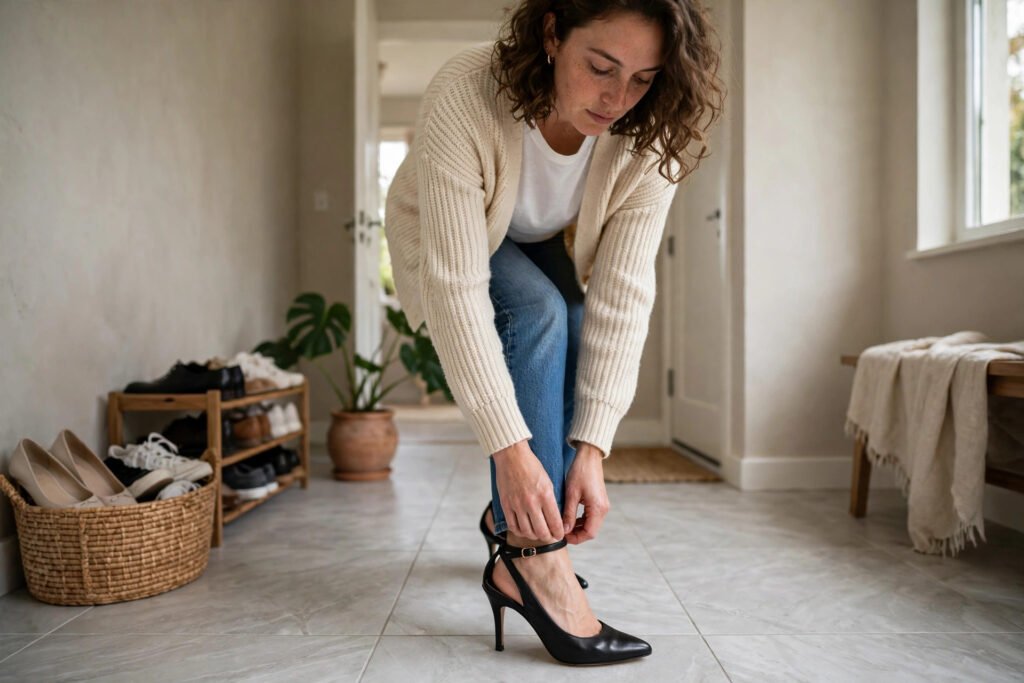
Use this check at home, in the full outfit, before a long day out. It takes about five minutes, and it catches most fitting problems early.
Start standing, not sitting. Put on both shoes, with the socks or tights you plan to wear, and stand on a hard floor. Feet spread when you stand, so a sitting check can miss tightness that shows up as soon as you stand.
Check these four points, in order:
- Toe room. Wiggle your toes. They should move a little, without hard pressure at the sides or the front. If the outer toes feel pinched, the toe box is probably too narrow for your foot, even if the length feels right.
- Widest point. Feel where the widest part of your foot sits. It should sit in the widest part of the shoe. If it feels squeezed, or if the shoe bends in the wrong place when you step, the fit may be off.
- Heel grip. Walk a few steps, sit down, and stand again. The heel should stay in place without slipping a lot, and without rubbing hard at the back. A heel that slips a lot can cause blisters, and it can make you grip with your toes, which adds to forefoot pressure.
- Arch alignment. The arch support, if the shoe has any, should sit under your arch, not too far forward or too far back.
Then walk, not just stand. Walk around your home for a few minutes, and pay attention to the ball of the foot, the toes, and the heel, not just to how the shoe looks. If pressure builds quickly, that pair is unlikely to feel better after several hours. Break in new heels gradually, with shorter wears at home first, rather than a full day as the first wear.
Choosing a More Comfortable Heel

A more comfortable heel is not one single style. It is a combination of height, toe shape, base, and material that fits your foot and your day.
Start with height and drop. For a long day, choose a lower heel, or a heel with a front platform that reduces the drop. For a shorter occasion, a higher heel is easier to manage, because the wearing time is shorter and the pressure does not build as much.
Next, choose the toe shape. For a wider foot, or for a day with a lot of walking, choose a rounded or square toe box, or an elongated pointed toe that gives your toes room before the point narrows. For a shorter occasion, a pointed toe can work, but check toe room standing and walking, not just sitting.
Next, choose the base. A block heel gives a wider base and usually feels more stable than a slim stiletto of the same height. A kitten heel gives height with a lower drop. Next, choose the material. Soft leather, suede, and flexible material are usually more forgiving than stiff plastic, especially around the toes. A cushioned insole can help with forefoot pressure, but it does not fix a toe box that is too narrow, so check fit with the insole in place.
Finally, match the heel to the day. A low block heel for a workday with a lot of walking, a mid block heel for a smart-casual evening, and a higher heel for a short occasion is a practical pattern for many people.
For heel styling with jeans in more detail, see Heels With Jeans: Effortless Outfit Ideas for Your Closet.
Frequently Asked Questions About High Heels and Your Feet

Why do high heels hurt the balls of my feet?
In many cases, it is about forward pressure. When the heel is raised, more weight moves toward the front of the foot, so the ball of the foot carries more load than it does in a flat shoe. A lower heel, a smaller drop, and a block heel can reduce that pressure for many people.
Can pointed-toe heels ever feel comfortable?
Yes, for some people, especially with an elongated pointed toe, where the point extends past where the toes end. A rounded or square toe is usually more forgiving, especially for a wider foot or a longer day.
How much toe room should I have in a heel?
Enough for your toes to move a little, without hard pressure at the sides or the front. Stand, wiggle your toes gently, and walk a few steps. If your toes feel crowded standing still, they will usually feel more crowded after walking.
Is a platform heel better for your feet than a stiletto?
A platform can help with pitch, because it reduces the drop from heel to toe, so the foot feels less steep than a stiletto of the same height. It does not fix a narrow toe box, and it does not make a very high heel feel like a low heel.
Should I size up to get more room in the toe box?
Usually not as a first step. Sizing up can make the heel slip, and it can move the arch support to the wrong place. If a shoe feels tight across the toes, try a wide fit in your usual length first.
Are block heels really more comfortable than stilettos?
For many people, yes, especially for longer days, because a block heel has a wider base, so the foot feels more supported. A stiletto can still work for a shorter occasion, but it usually needs a better fit and a shorter wearing time.
When should I stop wearing a pair of heels?
If a pair pinches badly at home, slips a lot at the heel, or causes pressure at the ball of the foot after only a few minutes of walking, that pair is unlikely to feel better after several hours. Try a different width, toe shape, or heel height, rather than forcing the same pair for a full day.
Your 5-Minute Fitting Checklist

Use this quick check before you buy or wear a pair of heels:
- Height and drop: lower heel, or smaller drop with a platform, for a longer day.
- Toe box: rounded, square, or elongated pointed, with room for your toes to move a little.
- Widest point: the widest part of your foot sits in the widest part of the shoe.
- Heel grip: walk, sit, and stand again, and check that the heel does not slip a lot.
- Walking test: walk for a few minutes at home, and check the ball of the foot, the toes, and the heel, not just how the shoe looks.
If all five check out, you have a heel that is more likely to feel comfortable for your day. If one fails, change that one thing, usually the width, the toe shape, or the heel height.
This guide is general shoe-fitting information, not medical advice.
Next, explore the guides that go with this one: Comfortable Heels You Can Actually Wear All Day, Heels With Jeans: Effortless Outfit Ideas for Your Closet, and Fall Outfit of the Day: Cozy Layered Looks Built Around Ankle Boots.

Emily started HeelToStyle after one too many pairs of boots sat unworn in her closet simply because she couldn’t figure out what to wear them with. What began as personal outfit notes turned into a full site dedicated to practical, wearable shoe styling. She leads content direction and writes most of the site’s occasion-based outfit guides.