

The best wide-calf ankle boots that actually fit are the ones you buy by the shaft, not by hope. Measure both calves at the widest point. Sit with your feet flat on the floor, over the socks or tights you will wear most. Use the larger number. Then look for a boot with a shaft about half an inch to an inch larger than your calf. Choose a stretch panel, an elastic gore, or an adjustable buckle. Ankle boots sidestep calf sizing almost entirely, because the shaft ends below the calf bulge.
Why do ankle boots fit wide calves so well? A knee-high boot has a long shaft. It must close around your calf, so the shaft size decides everything. An ankle boot has a short shaft. It ends below the widest part of your calf, so the calf size matters far less. What matters instead is the opening and the ankle circumference. The edge should not cut in. A small dip or V at the front lengthens the leg line.
This guide shows you why ankle boots are the easiest wide-calf fit, how to measure your calf for boots, how to read shaft sizes and labels, the features that make a wide-calf ankle boot fit, how to style wide-calf ankle boots, and what to avoid, so you can buy wide-calf ankle boots that actually fit.
Wide-Calf Ankle Boots That Actually Fit

The short answer is: measure both calves at the widest point. Sit with your feet flat on the floor, over the socks or tights you will wear most, and use the larger number. Then look for a boot with a shaft about half an inch to an inch larger than your calf. Choose a stretch panel, an elastic gore, or an adjustable buckle. Ankle boots sidestep calf sizing almost entirely, because the shaft ends below the calf bulge.
Why does the measurement matter so much? For many women, boot shopping fails at the zipper, not the foot. A boot can fit perfectly in length and width. It can still be unwearable, because the shaft was patterned for a fourteen-inch calf. Wide-calf boots solve the shaft problem directly. Their circumferences run from about sixteen inches to twenty inches and beyond. They add stretch panels, fuller ankles, and proportions balanced for a fuller leg.
Your choice should start with your calf number. If your calf measures over sixteen inches, you will do better with a wide-calf boot. If your calf measures under sixteen inches, a standard boot may fit, but a stretch panel still helps. Either way, buy by the shaft, not by hope. Check the opening and the ankle circumference before you buy.
Why Ankle Boots Are the Easiest Wide-Calf Fit

Ankle boots are the easiest wide-calf fit for three reasons. The shaft is short, the opening is forgiving, and the styling is simple. The shaft is short, so it ends below the calf bulge and avoids the pressure point where a taller boot would cut in. Openings are forgiving, so a stretch panel or an elastic gore can add an inch or two of flexible room where you need it most. The styling is simple, so you can pair ankle boots with slim pants, cropped jeans, or an A-line skirt without fighting the boot.
A knee-high boot needs a shaft that closes around your calf, so the shaft size decides everything. An ankle boot needs only an opening that does not cut in, so the ankle circumference decides the fit. A small dip or V at the front lengthens the leg line. A slightly shorter shaft, ending below the calf bulge, avoids pressure points. Choose a boot with vertical lines, like seams, laces, or a centre zip, to elongate the leg.
How to Measure Your Calf for Boots

Measuring your calf takes five minutes and a soft tape measure. Use the steps below, and write down your number before you shop.
What you need
You need a soft, flexible fabric tape measure, not a rigid ruler. A soft tape gives a more accurate result, as it follows the shape of your leg. Measure over bare legs or the layers you plan to wear with your boots, like thin socks or tights. Do not measure over bulky clothes, as this will add inches that are not really there.
Measure the widest part
Sit down with your feet flat on the floor, This gives a more accurate measurement than standing. Wrap the tape around the fullest part of your calf. It is usually about twelve to fourteen inches up from the heel, or midway between ankle and knee. Keep it flat against the skin, with no twists or gaps, and even all the way around.
Measure both legs, and use the larger number
Measure both calves, as most people have slightly different calf sizes. Use the larger number when ordering, as it decides the size. Measure in the evening if your legs swell during the day. This is a common and normal variation. It can add half an inch or more. If you plan to wear your boots over jeans or thick socks, add half an inch to an inch to your calf measurement. That gives a more realistic fit.
How to Read Shaft Sizes and Labels
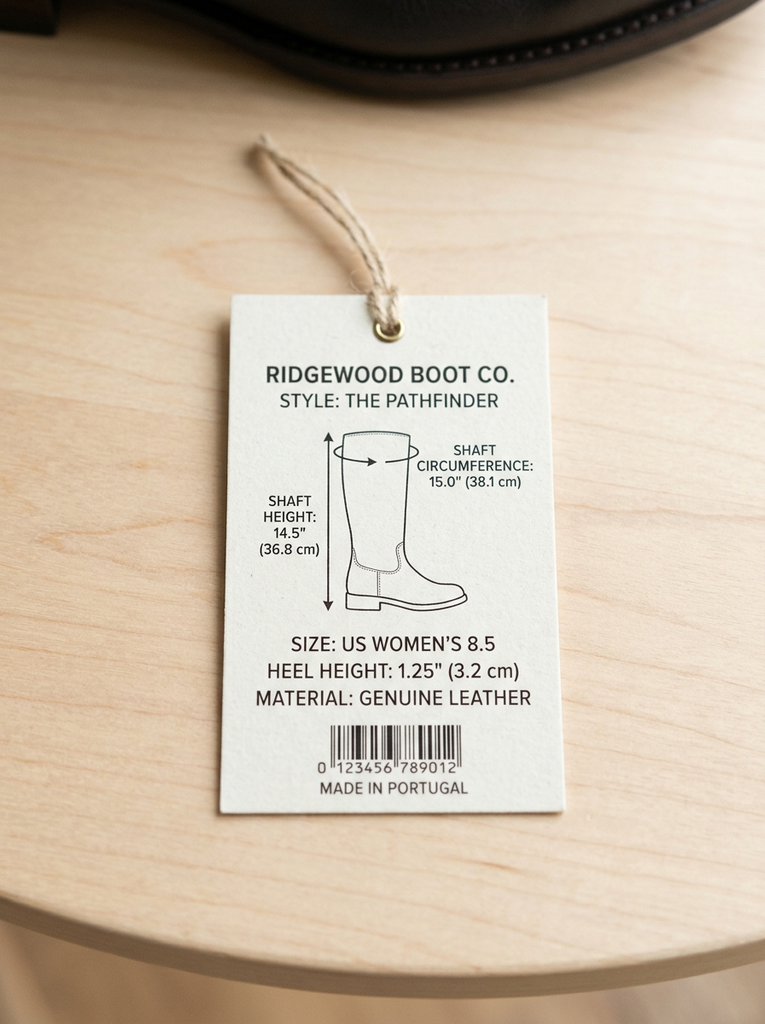
Shaft sizes and labels tell you how a boot will fit your calf. Use the tips below to read them before you buy.
Shaft circumference
Shaft circumference is the measurement around the boot shaft, usually listed for the standard size in the range. Typical boot shafts range from fourteen inches to twenty inches and beyond. Fourteen inches is standard. Twenty inches and beyond is wide or extended wide calf. You want the shaft about half an inch to an inch larger than your calf. That gives a clean zip and comfortable wear. Anything over sixteen inches does better with a wide-calf boot.
Shaft height
Shaft height matters as much as circumference. It is measured up the back or inside of the boot. It decides where the top edge lands on your leg. Measure from your heel up to where you want the top of the boot to hit. Try ankle, mid-calf, or knee, so you can compare it to product descriptions. A shorter shaft, ending below the calf bulge, avoids pressure points.
Wide calf vs wide width
Wide calf and wide width describe different measurements, and neither automatically includes the other. A wide-calf boot has a roomier shaft, while a wide-width boot provides additional space around your foot. A boot can be wide in the foot and narrow in the shaft, or the other way around.
The Features That Make a Wide-Calf Ankle Boot Fit
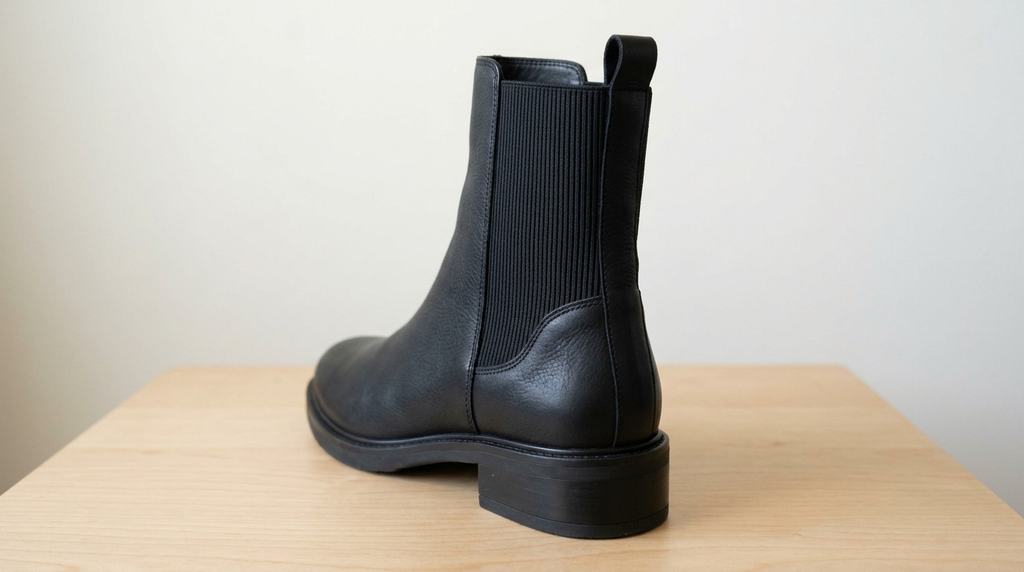
Three features make a wide-calf ankle boot fit: stretch panels, adjustable shafts, and a forgiving opening. Use the tips below to spot them in a product description.
Stretch panels and elastic gore
Look for terms like wide calf, extended calf, adjustable shaft, or stretch back in product descriptions. A stretch insert at the back of the shaft adapts without any adjustment at all. An elastic gore is a stretch panel at the side of the boot. It adds an inch or two of flexible room where you need it most. Slouch and stretch boots in suede, microsuede, or knit shafts conform to the calf and are the most forgiving first purchase.
Adjustable shafts and buckles
An adjustable shaft, usually through a gusset, a buckled strap, or a panel, lets the circumference be set after buying. Adjustable calf boots use buckles, lacing, or wrap-over straps to increase circumference when needed. They are especially helpful if your calf shape varies along its length. Look for a buckle or a strap you can loosen. Then the boot fits on day one, and it still fits if your legs swell.
A forgiving opening and a V dip
Ankle boots sidestep calf sizing almost entirely, but check the opening and ankle circumference so the edge does not cut in. Consider a small dip or V at the front that lengthens the leg line. A leather shaft relaxes a little with wear. It takes the shape of the leg. A coated synthetic does not, so a synthetic boot should fit on day one. For more on boots, see this waterproof chelsea boots guide.
How to Style Wide-Calf Ankle Boots

Wide-calf ankle boots are easy to style, as long as you keep the proportions simple. Use the tips below for the three outfits that matter most.
Jeans
Pair wide-calf ankle boots with slim pants or cropped jeans. Tapered or skinny bottoms prevent visual bulk and create a streamlined silhouette. Roll or cuff jeans just above the boot, as this highlights the ankle and draws the eye downward, balancing proportions. Avoid wide-leg pants tucked in, as excess fabric increases volume inside the boot, forcing the shaft tighter. For more on ankle boots, see this fall outfit of the day with ankle boots guide.
Skirts and dresses
Pair wide-calf ankle boots with skirts or dresses that do not cling to the leg. An A-line skirt, a midi skirt, or a fit-and-flare dress works well. The skirt brings movement, and the ankle boot balances it. Avoid a knee-length hemline that hits at the widest calf point, as this will visually shorten your legs. Choose a hem slightly shorter or longer than the widest point. For more on midi skirts, see this chelsea boots with a midi skirt guide.
Colour and lines
Match boot colour to pants, as a monochrome lower half creates continuity and minimises width perception. A black boot with black jeans looks long and neat. A brown boot with brown trousers looks warm. Choose boots with vertical lines, like seams, laces, or a centre zip, to elongate the leg. A long cardigan or a structured jacket adds dimension, while a statement belt defines your waist. For more on winter boots, see this how to wear suede boots in winter guide.
What to Avoid With Wide-Calf Ankle Boots
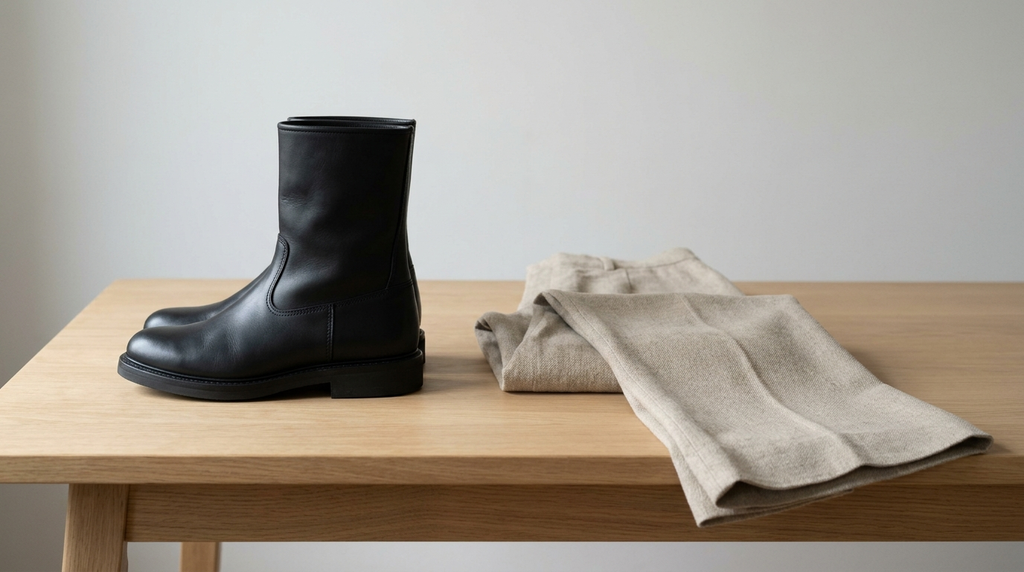
Here are three things to avoid. A rigid shaft with no stretch will pinch, slip down, or simply refuse to zip. Boots that cut across the widest point of your calf will visually shorten your legs. A wide-leg pant tucked into the boot will force the shaft tighter, as excess fabric increases volume inside the boot.
Also avoid measuring only one leg, as most people have slightly different calf sizes. Avoid measuring over bulky clothes, as this will add inches that are not really there. Avoid buying by foot size alone, as calf circumference varies far more between adults than foot length does. The safest choice is to measure both calves and buy by the shaft. For more on work boots, see this winter work commuter shoes guide.
Questions About Wide-Calf Ankle Boots That Actually Fit

How do I measure my calf for boots?
Sit down with your feet flat on the floor, Wrap a soft tape measure around the fullest part of your calf, usually about twelve to fourteen inches up from the heel. Measure both legs, and use the larger number.
What is a wide calf boot?
A wide-calf boot is a boot with a roomier shaft, made for wider calves. Wide-calf boots usually have circumferences from about sixteen inches to twenty inches and beyond, with stretch panels, fuller ankles, and proportions balanced for a fuller leg.
Do wide calf ankle boots exist?
Yes, wide-calf ankle boots exist, and they are the easiest wide-calf fit. Ankle boots sidestep calf sizing almost entirely, because the shaft ends below the calf bulge. What matters instead is the opening and the ankle circumference, so the edge does not cut in.
How do you style wide calf ankle boots?
Pair wide-calf ankle boots with slim pants or cropped jeans, as tapered bottoms prevent visual bulk and create a streamlined silhouette. Roll or cuff jeans just above the boot, to highlight the ankle. Pair them with an A-line skirt or a midi skirt,
What is the difference between wide calf and wide width?
Wide calf and wide width describe different measurements, and neither automatically includes the other. A wide-calf boot has a roomier shaft, while a wide-width boot provides additional space around your foot.
Can ankle boots fit wide calves?
Yes, ankle boots can fit wide calves, and they are the easiest wide-calf fit. A knee-high boot needs a shaft that closes around your calf, so the shaft size decides everything. An ankle boot needs only an opening that does not cut in, so the ankle circumference decides the fit.
Conclusion
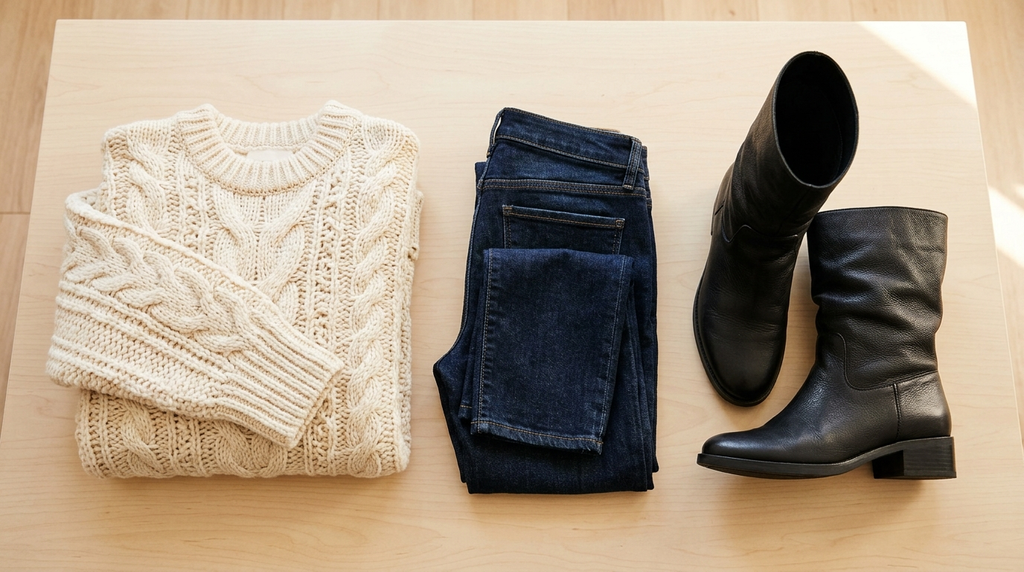
The best wide-calf ankle boots that actually fit are the ones you buy by the shaft, not by hope. Measure both calves at the widest point. Sit with your feet flat on the floor, over the socks or tights you will wear most. Use the larger number. Then look for a boot with a shaft about half an inch to an inch larger than your calf. Choose a stretch panel, an elastic gore, or an adjustable buckle.
Your next step is simple. Get a soft tape measure, sit down with your feet flat on the floor, and measure both calves at the widest point. Write down the larger number, and add half an inch to an inch if you will wear the boots over jeans or thick socks. Then look for a boot with that shaft size, a stretch panel, and a V dip at the front. If the opening does not cut in and the boot stays up, you have found a wide-calf ankle boot that actually fits.
Next, explore these guides:
- Waterproof Chelsea Boots That Still Look Smart
- Fall Outfit of the Day: Cozy Layered Looks Built Around Ankle Boots
- Winter Outfit of the Day: Warm, Chic Looks That Start With Knee-High Boots
- Chelsea Boots With a Midi Skirt for Rainy November Days
- What Shoes to Wear With Tights in Winter (The Denier and Colour Rule)

Emily started HeelToStyle after one too many pairs of boots sat unworn in her closet simply because she couldn’t figure out what to wear them with. What began as personal outfit notes turned into a full site dedicated to practical, wearable shoe styling. She leads content direction and writes most of the site’s occasion-based outfit guides.