
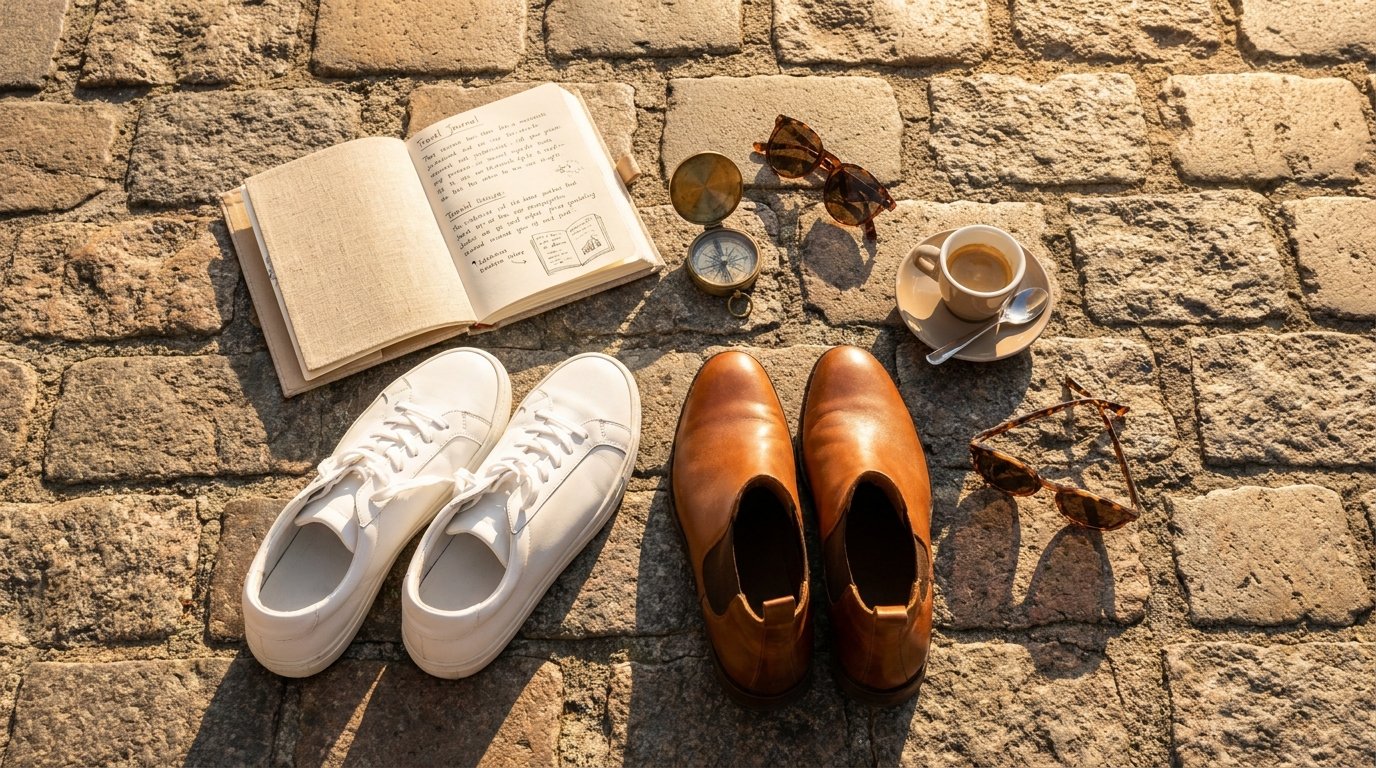
Finding the best walking shoes for Europe travel is the single most critical packing decision you will make before boarding your transatlantic flight. An average sightseeing itinerary in cities like Rome, Paris, Edinburgh, or Lisbon easily demands 15,000 to 25,000 steps per day across centuries-old, uneven cobblestone alleys, steep stone staircases, and slick subway tiles. Pack the wrong shoes, and painful blisters, fallen arches, or bruised heel bones can derail your vacation within forty-eight hours.
Fortunately, you no longer have to choose between clunky, neon gym trainers and unsupportive ballet flats that offer zero shock absorption. Modern footwear engineering has ushered in an era of ultra-chic, cobblestone-proof designs that combine podiatrist-level arch support with refined silhouettes. Whether you are pairing your shoes with tailored linen trousers, breezy floral midi skirts, or classic trench coats, these 12 stylish pairs ensure you experience Europe in comfort and timeless style.
What Makes a Shoe Cobblestone-Approved? The Engineering Checklist
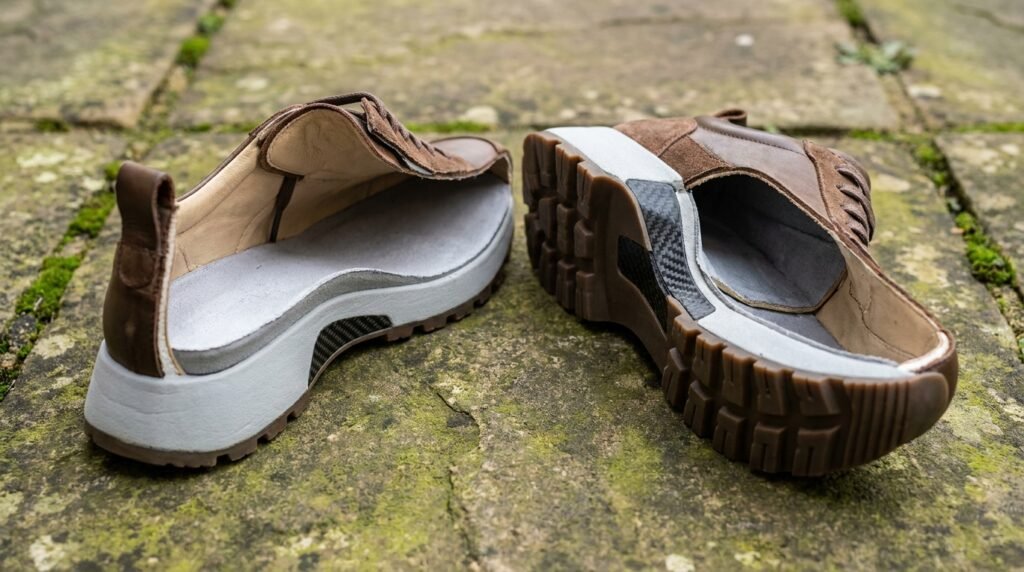
Historic European stone pavements are beautiful, but they act as relentless mechanical shock generators for your lower kinetic chain. Before packing any shoe, ensure it satisfies these four structural criteria:
- Torsional Rigidity: Grasp the shoe at the heel and toe, then twist. If it wrings out like a wet washcloth, it will offer zero stability when your foot lands on an uneven stone. A stable shank prevents ankle rolling.
- Outsole Thickness and Durometer: Thin leather or delicate canvas soles transmit every stone ridge directly into your metatarsal heads. Look for high-density EVA or vulcanized rubber outsoles at least 0.75 inches thick.
- Firm Calcaneal Heel Counter: A reinforced heel cup locks the back of your foot in place, preventing micro-slippage that generates painful friction blisters on long ascents.
- Non-Slip Tread Geometry: Polished marble walkways and wet stone streets turn dangerously slick when damp. Multidirectional siped rubber treads guarantee reliable traction.
Comfortable Shoes for Walking All Day in Europe: The 12 Top Picks
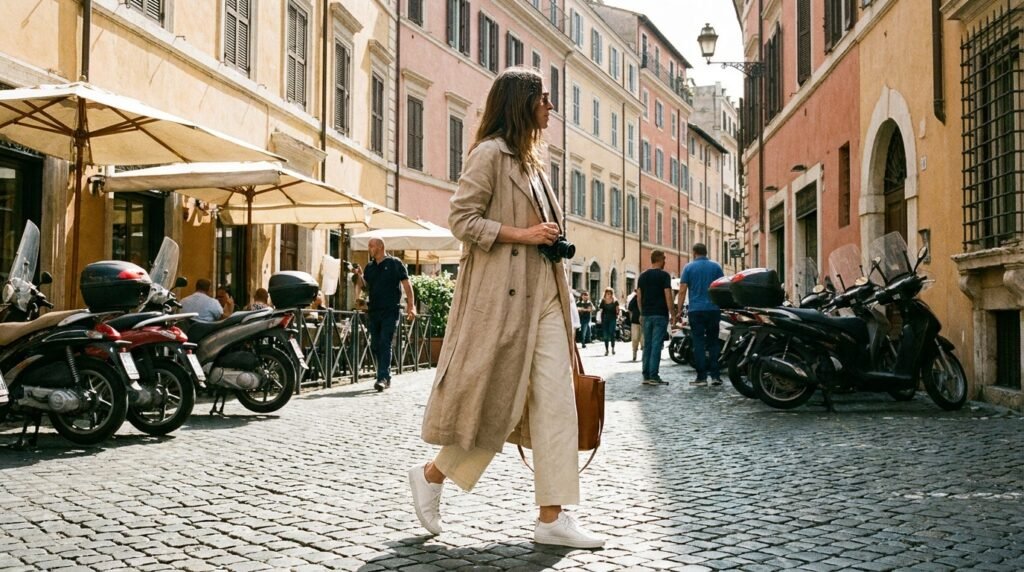
1. The Minimalist White Calfskin Court Sneaker
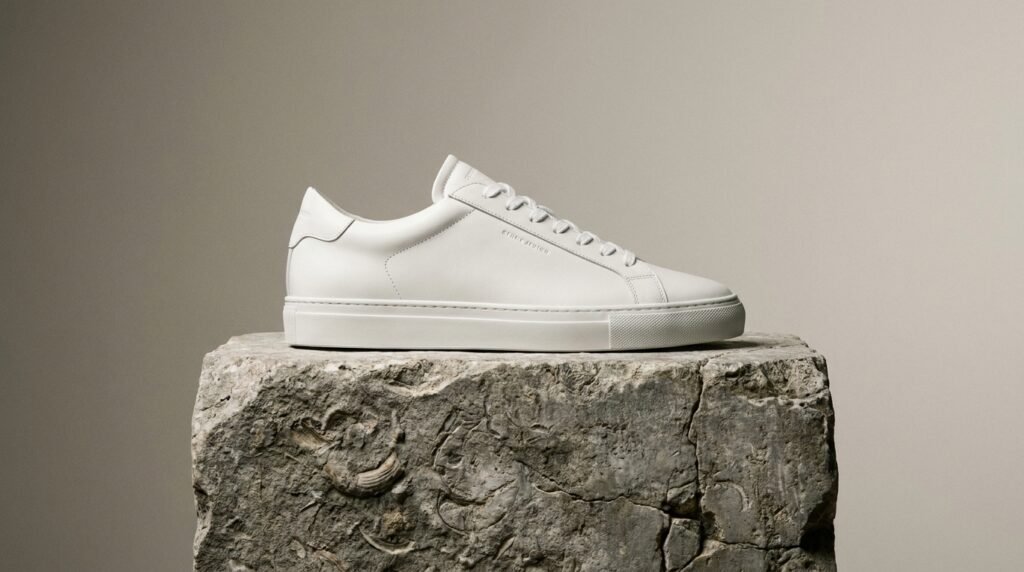
The undisputed queen of European street style. A clean, low-profile white calfskin sneaker acts as a modern neutral that pairs effortlessly with everything from tailored suits in Milan to floral slip skirts in Seville. Choose pairs featuring an internal dual-density cushioned footbed and smooth leather linings that prevent internal hotspots.
2. The Heritage Low-Profile Gum-Sole Trainer
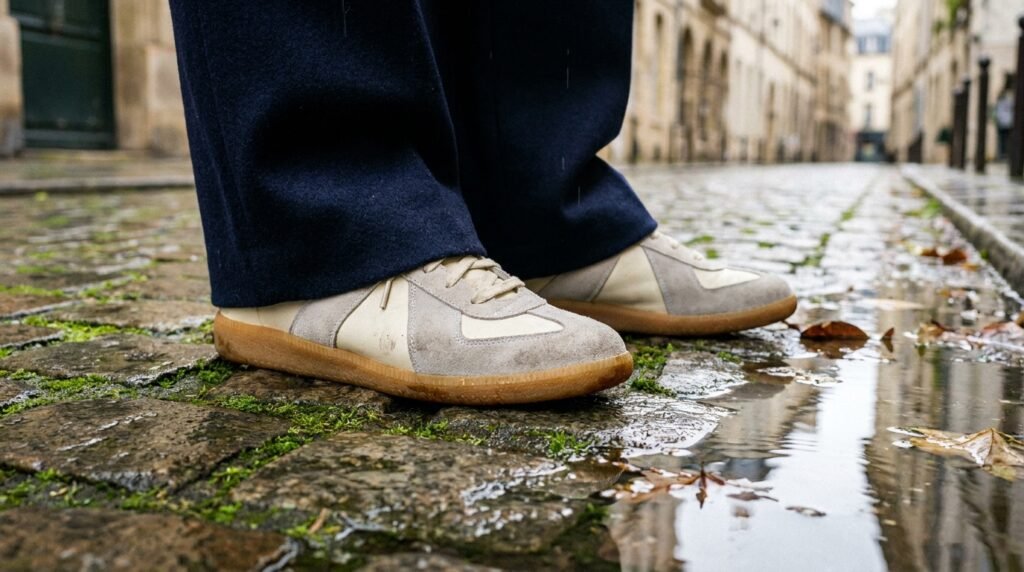
Inspired by vintage indoor athletic trainers, low-profile silhouettes like the Adidas Samba, Gazelle, or Puma Army Trainer are ubiquitous across London and Paris. Their flexible yet durable gum-rubber soles absorb impact while remaining slender enough to slip into sleek carry-on luggage without taking up excess room.
3. The Orthopedic-Grade Modern Retro Runner
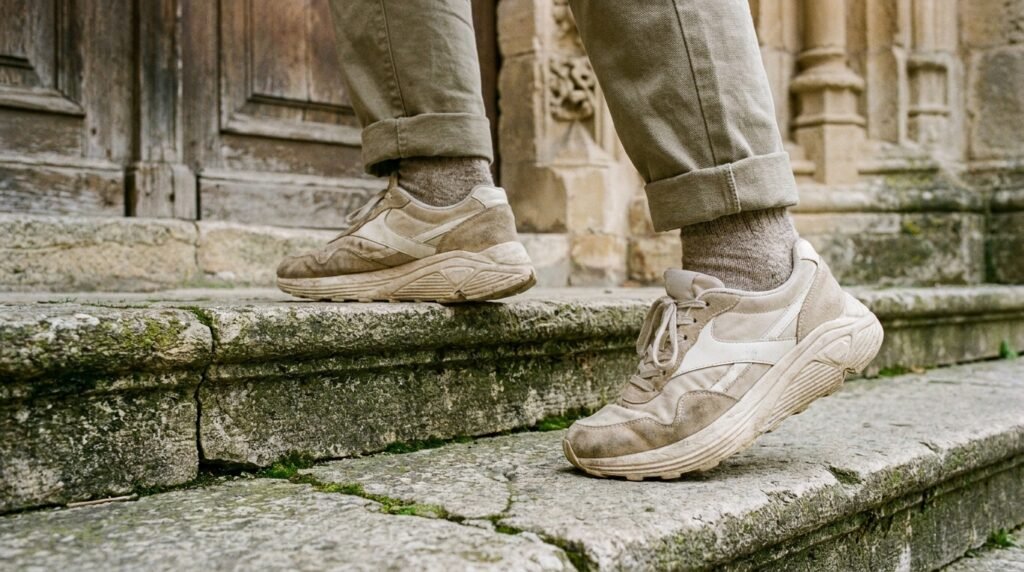
For travelers prone to plantar fasciitis or heel spurs, a retro runner from brands like New Balance (the 327 or 574 series) provides a substantial EVA foam midsole wedge. This elevated heel stack reduces strain on the Achilles tendon during long museum days while maintaining a high-fashion, vintage aesthetic.
4. The Water-Resistant Chelsea Ankle Boot
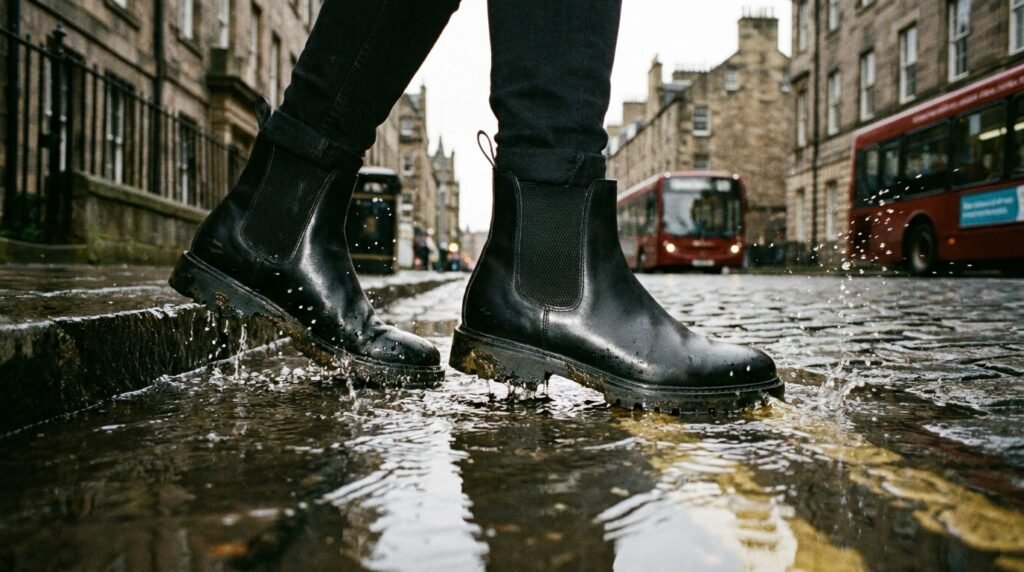
Essential for autumn, winter, and spring travel through rainy northern capitals like Dublin, Amsterdam, or Edinburgh. A streamlined black or dark brown Chelsea boot with a lugged Vibram sole shields your feet from puddles while looking polished enough for upscale evening dining.
5. The Ergonomic Contoured Footbed Slide
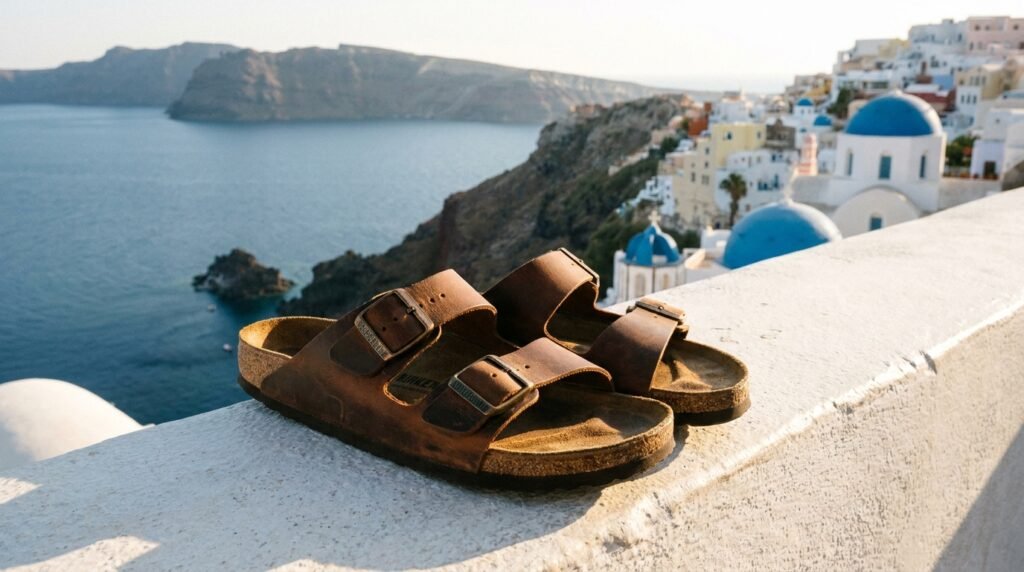
For warm-weather Mediterranean getaways across the Amalfi Coast or the Greek Islands, an anatomically molded cork and latex footbed sandal is essential. A contoured suede footbed molds to your foot’s unique footprint, providing orthotic arch support that flat sandals simply cannot replicate.
6. The Cushioned Pointed-Toe Knit Ballet Flat
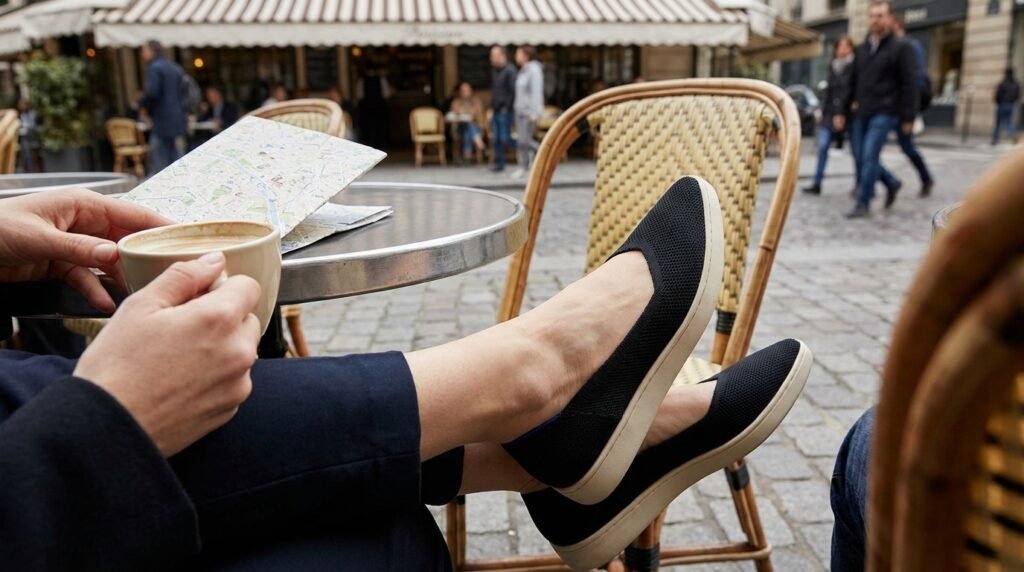
Modern knit ballet flats engineered with carbon-neutral yarns and hidden high-density foam arch inserts offer packable, glove-like flexibility. The pointed toe visually elongates your legs under cropped jeans or midi dresses while remaining completely machine-washable after dusty sightseeing tours.
7. The Chunky Cleated-Sole Penny Loafer
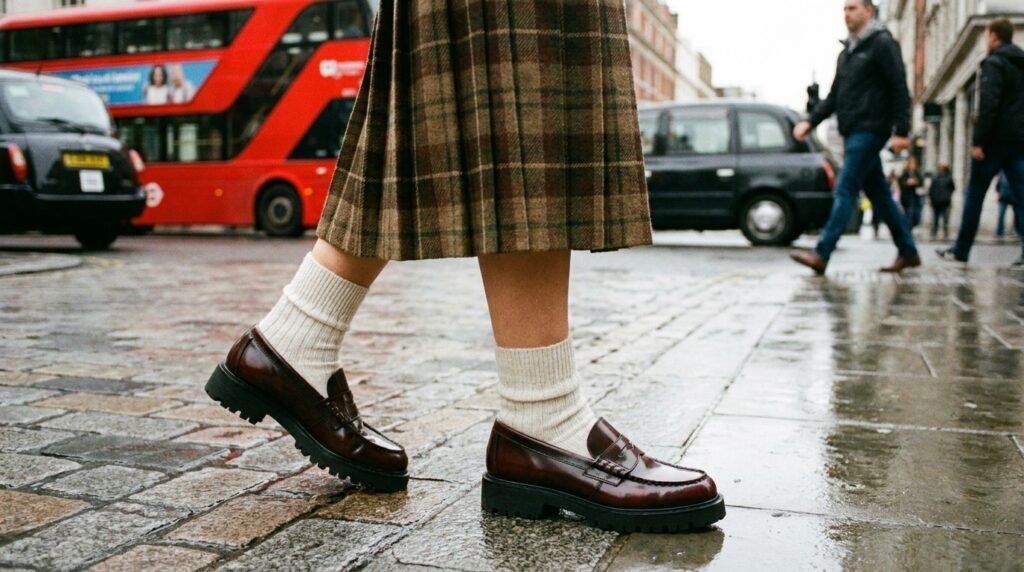
Channel an effortless dark academia vibe in vintage European cities with a glossy box-calfskin loafer set on a lightweight, cleated commando sole. The thick rubber sole acts as an impenetrable barrier against cobblestone ridges while elevating pleated skirts and wool trousers.
8. The Breathable Wool-Blend Walking Sneaker
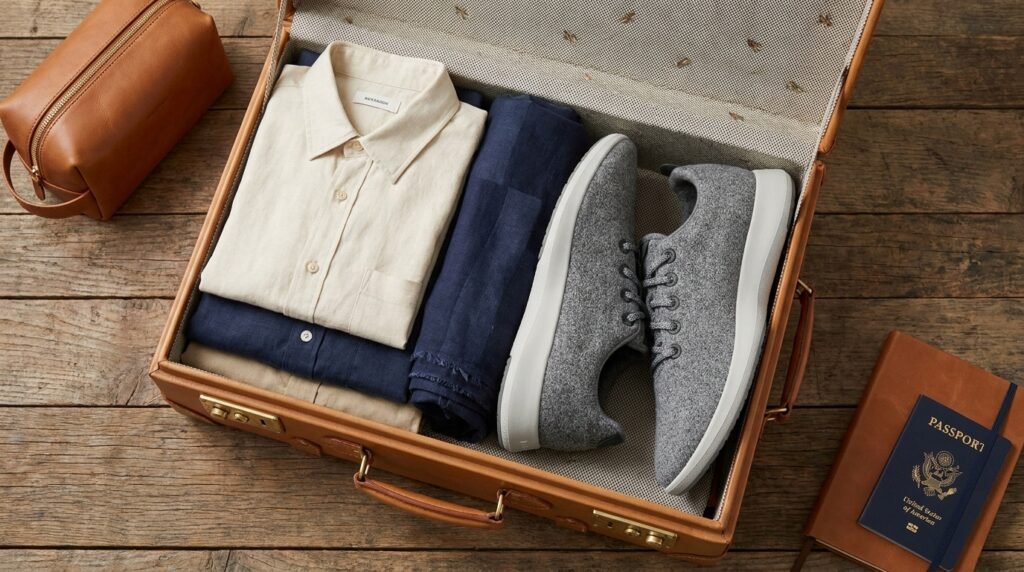
When packing ultra-light, a temperature-regulating merino wool sneaker offers breathable luxury. Naturally odor-resistant and flexible, wool uppers adjust to natural foot swelling caused by long flights and warm afternoon walking tours.
9. The Modern Architectural Fisherman Sandal
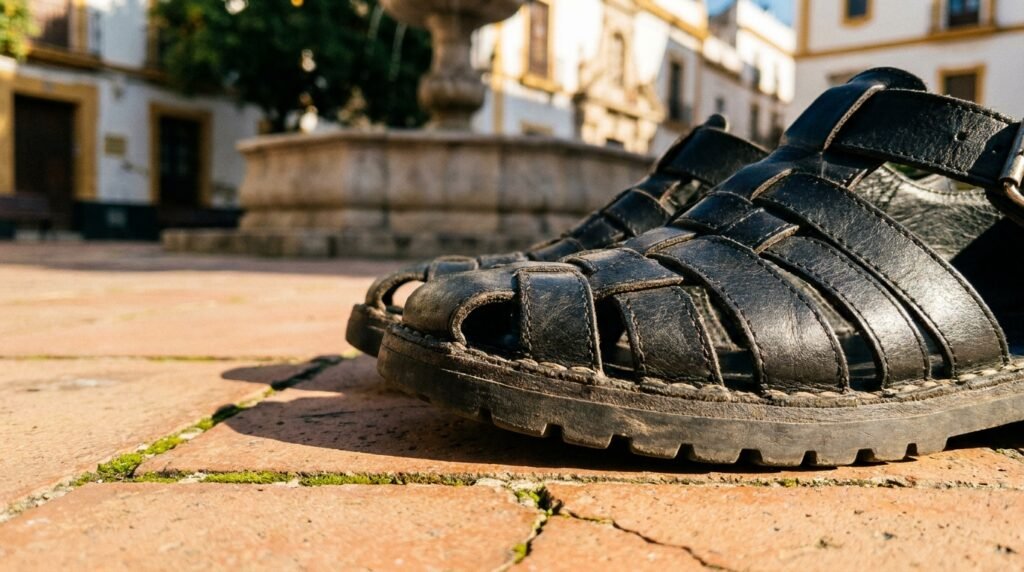
A standout trend that marries functional protection with high-fashion credentials. Interlocking woven leather straps shield your toes from rough stone edges while allowing maximum air circulation on warm Rome afternoons.
10. The Slip-Resistant Leather Riding Boot
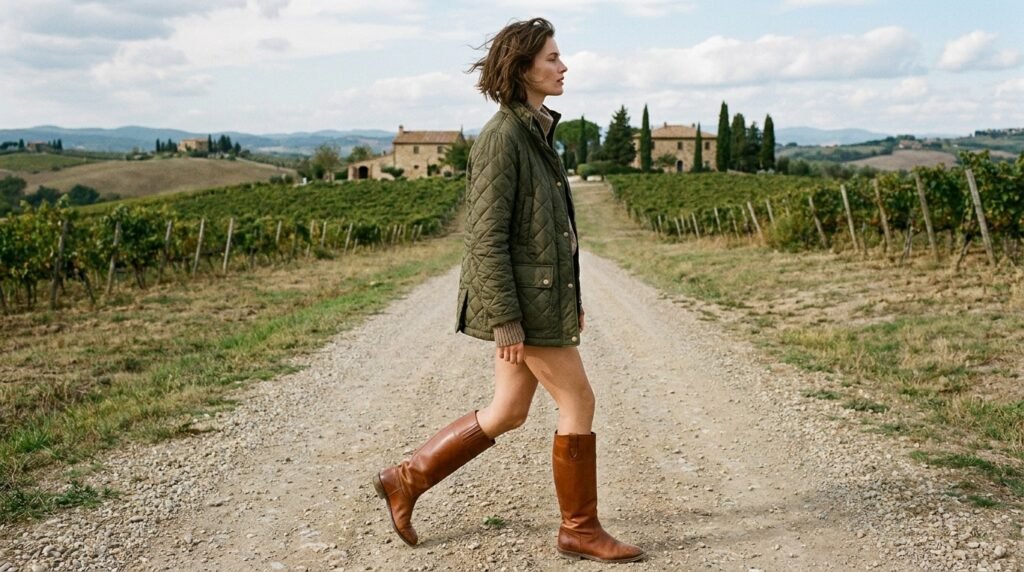
For countryside explorations through the Cotswolds or Tuscany in brisk weather, a knee-high equestrian leather boot with a low 1-inch stacked heel keeps your lower legs warm while providing ankle support across uneven terrain.
11. The Travel Derby Oxford with Hidden Cushioning
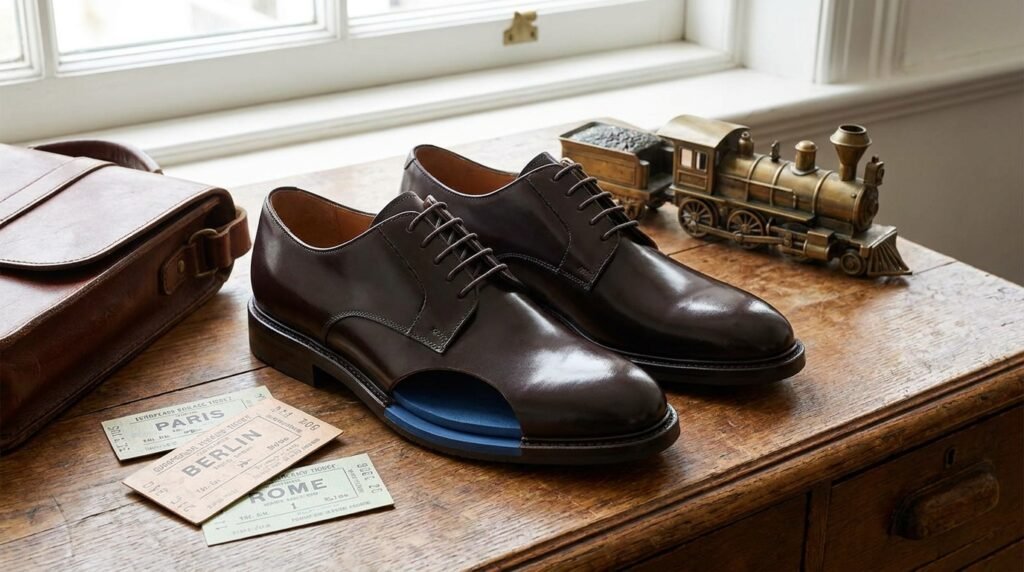
If your itinerary includes visits to conservative churches, opera performances, or Michelin-starred restaurants, a supple leather lace-up oxford gives you tailored elegance. Modern iterations hide athletic-grade EVA insoles inside traditional welted silhouettes.
12. The Ankle-Strap Low Block-Heel Sandal
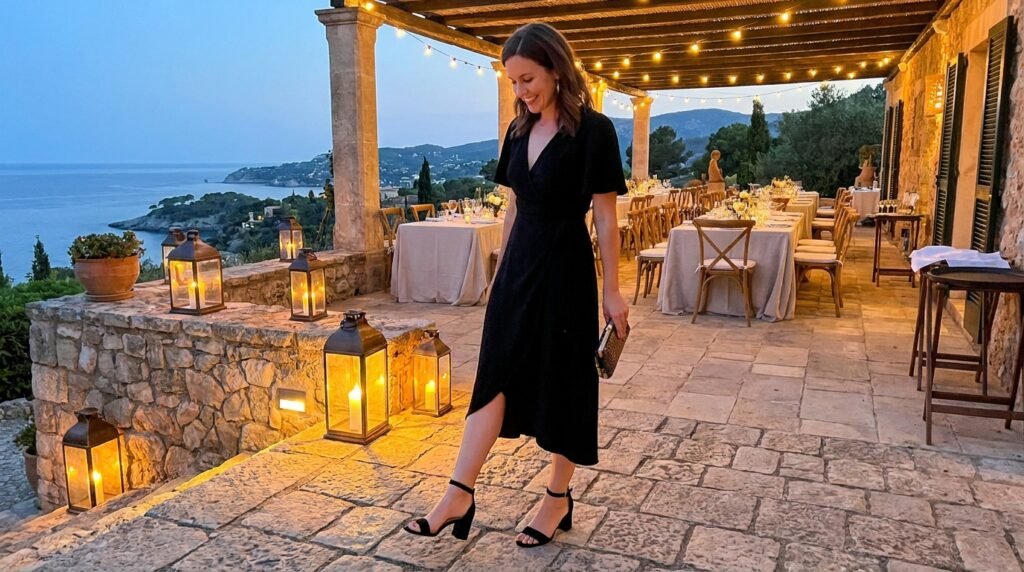
When you want a gentle lift for evening dinners without risking a twisted ankle on cobblestones, a 1.5-inch wide rectangular block heel sandal in soft cognac or black suede provides balanced surface contact and secure ankle strapping.
Quick Comparison: 12 Best Travel Shoes Ranked by Performance
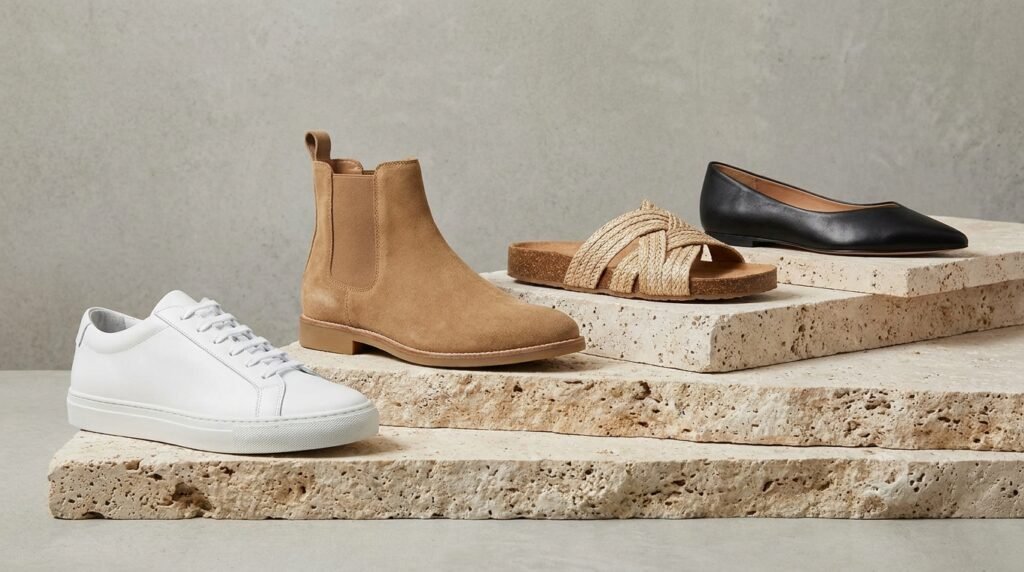
| Shoe Style | Arch Support | Cobblestone Rating (1–10) | Packability | Best Destination / Setting |
| White Calfskin Sneaker | Medium-High | 9.5 / 10 | Medium | City sightseeing (Paris, Rome, Madrid) |
| Gum-Sole Retro Trainer | Medium | 8.5 / 10 | High | Trendy capitals (London, Berlin, Vienna) |
| Retro Wedge Runner | High (Orthopedic) | 9.5 / 10 | Medium | High-mileage walking (15k+ daily steps) |
| Lug-Sole Chelsea Boot | High | 10 / 10 | Low (Wear on plane) | Rainy cities (Edinburgh, Amsterdam, Dublin) |
| Cork Footbed Slide | Maximum | 8.5 / 10 | Medium | Coastal travel (Santorini, Amalfi, Nice) |
| Pointed Knit Flat | Mild-Medium | 7.5 / 10 | Maximum (Rolls flat) | Museum visits, cafe lounging, theater |
| Chunky Lug Loafer | Medium | 9.0 / 10 | Low | Chic bistros, autumn layering, shopping |
| Merino Wool Sneaker | Medium | 8.5 / 10 | High | Plane travel, mild walking tours |
| Leather Fisherman Sandal | Medium | 8.5 / 10 | Medium | Historic ruins, summer cobblestones |
| Flat Knee-High Riding Boot | High | 9.0 / 10 | Low (Wear on plane) | Countryside tours, autumn/winter travel |
| Cushioned Derby Oxford | High | 9.0 / 10 | Medium | Business travel, fine dining, galas |
| 1.5″ Block-Heel Sandal | Medium | 7.5 / 10 | High | Sunset terrace dinners, alfresco wine bars |
Chic Travel Sneakers and Flats: Capsule Wardrobe Styling Rules
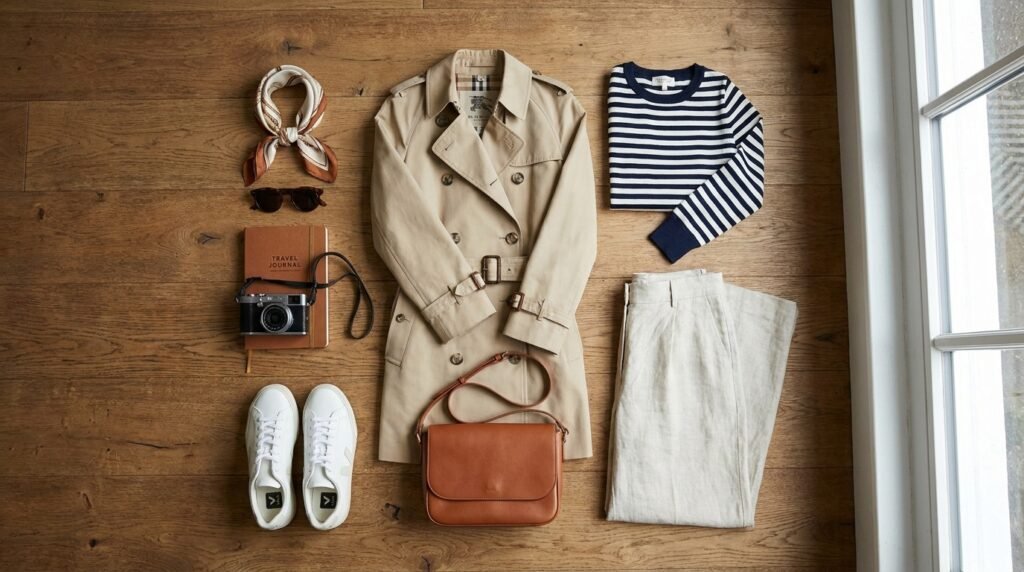
Packing light for European carry-on weight limits requires choosing footwear that pairs seamlessly with multiple capsule wardrobe staples:
- The 2+1 Footwear Packing Rule: Limit your entire trip to exactly three pairs: one comfortable daytime sneaker (worn during transit), one weather-resistant boot or tailored walking loafer, and one packable evening flat or dress sandal.
- Proportion with Pant Hems: Wide-leg linen trousers should break slightly over low-profile sneakers, while ankle-skimming cigarette pants frame pointed knit flats or lug loafers cleanly.
- Break Them in Three Weeks Prior: Never take brand-new, unbox-fresh shoes on an overseas trip. Wear every pair on concrete pavements for at least 15 miles before your departure to allow the leather to mold to your foot shape.
Blister Prevention and Active Foot Recovery on the Road

Even the best-engineered footwear can cause friction when walking miles in humid foreign climates. Protect your feet with these proactive traveler habits:
- Pack Hydrocolloid Blister Bandages: Unlike standard adhesive bandages that roll off from friction and moisture, hydrocolloid patches form a gel-cushioned second skin over hotspots.
- Wear Technical Merino Wool Socks: Ditch cotton athletic socks, which retain moisture and cause chafing. Fine-gauge merino socks wick away sweat, prevent blisters, and remain odor-free across multiple wears.
- Elevate Feet for 15 Minutes Nightly: After returning to your hotel, elevate your legs against the headboard to flush out pooled venous blood and relieve swelling before dinner.
Frequently Asked Questions
What are the best shoes for walking on cobblestones in Europe?
The best shoes for walking on cobblestones feature thick, shock-absorbing rubber outsoles (at least 0.75 inches thick), a firm internal shank that resists twisting, and a secure lace-up or ankle-strap closure. Low-profile white leather court sneakers, lug-sole Chelsea boots, and thick-soled retro runners are proven performers.
What are the best walking shoes for a trip to Europe?
A minimalist white leather sneaker with built-in arch support is the most versatile walking shoe you can pack. It provides the all-day cushioning required for navigating historic sites while effortlessly matching dresses, jeans, and tailored trousers across casual and smart-casual dress codes.
What are some comfy, podiatrist-approved walking shoes for travel to Europe?
Podiatrists recommend walking shoes featuring contoured anatomical arch bridges, deep heel cups to stabilize the calcaneus bone, and generous toe boxes that allow toes to splay naturally. Brands like New Balance, Birkenstock, Vionic, and Ecco are frequently praised for integrating orthotic-grade biomechanics into stylish silhouettes.
What shoes are people wearing in Europe right now?
Locals across major European fashion capitals favor streamlined, low-profile leather sneakers (like Adidas Sambas and Veja Campo), chunky lug-sole loafers with ribbed socks, architectural kitten-heel slingbacks, and refined western-inspired ankle boots during the cooler months.
Can you wear sneakers to dinner in Europe?
Yes, in almost all modern European restaurants, bistros, and wine bars, clean leather sneakers are widely accepted as part of a smart-casual outfit. Ensure your sneakers are pristine, un-scuffed, and paired with tailored trousers or an elegant dress rather than casual gym shorts or athletic leggings.
How many pairs of shoes should I pack for two weeks in Europe?
Three pairs are ideal: one comfortable primary walking sneaker for sightseeing days (wear this on the plane to save luggage space), one weather-appropriate walking boot or structured loafer, and one elevated flat or block-heel sandal for evening dining.
Conclusion
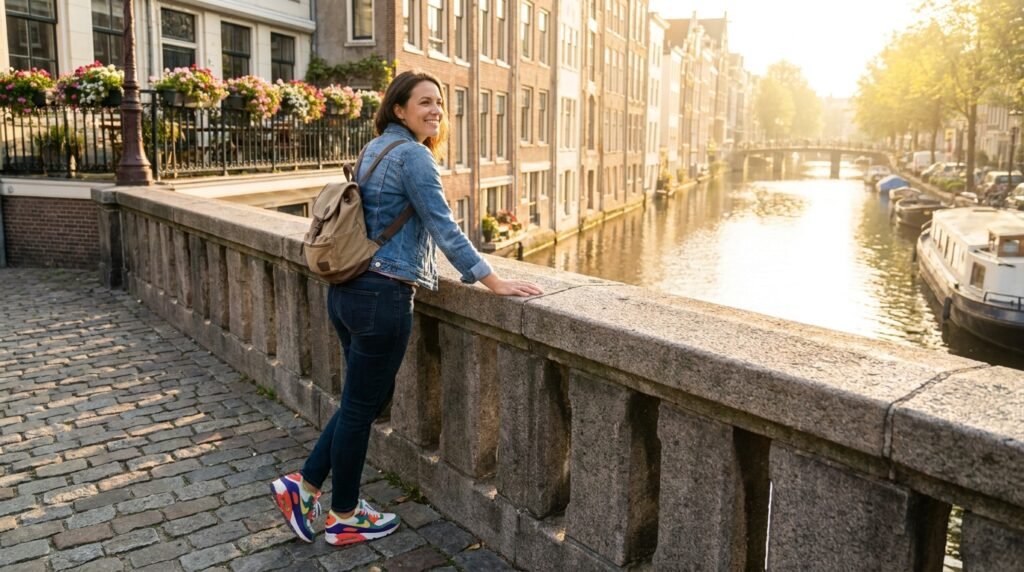
Conquering European cobblestones with confidence comes down to curating supportive, shock-absorbing footwear that aligns with your personal style. By packing versatile white leather court sneakers, durable lug-sole boots, and cushioned flats, you can explore historic landmarks all day and step into chic evening bistros without a hint of foot fatigue.

Emily started HeelToStyle after one too many pairs of boots sat unworn in her closet simply because she couldn’t figure out what to wear them with. What began as personal outfit notes turned into a full site dedicated to practical, wearable shoe styling. She leads content direction and writes most of the site’s occasion-based outfit guides.